

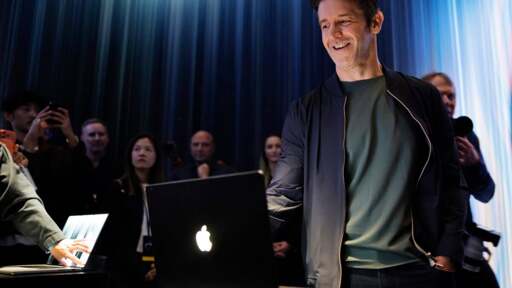
Apple CEO John Ternus pressured Apple senior VP of Software Engineering Craig Federighi to “accelerate the company’s road map and move quickly beyond merely making necessary improvements to Siri,” reports Bloomberg’s Mark Gurman in today’s Power On newsletter.
Citing anonymous sources, Gurman writes that Ternus is “frustrated by what he sees as a reluctance to embrace AI with the same urgency as competitors,” and pushed Federighi for changes in a meeting behind closed doors. Federighi, Gurman points out, has been considered an AI skeptic with concerns “about the technology’s privacy, security, societal and employment implications.”
They where jot slow they pushed really hard but failed to execute. I love how everyone seems to forget that.
they skipped burning infinity billions on training useless models and building data centres.
Apple very much did want to invest into AI development, but the financial department - which used to be Cook’s department before he became CEO - repeatedly denied allocating money for buying GPUs, and told the engineers to ‘just use the old ones’.
At that point, the ‘old ones’ were several years old, and in quantity about 1% of what Microsoft or Google had at the time.
Apple never ‘chose’ to wait with AI. It chose to be run by businessmen, who are always clueless, and who will always make terrible decisions. Though in this case it happened to have temporarily positive or neutral consequences for the users.
They didn’t “fail”, they just realized the technology was not ready. This was made very clear through many public blunders. And they didn’t want to just ram it down people’s throats like their competitors.