

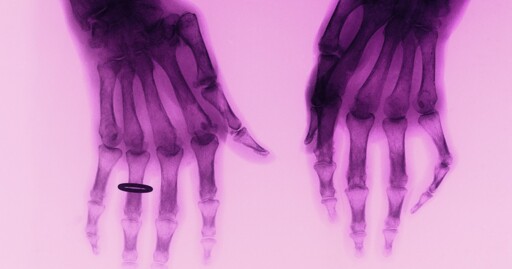
An online survey by British researchers found that it took women with an autoimmune disorder about four years to get a diagnosis, while it took men around three months to less than a year.
It adds to previous research showing disparities in diagnosis between men and women with autoimmune disorders.
“Women in particular felt not listened to or not heard or not believed by their medical professionals,” said Sydnae Taylor, a doctoral researcher at the University of Oxford in the U.K. and co-author of the study published recently in eClinicalMedicine.
Autoimmune diseases — including Type 1 diabetes, multiple sclerosis, inflammatory bowel disease and psoriasis — occur when the immune system mistakenly attacks the body. More than 23 million people in the U.S. have an autoimmune disease, and most of them are women.
Autoimmune thyroid disease, which includes Hashimoto’s, was the most common type reported by women in the survey. It typically causes fatigue, unexplained weight gain and sensitivity to cold, among other symptoms.
Autoimmune conditions can affect anyone but are more common in women than in men, according to the federal Office on Women’s Health. For example, around 90% of people with lupus are women, according to the Lupus Foundation of America.
It’s not clear why women are more at risk. Research from the Mayo Clinic has suggested differences in the microbiome, sex hormones and that women’s bodies produce higher levels of antibodies that are associated with autoimmune disorders. A 2024 Stanford Medicine study found clues in a molecule connected to the X chromosome.
Because many of the disorders share similar symptoms in the early stages — fatigue, dizziness, low-grade fever, as well as stress, anxiety and depression — they can be difficult to diagnose.
Women and men have similar symptoms, but with women specifically, “they develop over time, so it’s often hard to recognize right at the beginning,” said Dr. Saira Z. Sheikh, the director of the UNC Rheumatology Lupus Clinic in Chapel Hill, North Carolina. Symptoms can appear during childhood and last throughout adulthood.
The reality is autoimmune/autoinflammatory is just so disregarded by most doctors with most patients.
Because it’s so much less likely than other conditions, most doctors just think they’ll never see it.
The medical world constantly treats individuals as if each one is an idealized representative of a statistical group. So the stats say most people won’t have an autoimmune/autoinflammtory disorder, therefore this person won’t. 🤦🏼
Just look at blood pressure - they treat the number (a proxy for multiple systems such as RAAS) as if it’s a simple, unique process, and the individual as if each one’s the same, then blindly prescribe meds to reduce this proxy without fully understanding the implications for the individual.
Never mind that it takes treating 33 people for 5 years and 65,000 doses of a medication to prevent one cardiac event, all while glossing over the side effects and very real risks (largely kidney damage) of BP meds.
Oh, and that blood pressure - any one reading is around 75 beats, among the hundreds of thousands in a year - how is that a measure of anything? I’d you’re not doing proper BP studies (these are done with wearable monitors) then it’s a random sample with no statistical basis (oh, and docs know this).
The medical world has a major problem with dogmatic scientism, especially among GPs.
Yes, doctors dismiss a lot of people from all walks of life. When diagnosing autoimmune diseases, they listen to women less than men.