This diagram shows the LCOE (levelized cost of electricity) for various technologies - i.e. how much does one kWh of electricity cost if you divide the total number of generated kWh by the total cost of the power plant.
“utility-scale solar” means large-scale flat-area solar parks
But will Fusion ever be cheaper than solar?
I doubt it; It’s not only about technology costs but also about advantages like decentralization. If you can generate your own electricity in your own back-yard, you’re much more independent than if you’re dependent on large-scale fusion power. Because that will necessarily be very large-scale and centralized because nobody can set up a fusion reactor in their own back yard.
Technically, there’s only two sources of energy in the universe: nuclear energy and the expansion of the cosmos.
Like, solar is fusion, ofc, the light coming from the sun. So is wind and water and bioenergy (indirectly).
Geothermal is fission (heat comes from radioactive decay inside Earth).
But then there’s another source of energy that nobody ever talks about: tidal power
It works by converting the rise and fall of water with the tides into electrical energy. This energy ultimately comes from the moon orbiting around Earth, more precisely, its mechanical energy: The fact that the moon is distant from Earth is only because the universe expanded after the big bang. Had it not done this, the moon and earth would be located at the same location, and there would be no “orbiting” to extract energy out of :P
but isnt it being centralized being the point? I have the (probably not so rare) tin foil theory that big energy spends a lot of money to dampen solar and other decentralized power generation. As a politician you have to ask yourself, do I get nice packages from big energy for not looking so closely when another forest is turned into a hole or do I hope that 20000 random people try to bribe me for something. In terms of money gain for a few big power plant is double plus good. Boring solar might be better for all of us, the rest, but not for the guys calling the shots. This all assumes of course that there is no empathy at all in the local legislation
That’s why I always want to crowdsource corruption. Everybody who wants something gives 3 Euro/Dollar/Whatever and we just carry those cash suitcases to the morons in charge. What big companies can do, we can do!
I haven’t looked into it but isn’t the problem that bribing and corruption, as we general think of it, is not common anymore. They’ve gotten creative.
They don’t hand you cash. they form super PACs that are legislative black holes so “people that align with you politically” can use that money to help you run, or your family member is hired as a VP in a company where they do nothing but get millions in stock options. They can also you can also get paid for talks, meetings, lectures in exotic locations. Hell, Clarence the supreme court judge gets stuff all the time from his billionaire friend. here’s John Oliver.
Well, I just give them a contract for a speech of two minutes, worth 3 million, I guess. Even those politicians will see the appeal in just receiving plain ol’ money instead of jumping through all those hoops.
Solar has the problem of storage. You need something like a generator to tide those in-between times. Also you need the signal to be a clean 60 hz and solar apparently isn’t very good at keeping the power clean.
Yeah i was thinking one could probably generate something like synthetic petroleum when one has excess clean energy and store the synthetic fuel for many months.
Will solar with interseasonal storage ever be even feasible?
People like to throw LCOE around, occulting that running countries with solar (and wind) power is plain science-fiction and nowhere close to change, while nuclear (at least fission) is empirically proven to work reliably, even for cheap, costing less than 200 billions of euros in the span of 60 years in France for example.
When you don’t have enough sun (or wind), you either have sufficient backup in hydro or solar, or you burn coal and gas.
my take is that 1. you don’t need equal supply year-through because big consumers should be able to sleep and reduce their energy intake in the winter. yes i know that is complicated, but sleep is also complicated in nature and evolution still pulled through with it because it does pay off in the long term.
secondly, storage can also be renewable biomass. i have some napkin math sitting around somewhere on my disk that says that about 5% of the yearly energy demand can be covered with basically non-cost “waste” biomass that’s basically being burned to get rid of it today. I actually wanted to write a longer post about it in the !bathtubthoughts@discuss.tchncs.de community, i just couldn’t figure out how to properly present my calculations yet.
my take is that 1. you don’t need equal supply year-through because big consumers should be able to sleep and reduce their energy intake in the winter. yes i know that is complicated, but sleep is also complicated in nature and evolution still pulled through with it because it does pay off in the long term.
So you’re trying to advocate we should put millions of people on virtual unemployment during winter to save energy? Who will pay for that?
Do you think it’s honest to compare nuclear price all-included LCOE to the solar and wind LCOE* (* = not accounting for the tens or hundred of billions of unemployment subsides each year to account for forced shutdown because of power drought)?
secondly, storage can also be renewable biomass. i have some napkin math sitting around somewhere on my disk that says that about 5% of the yearly energy demand can be covered with basically non-cost “waste” biomass that’s basically being burned to get rid of it today. I actually wanted to write a longer post about it in the !bathtubthoughts@discuss.tchncs.de community, i just couldn’t figure out how to properly present my calculations yet.
First thing: biomass is about 200-250g of CO²eq per kWh. Burning biomass is polluting, and thus is not a viable alternative to nuclear, hydro, solar, wind, and the other low-carbon power sources we should aiming for.
Even if your calculus are correct, if I take the example of a country like France which has a +30-50% increase in power consumption for 5 months during the coldest months than in the rest of the year. And it’s not because of industry, it’s because we heat up with a lot of electricity, even if we still need to convert a lot of fossil-based heating to low-carbon electricity heating.
But the solar production at the time has a -75% decrease. Wind is basically non-consistent through the year.
So when we need solar the most, to heat up in winter, a phenomena that will get even worse when we decarbonize heating, it just does not follows up. And wind drought during very cold weeks definitely happens regularly.
So we NEED interseasonal power storage to make full-renewable working, at least without huge capacities in hydro-electricity.
And we’re not even close to achieving this kind of gigantic power storage, which is why Germany, the biggest advocate for solar and wind with more than 40% of its electricity coming from it, and has no hydro, is still one of the dirtiest electricity in Europe. Because it still burns gas and coal to compensate for solar and wind lack of reliability.
First thing: biomass is about 200-250g of CO²eq per kWh. Burning biomass is polluting, and thus is not a viable alternative to nuclear, hydro, solar, wind, and the other low-carbon power sources we should aiming for.
I think “biomass” CO2 emission depends on whether it’s renewable biomass (which i meant here) or non-renewable biomass (a.k.a fossil fuels). If you consider it over a 10-year average.


This diagram shows the LCOE (levelized cost of electricity) for various technologies - i.e. how much does one kWh of electricity cost if you divide the total number of generated kWh by the total cost of the power plant.
“utility-scale solar” means large-scale flat-area solar parks
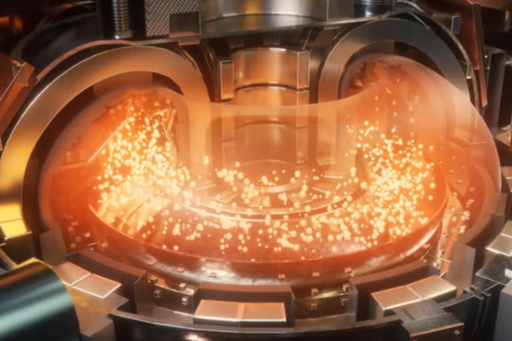
But will Fusion ever be cheaper than solar?
I doubt it; It’s not only about technology costs but also about advantages like decentralization. If you can generate your own electricity in your own back-yard, you’re much more independent than if you’re dependent on large-scale fusion power. Because that will necessarily be very large-scale and centralized because nobody can set up a fusion reactor in their own back yard.
Solar is technically fusion though
Solar is Fusion as a Service or FaaS technology.
The sun is in the cloud(s)?
Technically, there’s only two sources of energy in the universe: nuclear energy and the expansion of the cosmos.
Like, solar is fusion, ofc, the light coming from the sun. So is wind and water and bioenergy (indirectly). Geothermal is fission (heat comes from radioactive decay inside Earth).
But then there’s another source of energy that nobody ever talks about: tidal power It works by converting the rise and fall of water with the tides into electrical energy. This energy ultimately comes from the moon orbiting around Earth, more precisely, its mechanical energy: The fact that the moon is distant from Earth is only because the universe expanded after the big bang. Had it not done this, the moon and earth would be located at the same location, and there would be no “orbiting” to extract energy out of :P
I just made a post about this here
but isnt it being centralized being the point? I have the (probably not so rare) tin foil theory that big energy spends a lot of money to dampen solar and other decentralized power generation. As a politician you have to ask yourself, do I get nice packages from big energy for not looking so closely when another forest is turned into a hole or do I hope that 20000 random people try to bribe me for something. In terms of money gain for a few big power plant is double plus good. Boring solar might be better for all of us, the rest, but not for the guys calling the shots. This all assumes of course that there is no empathy at all in the local legislation
That’s why I always want to crowdsource corruption. Everybody who wants something gives 3 Euro/Dollar/Whatever and we just carry those cash suitcases to the morons in charge. What big companies can do, we can do!
I haven’t looked into it but isn’t the problem that bribing and corruption, as we general think of it, is not common anymore. They’ve gotten creative.
They don’t hand you cash. they form super PACs that are legislative black holes so “people that align with you politically” can use that money to help you run, or your family member is hired as a VP in a company where they do nothing but get millions in stock options. They can also you can also get paid for talks, meetings, lectures in exotic locations. Hell, Clarence the supreme court judge gets stuff all the time from his billionaire friend. here’s John Oliver.
Well, I just give them a contract for a speech of two minutes, worth 3 million, I guess. Even those politicians will see the appeal in just receiving plain ol’ money instead of jumping through all those hoops.
Eventually. But, much like traditional fission power, you’ll need a very large and complex piece of infrastructure to deliver it.
You won’t be able to put a fusion plant in your basement like you can put solar on your roof.
There are fusion reactors that fit between your fingers.
Solar has the problem of storage. You need something like a generator to tide those in-between times. Also you need the signal to be a clean 60 hz and solar apparently isn’t very good at keeping the power clean.
Yeah i was thinking one could probably generate something like synthetic petroleum when one has excess clean energy and store the synthetic fuel for many months.
Will solar with interseasonal storage ever be even feasible?
People like to throw LCOE around, occulting that running countries with solar (and wind) power is plain science-fiction and nowhere close to change, while nuclear (at least fission) is empirically proven to work reliably, even for cheap, costing less than 200 billions of euros in the span of 60 years in France for example.
When you don’t have enough sun (or wind), you either have sufficient backup in hydro or solar, or you burn coal and gas.
my take is that 1. you don’t need equal supply year-through because big consumers should be able to sleep and reduce their energy intake in the winter. yes i know that is complicated, but sleep is also complicated in nature and evolution still pulled through with it because it does pay off in the long term.
secondly, storage can also be renewable biomass. i have some napkin math sitting around somewhere on my disk that says that about 5% of the yearly energy demand can be covered with basically non-cost “waste” biomass that’s basically being burned to get rid of it today. I actually wanted to write a longer post about it in the !bathtubthoughts@discuss.tchncs.de community, i just couldn’t figure out how to properly present my calculations yet.
So you’re trying to advocate we should put millions of people on virtual unemployment during winter to save energy? Who will pay for that?
Do you think it’s honest to compare nuclear price all-included LCOE to the solar and wind LCOE* (* = not accounting for the tens or hundred of billions of unemployment subsides each year to account for forced shutdown because of power drought)?
First thing: biomass is about 200-250g of CO²eq per kWh. Burning biomass is polluting, and thus is not a viable alternative to nuclear, hydro, solar, wind, and the other low-carbon power sources we should aiming for.
Even if your calculus are correct, if I take the example of a country like France which has a +30-50% increase in power consumption for 5 months during the coldest months than in the rest of the year. And it’s not because of industry, it’s because we heat up with a lot of electricity, even if we still need to convert a lot of fossil-based heating to low-carbon electricity heating.
But the solar production at the time has a -75% decrease. Wind is basically non-consistent through the year.
So when we need solar the most, to heat up in winter, a phenomena that will get even worse when we decarbonize heating, it just does not follows up. And wind drought during very cold weeks definitely happens regularly.
So we NEED interseasonal power storage to make full-renewable working, at least without huge capacities in hydro-electricity.
And we’re not even close to achieving this kind of gigantic power storage, which is why Germany, the biggest advocate for solar and wind with more than 40% of its electricity coming from it, and has no hydro, is still one of the dirtiest electricity in Europe. Because it still burns gas and coal to compensate for solar and wind lack of reliability.
I think “biomass” CO2 emission depends on whether it’s renewable biomass (which i meant here) or non-renewable biomass (a.k.a fossil fuels). If you consider it over a 10-year average.
Solar power is not a feasible solution in all parts of the world, though, and large-scale storage is still very much an issue.