Just a reminder that even if you have a fusion generator that reaches over unity, untill you can fit that in the space and weight of a car or truck engine, you still need a lot of oil, and you still need a lot of rare earth minerals for batteries.
Either that or a whole new transit / economic trade paradigm.
Not saying that it would not be great to be able to retire coal oil and gas power plants from the grid as a theoretical over unity fusion power source someday becomes a thing…
The whole initial pitch from Tesla, that basicslly got EVs conceptually over the hump into being potentially practical… at a paradigmatic level…
… was Elon saying he was gonna build a whole network of infrastructure for that, charging networks.
… and then 90% of that never happened.
Remember when we were gonna have basically a carwash type thing but it would just do a battery swap on your car?
Remember when he was all giddy about the SOLID METAL SNAKE that was gonna basicslly just be a robot tentacle that would automagically plug in to your charging port?
Yeah, basically none of that shit happened, similar to all that money we gave to the ISPs and such to build out fiber networks, most of which just went into stock buybacks, not infrastructure.
So my point is, you run into the same fundamental problem with hydrogen, now you need to build a whole new set of infrastructure.
… Who is going to pay for that?
Oh and also power would not be free.
Not for a long long time, not untill you solve capitalism.
Even with the magical thinking of an over unity power generator, you have do another order of magnitude of magical thinking to think that that somehow just makes power, in general, free, in a capitalist system.
They’ll find a way, many ways, to make it cost money.
… so you’re saying to use i guess infinite amounts of energy to … do abiotic synthesis and just literally produce hydrocarbons?
… Like, just Fischer-Troph everything?
I suspect you are wildly oversimplifying the complexity of the chemical processes involved…
…for the general concept of what you are saying, to make actual sense…
Your abiotic hydrocarbon synthesis process would have to be less energy demanding than the constant surplus energy production rate of a theoretical over unity fusion generator.
Just getting any fusion generator than is any miniscule amount of truly over unity, thats not enough.
Thats infinite energy… if you have an infinite amount of time to wait, and an infinite amount of some kind of battery system to contain that energy in.
Synthetic fuel production is kind of notorious for being immensely energy intensive.
And for FT at least, you need a feedstock of either biomass, coal or natural gas.
If you want to just do some kind of variant of an FT like process, where your feedstock is ultimately ‘refined air’… you’re going to need even more energy, a fusion generator than is over unity by an even larger margin.
It is a little more complicated than just ‘heat up CO2’.
Unless you can point me to … somebody who has actually worked out the chemistry of how you can just synthesize hydrocarbons from… ambient CO2… that you’re scrubbing from the air… demonstrated this entire process at a tiny scale as proof of concept… and described the total amount of energy required to power this process…
Seems obvious to pick a new transit paradigm for personal cars, obviously trucks can stay.
Also in the current era, coal plants already have a good replacement: nuclear. At least for bigger countries, but most are shutting down rather than improving. This might be (hopefully) starting to change though in recent times.
Also I don’t know what fusion power is, I shall be on wikipedia now. Good day sir.
Assuming you mean commericial grade hauler trucks and such, I absolutely agree with all your points.
… Are we running commercial trucks on biodiesel yet?
But yeah, for personal transit… a huge amount of the world gets around on bicycles, mopeds, motorcycles. Cars are basically a luxury, like, any car.
Of course that works because public transit over long distances tends to work, and the whole country tends to not be laid out as just a cancerous mass of utterly useless suburubs, strewn out around urban cores that are half parking lot.
I dunno, if we just say, banned pickup trucks and SUVs for private use, well, that’d cut down on road maintenance a good deal, would make being a moped or bicycle or motorcycle commuter a bit more feasible.
Assuming you mean commericial grade hauler trucks and such, I absolutely agree with all your points.
Oh yes, I mean commercial hauler trucks, etc. The ones that do their job well of course. Of course theres other types of trucks for maintenece, last mile deliveries, etc.
(Side note, europe has nice delivery vans)
Definitely not the things the average american has started calling a “truck”, which has 5mpg and is used solely for one person to go to and from an office job, etc, never hauling anything.
And plus 1 for bikes, idk about motorbikes though, sadly they seem like death traps because of how fast you can go, one mistake by you or someone else on the road and you could see black.
Ah ok, haha yeah sorry, I’m over here in belligerent burger land, terminology is a bit different… along with … a lot of other things.
Yeah, our “truck”/suv culture is… just actually insane.
Many common US “trucks” are literally as large as WW2 medium tanks. Its fucking nonsense.
Also yes, delivery vans, utility vehicles that are van-like… yeah I think those generally make sense as well.
With mopeds / motorcycles … Yeah, small vehicle with no driver/rider encompassing frame around it + high speed = dangerous.
But… mopeds are incredibly popular in eastern asia, many other parts of the world a lot of other parts of the world because they are small, cheap, and if you have a traffic law paradigm and road system that accomodates them, they totally make sense.
Motorcycles… have more effective maximum range though. Higher sustainable top speeds.
Theyre a bit more popular in south america, which generally has less medium/long distance mass transit.
Cheaper than cars, but they can actually drive a significant distance.
The US is also really really spread out, in lots of places. We built our cities so you have to drive everywhere within them, and also between them, because we generally hate mass transit that is medium or long distance.
And the wild thing is, in the US, right now?
I can get a decent, gasoline powered, starter motorcycle, which is street legal, for about the same price, or even cheaper, than an e-bicycle, which has ~60% the top speed, maybe ~20% the overall range.
Really, a decent starter motorcycle is more like half or a third the cost of an e-bike that… could possibly, maybe get me from place to place in a spread out US city, that is 50% parking lot by land use.
And bicycles are not street legal in the US, the way that cars and motorcycles are.
They get shunted into their own sort of ruleaet governing where they can be ridden, which is highly variable and not standardized from city to city.
Practically speaking, our bicycle infrastructre is either non existant, or designed by insane people, basically. I tried, I really tried to do the bicyclist thing in a lefty, US major city that was supposedly all about bike infrastructure for a time.
Nope. I’d feel much safer in that city, on a motorcycle, on the actual main streets, just moving more slowly, following the road laws of basically juat being a very small car, being cautious…, than I would on a bicycle, where…
… you get insane little unprotected nonsense lanes that are sometimes on the shoulder of a road, sometimes they weave into the middle of a street at an intersection, sometimes there’s some kind of shunted off specific bike path through a block or two, or most of the time there’s just no bike lane at all, but its illegal for you to ride them on a sidewalk… if there even is a sidewalk.
Incredible mess, and if an SUV going 45 mph t-bones a bicyclist crossing an intersection, or just doesn’t see them and does a lower speed turn into them… they’re basically as dead of injured as a motorcyclist in the same position… though motorcyclists tend to wear full head encompassing helmets.
Anyway, in the US, having a one or two hour commute to work in the morning, and a one or two hour commute back home, via some kind of motor vehicle, on a highway system… is pretty common.
Some vehicle has to exist that can make that distance, but is also affordable… unless/untill we actually build medium/long range mass transit.
Motorcycles can do that.
So could kei vehicles, maybe, kind of… they generally can’t maintain US highway speeds, and honestly, they’d get pretty obliterated in a collision with a US “truck” or SUV, and their suspensions / ground clearance also can’t really handle the shitty state of US roads and potholes, caused by those “trucks” and SUVs.
I’m rambling at this point, but … some new kind of personal vehicle paradigm is going to have to exist in the US soon… because cars are simply now unaffordable to the average person, we’re too broke, car prices are too high, soo many people are in massive debt for their cars.
We’re either gonna need cheaper vehicles that can go fast and can go a significant distance… or we’re basically just gonna collapse as a society.
We’re extremely car centric, and people can’t afford cars anymore.
I don’t know how to solve that problem in a ‘good’ way, motorcycle is the best I can come up with.
Luckily major european countries that have well designed streets publish a lot of their found research, it just has to start being adopted in the more car-centric places.
The US as an example is pretty far gone, but if the major cities went fully in the correct direction, it probably would only take a few decades to look completely different (amsterdam is decent proof of this).
While I agree with you in theory, in practice, no, we could not transform that fast, to a significant degree, unless we first basically had something like a Maoist genocide of current landowners, burned all the existing building and land use codes, and started over.
More than just the whole… rich people have way too much control over society thing…
The amount of NIMBYism in the US is insane.
(Not In My BackYard)
Every single element of every city’s zoning laws and building regulations are designed to benefit existing property owners and existing properties, as they currently are.
We would have to dismantle a whole lot of that to actually change the fundamental street grid system.
… The problem is complex not so much in technical, engineering, how do we actually do this kinds of ways… but in the way of: there are way too many powerful groups and actors that will fuck up every stage of any process that is attempting to change anything about urban design.
I guess you could say our governance structures are as gridlocked as the actual streets are.
No no no. You just use the fusion to heat the water to make the steam to turn a turbine and then distribute that energy. Boom electric cars are a thing. While it’s technically possible to make a car with 0 petroleum products, it’s not financially viable in the current market.
Oil is remarkably cheap. I always find it funny that a gallon of gas and a gallon of water stay about the same price when one literally falls from the sky for free.
I mean, if we’re in the sci fi timeline where fusion is a developed technology to the point where energy is effectively free with no env impact, then we can still do a lot to avoid that. Cars don’t need huge batteries when your roads are powered, etc.


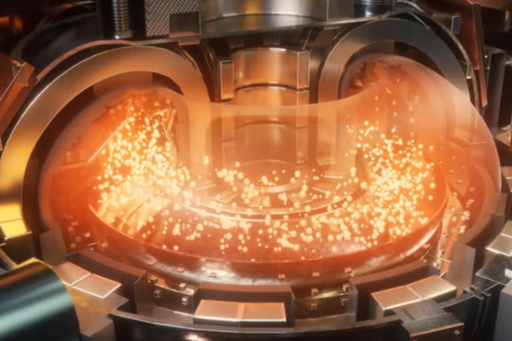
Just a reminder that even if you have a fusion generator that reaches over unity, untill you can fit that in the space and weight of a car or truck engine, you still need a lot of oil, and you still need a lot of rare earth minerals for batteries.
Either that or a whole new transit / economic trade paradigm.
Not saying that it would not be great to be able to retire coal oil and gas power plants from the grid as a theoretical over unity fusion power source someday becomes a thing…
But I am saying its not a cure-all.
If the power is free, you can synthesize hydrogen or even hydrocarbons from captured CO2.
Cool and hows all that coming along?
Hydrogen vehicles?
The whole initial pitch from Tesla, that basicslly got EVs conceptually over the hump into being potentially practical… at a paradigmatic level…
… was Elon saying he was gonna build a whole network of infrastructure for that, charging networks.
… and then 90% of that never happened.
Remember when we were gonna have basically a carwash type thing but it would just do a battery swap on your car?
Remember when he was all giddy about the SOLID METAL SNAKE that was gonna basicslly just be a robot tentacle that would automagically plug in to your charging port?
Yeah, basically none of that shit happened, similar to all that money we gave to the ISPs and such to build out fiber networks, most of which just went into stock buybacks, not infrastructure.
So my point is, you run into the same fundamental problem with hydrogen, now you need to build a whole new set of infrastructure.
… Who is going to pay for that?
Oh and also power would not be free.
Not for a long long time, not untill you solve capitalism.
Even with the magical thinking of an over unity power generator, you have do another order of magnitude of magical thinking to think that that somehow just makes power, in general, free, in a capitalist system.
They’ll find a way, many ways, to make it cost money.
Ok, so use the hydrogen to make heavier fuels, you just need heat and CO2.
America might not do anything, but China would be happy to sell USA’s emissions back to them for profit.
… so you’re saying to use i guess infinite amounts of energy to … do abiotic synthesis and just literally produce hydrocarbons?
… Like, just Fischer-Troph everything?
I suspect you are wildly oversimplifying the complexity of the chemical processes involved…
…for the general concept of what you are saying, to make actual sense…
Your abiotic hydrocarbon synthesis process would have to be less energy demanding than the constant surplus energy production rate of a theoretical over unity fusion generator.
Just getting any fusion generator than is any miniscule amount of truly over unity, thats not enough.
Thats infinite energy… if you have an infinite amount of time to wait, and an infinite amount of some kind of battery system to contain that energy in.
Synthetic fuel production is kind of notorious for being immensely energy intensive.
And for FT at least, you need a feedstock of either biomass, coal or natural gas.
If you want to just do some kind of variant of an FT like process, where your feedstock is ultimately ‘refined air’… you’re going to need even more energy, a fusion generator than is over unity by an even larger margin.
It is a little more complicated than just ‘heat up CO2’.
Unless you can point me to … somebody who has actually worked out the chemistry of how you can just synthesize hydrocarbons from… ambient CO2… that you’re scrubbing from the air… demonstrated this entire process at a tiny scale as proof of concept… and described the total amount of energy required to power this process…
Yeah I’m calling bullshit.
what if we abolish capitalism?
Seems obvious to pick a new transit paradigm for personal cars, obviously trucks can stay.
Also in the current era, coal plants already have a good replacement: nuclear. At least for bigger countries, but most are shutting down rather than improving. This might be (hopefully) starting to change though in recent times.
Also I don’t know what fusion power is, I shall be on wikipedia now. Good day sir.
Assuming you mean commericial grade hauler trucks and such, I absolutely agree with all your points.
… Are we running commercial trucks on biodiesel yet?
But yeah, for personal transit… a huge amount of the world gets around on bicycles, mopeds, motorcycles. Cars are basically a luxury, like, any car.
Of course that works because public transit over long distances tends to work, and the whole country tends to not be laid out as just a cancerous mass of utterly useless suburubs, strewn out around urban cores that are half parking lot.
I dunno, if we just say, banned pickup trucks and SUVs for private use, well, that’d cut down on road maintenance a good deal, would make being a moped or bicycle or motorcycle commuter a bit more feasible.
Oh yes, I mean commercial hauler trucks, etc. The ones that do their job well of course. Of course theres other types of trucks for maintenece, last mile deliveries, etc.
(Side note, europe has nice delivery vans)
Definitely not the things the average american has started calling a “truck”, which has 5mpg and is used solely for one person to go to and from an office job, etc, never hauling anything.
And plus 1 for bikes, idk about motorbikes though, sadly they seem like death traps because of how fast you can go, one mistake by you or someone else on the road and you could see black.
Ah ok, haha yeah sorry, I’m over here in belligerent burger land, terminology is a bit different… along with … a lot of other things.
Yeah, our “truck”/suv culture is… just actually insane.
Many common US “trucks” are literally as large as WW2 medium tanks. Its fucking nonsense.
Also yes, delivery vans, utility vehicles that are van-like… yeah I think those generally make sense as well.
With mopeds / motorcycles … Yeah, small vehicle with no driver/rider encompassing frame around it + high speed = dangerous.
But… mopeds are incredibly popular in eastern asia, many other parts of the world a lot of other parts of the world because they are small, cheap, and if you have a traffic law paradigm and road system that accomodates them, they totally make sense.
Motorcycles… have more effective maximum range though. Higher sustainable top speeds.
Theyre a bit more popular in south america, which generally has less medium/long distance mass transit.
Cheaper than cars, but they can actually drive a significant distance.
The US is also really really spread out, in lots of places. We built our cities so you have to drive everywhere within them, and also between them, because we generally hate mass transit that is medium or long distance.
And the wild thing is, in the US, right now?
I can get a decent, gasoline powered, starter motorcycle, which is street legal, for about the same price, or even cheaper, than an e-bicycle, which has ~60% the top speed, maybe ~20% the overall range.
Really, a decent starter motorcycle is more like half or a third the cost of an e-bike that… could possibly, maybe get me from place to place in a spread out US city, that is 50% parking lot by land use.
And bicycles are not street legal in the US, the way that cars and motorcycles are.
They get shunted into their own sort of ruleaet governing where they can be ridden, which is highly variable and not standardized from city to city.
Practically speaking, our bicycle infrastructre is either non existant, or designed by insane people, basically. I tried, I really tried to do the bicyclist thing in a lefty, US major city that was supposedly all about bike infrastructure for a time.
Nope. I’d feel much safer in that city, on a motorcycle, on the actual main streets, just moving more slowly, following the road laws of basically juat being a very small car, being cautious…, than I would on a bicycle, where…
… you get insane little unprotected nonsense lanes that are sometimes on the shoulder of a road, sometimes they weave into the middle of a street at an intersection, sometimes there’s some kind of shunted off specific bike path through a block or two, or most of the time there’s just no bike lane at all, but its illegal for you to ride them on a sidewalk… if there even is a sidewalk.
Incredible mess, and if an SUV going 45 mph t-bones a bicyclist crossing an intersection, or just doesn’t see them and does a lower speed turn into them… they’re basically as dead of injured as a motorcyclist in the same position… though motorcyclists tend to wear full head encompassing helmets.
Anyway, in the US, having a one or two hour commute to work in the morning, and a one or two hour commute back home, via some kind of motor vehicle, on a highway system… is pretty common.
Some vehicle has to exist that can make that distance, but is also affordable… unless/untill we actually build medium/long range mass transit.
Motorcycles can do that.
So could kei vehicles, maybe, kind of… they generally can’t maintain US highway speeds, and honestly, they’d get pretty obliterated in a collision with a US “truck” or SUV, and their suspensions / ground clearance also can’t really handle the shitty state of US roads and potholes, caused by those “trucks” and SUVs.
I’m rambling at this point, but … some new kind of personal vehicle paradigm is going to have to exist in the US soon… because cars are simply now unaffordable to the average person, we’re too broke, car prices are too high, soo many people are in massive debt for their cars.
We’re either gonna need cheaper vehicles that can go fast and can go a significant distance… or we’re basically just gonna collapse as a society.
We’re extremely car centric, and people can’t afford cars anymore.
I don’t know how to solve that problem in a ‘good’ way, motorcycle is the best I can come up with.
Luckily major european countries that have well designed streets publish a lot of their found research, it just has to start being adopted in the more car-centric places.
The US as an example is pretty far gone, but if the major cities went fully in the correct direction, it probably would only take a few decades to look completely different (amsterdam is decent proof of this).
While I agree with you in theory, in practice, no, we could not transform that fast, to a significant degree, unless we first basically had something like a Maoist genocide of current landowners, burned all the existing building and land use codes, and started over.
More than just the whole… rich people have way too much control over society thing…
The amount of NIMBYism in the US is insane.
(Not In My BackYard)
Every single element of every city’s zoning laws and building regulations are designed to benefit existing property owners and existing properties, as they currently are.
We would have to dismantle a whole lot of that to actually change the fundamental street grid system.
… The problem is complex not so much in technical, engineering, how do we actually do this kinds of ways… but in the way of: there are way too many powerful groups and actors that will fuck up every stage of any process that is attempting to change anything about urban design.
I guess you could say our governance structures are as gridlocked as the actual streets are.
That’s true, reading your comment reminded me of SUBURBIA!!! Definitely not easy to fix that.
Certainly a good place to start with better zoning as you say.
No no no. You just use the fusion to heat the water to make the steam to turn a turbine and then distribute that energy. Boom electric cars are a thing. While it’s technically possible to make a car with 0 petroleum products, it’s not financially viable in the current market.
Oil is remarkably cheap. I always find it funny that a gallon of gas and a gallon of water stay about the same price when one literally falls from the sky for free.
There are topologies which don’t require steam heating for electricity generation…
Its not ‘funny’, its the result of enormous structural subsidies for the oil and gas industry for … what like 125, 150 years now?
Brought to you by all the people who preach the merits of the perfectly competitive free market for everyone else.
… Its a multi generational, ongoing crime.
I wonder what Smedley Butler would have to say about the Trump-ezuela operation.
… on the other hand, nuclear fusion powered steam engine car… what could go wrong?
I mean, if we’re in the sci fi timeline where fusion is a developed technology to the point where energy is effectively free with no env impact, then we can still do a lot to avoid that. Cars don’t need huge batteries when your roads are powered, etc.
Your… roads are powered?
Via what, a third rail, that can electrocute anyone who touches it, does ‘funny stuff’ in snow or rain or ice?
Every road segment has a… gigantic cellphone style wireless charger?
That sure wont be a nightmare to maintain.
… Cars somehow become maglev trains?
What are you talking about?
You know, the fictional concept of cars being powered by the road, via whatever technobabble the author writes
Sorry I don’t read sci fi with garbage worldbuilding.
Sounds like you just prefer science nonfiction =)