Ofcourse, not everyone can afford to buy a new car at the drop of a hat.
The K-shaped economic recovery post-COVID (hell, post Great Recession even) has been absolutely brutal on household disposable income.
The only (slight) silver lining is that organic market incentives like this fuel-shock will cause a spike in new economical car sales, which will flow through into the used market over the next 2-5 years as leases expire or cars get traded in for the next upgrade.
If all that was selling continued to be fuel-guzzling road-hog SUVs and yank-style “trucks”, then that’s all that will be available in the used market for the next few years.
But even for that small group of people who can only afford at most ~$25K for their next vehicle - they at least now have the option of a brand new (and actually not cheap shit) EV -which they can usually just slow-charge off their mains power (thanks to being in a 200-240V country).
Doesn’t necessarily help those without access to off-street parking and proximity to a power point, but people are creative - and to paraphrase Jeff Goldblum’s character in Jurassic Park: “life finds a way (to an unattended public outlet”.
The result of that would be significantly more strain on the grid, and even more increases in power prices. Yay.
I love EV’s and my next car will be one, but we need to get our power grid shitshow sorted before any significant percentage of people get EVs or we’ll be up a creek without a paddle.


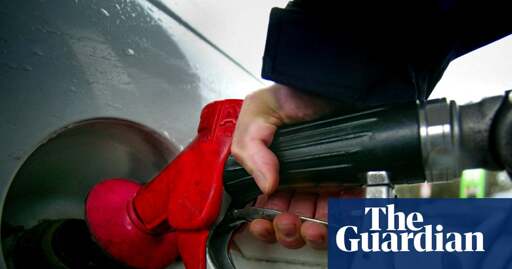
Hopefully this will make a number of people reconsider the size of the vehicles they require, and switch to smaller hybrids and/or EVs.
The new BYD ATTO1 is really tempting as a secondary run-around car for when me or the missus needs to do a solo trip.
That’s fine for the people that can afford this, have the home and subsidised solar infrastructure to charge it.
The rest of us can’t just make this switch.
Ofcourse, not everyone can afford to buy a new car at the drop of a hat.
The K-shaped economic recovery post-COVID (hell, post Great Recession even) has been absolutely brutal on household disposable income.
The only (slight) silver lining is that organic market incentives like this fuel-shock will cause a spike in new economical car sales, which will flow through into the used market over the next 2-5 years as leases expire or cars get traded in for the next upgrade.
If all that was selling continued to be fuel-guzzling road-hog SUVs and yank-style “trucks”, then that’s all that will be available in the used market for the next few years.
But even for that small group of people who can only afford at most ~$25K for their next vehicle - they at least now have the option of a brand new (and actually not cheap shit) EV -which they can usually just slow-charge off their mains power (thanks to being in a 200-240V country).
Doesn’t necessarily help those without access to off-street parking and proximity to a power point, but people are creative - and to paraphrase Jeff Goldblum’s character in Jurassic Park: “life finds a way (to an unattended public outlet”.
That’s wonderful, it truly is.
Still something we can’t participate in, won’t for a while, is a marker for the difference between us and that gap is growing.
I doubt I’ll be able to do to a second hand EV what I can do to my old Corolla. Nice to know the second hand cars of the future will be useless to us.
The result of that would be significantly more strain on the grid, and even more increases in power prices. Yay.
I love EV’s and my next car will be one, but we need to get our power grid shitshow sorted before any significant percentage of people get EVs or we’ll be up a creek without a paddle.
They don’t make supply hoping for extra demand anymore. It goes the other way around.