

- cross-posted to:
- world@lemmy.world
- cross-posted to:
- world@lemmy.world
cross-posted from: https://sh.itjust.works/post/56890254
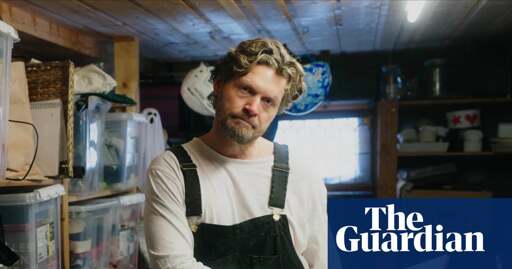
The video’s opening shot shows a man hiding under a bed snipping in a hole in someone’s sock. Seconds later, the same man uses a saw to shorten a table leg so that it wobbles during breakfast. “My job is to make things shitty,” the man explains. “The official title is enshittificator. What I do is I take things that are perfectly fine and I make them worse.”
The video, released recently by the Norwegian Consumer Council, is an absurdist take on a serious issue; it is part of a wider, global campaign aimed at fighting back against the “enshittification”, or gradual deterioration, of digital products and services.
“We wanted to show that you wouldn’t accept this in the analogue world,” said Finn Lützow-Holm Myrstad, the council’s director of digital policy. “But this is happening every day in our digital products and services, and we really think it doesn’t need to be that way.”
Coined by author Cory Doctorow, the term enshittification refers to the deliberate degradation of a service or product, particularly in the digital sphere. Examples abound, from social media feeds that have gradually become littered with adverts and scams to software updates that leave phones lagging and chatbots that supplant customer service agents.
“…there’s isn’t going to be a not-enshittified Norwegian Netflix opening up next year for you to subscribe to.”
Yes, but there could be. There’s no actual mechanism besides pure greed that leads to enshittification.
Imagine a service with a set price, no ads, never increases prices except to maintain operation in the face of inflation. Not beholden to shareholders, but rather to stakeholders.
Corporations have a legal obligation to make profit for their shareholders. However, being incorporated can also add legal protections for employees. So, we need such companies who are beholden once again to their stakeholders.
What you are describing is basically a worker co-op: workers decide collectively how to distribute or reinvest retained earnings and plan for down years, and there’s no rich guy who owns the company and needs it to keep growing their wealth, so there’s no one with the power and incentive to direct everyone to screw over the customers. These exist today but have a hard time scaling in capital-intensive industries like global streaming where you have to pay the thousands of laborers who work to produce the content.
The problem is that private capital is always going to want something back; equity means ceding control, and debt at commercial rates means the repayment pressure recreates the same growth imperative you were trying to escape. This is essentially the socialist critique of capitalism. One of the more interesting socialist answers to the scaling problem is public investment banks, which can capitalize co-ops at patient rates without taking equity.
Yeah, there is a mechanism that ensures it, and that’s the interaction between competition and artificial scarcity. Companies that try to do things in the best interests of their customers and society end up either getting bought out, or out competed and die. It’s a simple matter of survival given the rules of the game that we have set up. Greed is the mechanism that keeps these rules in place and even makes them worse, sure, but then, the rules are designed to encourage and reward greed as well; a positive feedback loop. To stop it, the rules need to be changed at a deeper level than most realize or are comfortable with, despite all the many benefits.
Yarrrrr
I think that would be amazing and, in the US at least, there is a new business entity that could do that.
One of the issues with trying to make Netflix not enshittify is that companies have a legal obligation to maximize shareholder value (Dodge v. Ford Motor Co. (1919) is the case if you want to read further). So if Netflix decided to try what you’re suggesting then some shareholder could sue the company and show that they’re not doing everything to maximize returns.
There are around 40 states in the US that recognize a new corporate entity type called a Public Benefit Corporation, which is allowed to operate without the legal obligation towards profit so that the company can pursue goals other than making money. The AI company Anthropic is an example, they are a Public Benefit Corporation. Because of that fact, they’re able to take a moral stand against the US Government… a decision that will cost them money, without worrying about shareholder retaliation.
I think eventually we’ll see more of these companies forming and I will certainly support them. However, as it stands now, we’re on our own and have to work together as a community to mitigate the worst of it. I’d certainly be interested in running a Public Benefit Corporation towards those ends, if you know anyone with a few tens of millions of dollars to burn!