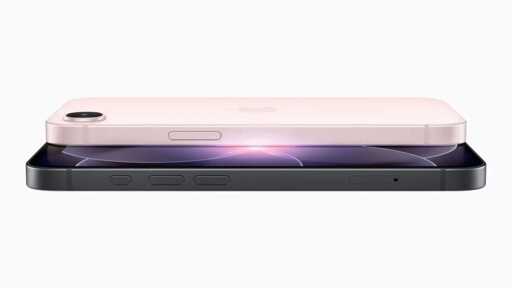
The new iPhone 17 model supports Apple’s AI tools, features faster wireless charging, and includes the new C1X modem developed by the company’s silicon team.
Okay, to address just the request for proof that the security order is graphene, stock pixel then everything else, look at the 2025 link I posted, table 2, android access support matrix - locked devices:
Huawei - cold and hot brute force extraction at least partially supported
Pixel - second column of both cold and hot sections, brute force password to decrypt user ce and brute force password are marked not supported.
Xiaomi - bottom row, hot and cold extraction and brute forcing supported.
So there you go, pixel over xiaomi and huawei. If you need proof that graphene is at the top, compare the standard android and graphene columns in table 3: android os access support matrix - google pixel in the same most recent link.
I understand that you’re saying something else may be out there. You’re right, unknown security vulnerabilities might be around that have serious effects on non Chinese phones.
Im saying there are security vulnerabilities in the hands of police which are least effective against iphones, pixels and graphene and that it’s best to choose devices based on what you know as opposed to what you assume.
It really seems to me like I’m posting exactly what you say you need to see over and over again, what am I missing?
The devices in that table are ancient. We just keep going in circles here. Huawei doesn’t even run Android nowadays. I’m starting to get the impression you’re not even reading the links you’re using here. The chart even says this clearly that devices they can brute force are up to 2021:
It’s really tough to hear you imply I’m not reading the things I post when I made reference to the same p40 model fact earlier today.
In that same page, on the bottom row the same column that had the p40 comment referenced recently added support for the snapdragon 8 elite.
On the unlocked devices support matrix (they become unlocked devices once brute forced) support for the dimensity 9400 is referenced.
Those are both chips used in q4 ‘24 and forward phones and the cop hardware brute forces and extracts them in February of ‘25. That’s not ancient at that time by any measure and not even ancient by the standards of today.
On that same page support for private space and 2nd space are referenced (those are the name for containers that harmony and hyper use) indicating support for extracting and decrypting harmonyos and hyperos containers indicating support for cracking harmonyos and hyperos. I pointed this out earlier today.
The fact that older devices have notes on them does not mean newer devices are not supported.
It’s really tough when I keep pointing out that your examples are not recent, and you continue to double down. Huawei p40 came out 2020 which is over half a decade ago. I repeatedly pointd out that you do not have any recent examples. Yet, you just keep providing more old models. I really don’t know what else to say here.
This is not a chip either, it’s a phone that isn’t in production anymore. It was succeeded by p50 which was then succeeded by Pura 90. So, if your best example, is a device that’s no longer in production, then you clearly need to retract your claim.
As you must obviously know, harmonyos and hyper have also been evolving since those devices were released just like android and ios have.
To sum up. You’ve provided zero evidence that any phones from Huawei or Xiaomi that are actually in production have vulnerabilities. And your argument that the that older devices have notes on them does not mean newer devices are not supported equally applies to iphone and pixel.
You have failed to provide any evidence to support your assertions, yet you just won’t retract them. This is frankly bizarre.
I literally just pointed out that while there is a note about a four year old device on the 2025 leak, there is also brute force support listed for socs that came out just a couple of months before the documents date.
I pointed it out in the post you just replied to.
My assertion is that pixels, graphene and iphones are safest against the hardware/software tools the police have. I’m using leaks of the capabilities of those tools to back that assertion up. While a leak from 2024 or 2025 might not have phones from 2026 on it, it provides a really clear picture of the capabilities of the police at those points in time.
I don’t think saying “look, there’s evidence that pixels, graphene and ios were best at foiling the cops a year ago and a couple years ago and five years ago and ten years ago, it stands to reason the same situation is true now” is all that contentious.
In lieu of actually having access to that software database to look up specific devices and os versions, which neither one of us have, the leaks seem like a pretty solid basis upon which to establish an understanding of police capabilities. The alternative that you’re proposing is literally assumptions.
So what would convince you of my point? It’s vanishingly unlikely that they’ll be a leak soon that will let us talk about the current latest and greatest, but would a leak that claims the ability to brute force a phone that was new back when the leak is dated be convincing to you? Do you need explicit model numbers or is just the chipset/family enough?


Okay, to address just the request for proof that the security order is graphene, stock pixel then everything else, look at the 2025 link I posted, table 2, android access support matrix - locked devices:
Huawei - cold and hot brute force extraction at least partially supported
Pixel - second column of both cold and hot sections, brute force password to decrypt user ce and brute force password are marked not supported.
Xiaomi - bottom row, hot and cold extraction and brute forcing supported.
So there you go, pixel over xiaomi and huawei. If you need proof that graphene is at the top, compare the standard android and graphene columns in table 3: android os access support matrix - google pixel in the same most recent link.
I understand that you’re saying something else may be out there. You’re right, unknown security vulnerabilities might be around that have serious effects on non Chinese phones.
Im saying there are security vulnerabilities in the hands of police which are least effective against iphones, pixels and graphene and that it’s best to choose devices based on what you know as opposed to what you assume.
It really seems to me like I’m posting exactly what you say you need to see over and over again, what am I missing?
The devices in that table are ancient. We just keep going in circles here. Huawei doesn’t even run Android nowadays. I’m starting to get the impression you’re not even reading the links you’re using here. The chart even says this clearly that devices they can brute force are up to 2021:
It’s really tough to hear you imply I’m not reading the things I post when I made reference to the same p40 model fact earlier today.
In that same page, on the bottom row the same column that had the p40 comment referenced recently added support for the snapdragon 8 elite.
On the unlocked devices support matrix (they become unlocked devices once brute forced) support for the dimensity 9400 is referenced.
Those are both chips used in q4 ‘24 and forward phones and the cop hardware brute forces and extracts them in February of ‘25. That’s not ancient at that time by any measure and not even ancient by the standards of today.
On that same page support for private space and 2nd space are referenced (those are the name for containers that harmony and hyper use) indicating support for extracting and decrypting harmonyos and hyperos containers indicating support for cracking harmonyos and hyperos. I pointed this out earlier today.
The fact that older devices have notes on them does not mean newer devices are not supported.
We are indeed going in circles.
It’s really tough when I keep pointing out that your examples are not recent, and you continue to double down. Huawei p40 came out 2020 which is over half a decade ago. I repeatedly pointd out that you do not have any recent examples. Yet, you just keep providing more old models. I really don’t know what else to say here.
This is not a chip either, it’s a phone that isn’t in production anymore. It was succeeded by p50 which was then succeeded by Pura 90. So, if your best example, is a device that’s no longer in production, then you clearly need to retract your claim.
As you must obviously know, harmonyos and hyper have also been evolving since those devices were released just like android and ios have.
To sum up. You’ve provided zero evidence that any phones from Huawei or Xiaomi that are actually in production have vulnerabilities. And your argument that the that older devices have notes on them does not mean newer devices are not supported equally applies to iphone and pixel.
You have failed to provide any evidence to support your assertions, yet you just won’t retract them. This is frankly bizarre.
I literally just pointed out that while there is a note about a four year old device on the 2025 leak, there is also brute force support listed for socs that came out just a couple of months before the documents date.
I pointed it out in the post you just replied to.
My assertion is that pixels, graphene and iphones are safest against the hardware/software tools the police have. I’m using leaks of the capabilities of those tools to back that assertion up. While a leak from 2024 or 2025 might not have phones from 2026 on it, it provides a really clear picture of the capabilities of the police at those points in time.
I don’t think saying “look, there’s evidence that pixels, graphene and ios were best at foiling the cops a year ago and a couple years ago and five years ago and ten years ago, it stands to reason the same situation is true now” is all that contentious.
In lieu of actually having access to that software database to look up specific devices and os versions, which neither one of us have, the leaks seem like a pretty solid basis upon which to establish an understanding of police capabilities. The alternative that you’re proposing is literally assumptions.
So what would convince you of my point? It’s vanishingly unlikely that they’ll be a leak soon that will let us talk about the current latest and greatest, but would a leak that claims the ability to brute force a phone that was new back when the leak is dated be convincing to you? Do you need explicit model numbers or is just the chipset/family enough?