

cross-posted from: https://news.abolish.capital/post/49178
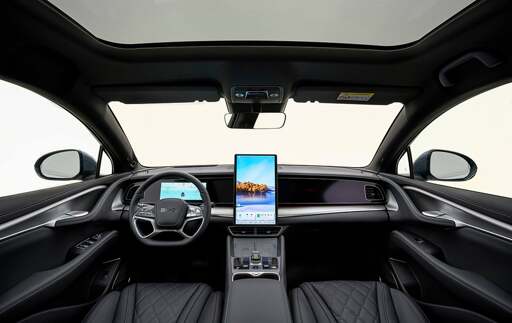
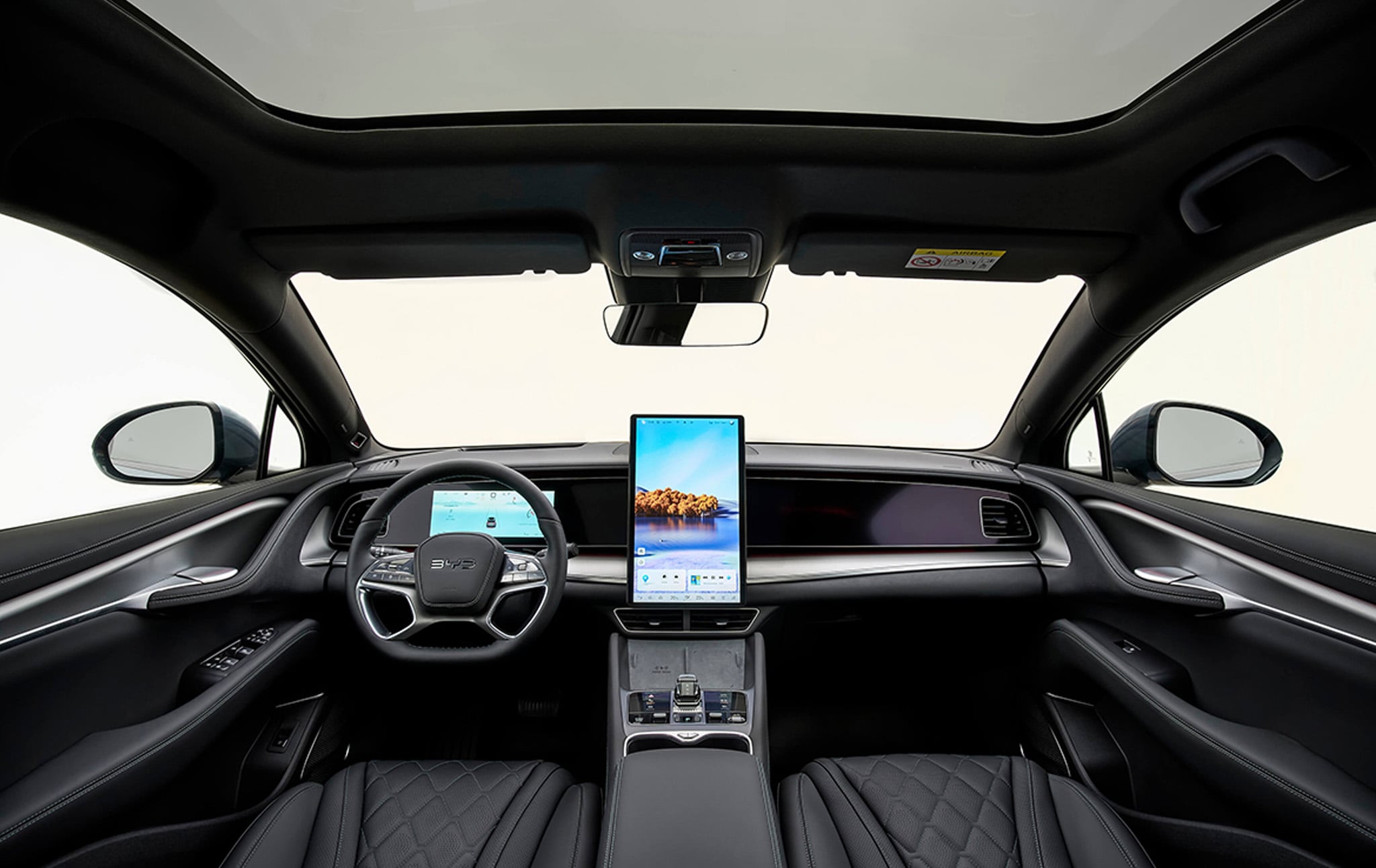
I took my first ride in a Chinese car recently. Not in the U.S., of course, since sky-high tariffs have made them almost impossible to import. I was visiting family in the U.K., and we rented a BYD Sealion SUV. And let me tell you: I saw immediately why American car companies are desperate to have these things kept out of this country. It was elegantly designed, incredibly comfortable, and a smooth ride.
From blog via This RSS Feed.

They’re cheap because BYD received about $1.86 billion dollars in government subsidies last year.
Like in other sectors, they flood the market with cheap goods to put competitors out of business. Then they’re the only car company in town and they have you by the balls.
Many countries subsidiese their car brands. In Germany exact numbers are not known, because the government works for the companies I guess, but most experts assume that brands like Volkswagen receive about 1 billion euros (or 1.15 billion US dollars) a year. Source A Source B. I’m no expert for other countries, but a quick research lead to the claim that until 2015 Tesla and the adjacent businesses (SpaceX etc.) had received 4.9 billion US dollars in subsidies Source. I don’t think its fair to say that they are cheap just because they receive subsidies, they are just getting what everyone else is.
China is subsidizing it’s auto industry far less that North America and Europe.
Not really. European countries usually subsidize purchasing EVs. China subsidizes manufacturing them, including for foreign markets.
If you buy a Chinese EV, it still get a subsidy from your own government too (if it still has such a program - mine does not), not just the Chinese one.
From the article about BYD:
From your first article about VW (I used google translate, let me know if it got anything wrong, mein Deutsch ist sehr schlecht):
So we don’t know what BYD’s true equivalent for the €6.4 billion (over 8 years) number is. They get grants for building manufacturing plants and such too. But here’s what we do know: their equivalent for VW’s €2.4 billion (over 8 years) is that $1.86 billion dollar figure (for one year). That’s the subsidies for actually manufacturing and selling cars. And crucially, since that €2.4 billion (again, over 8 years) was from purchase subsidies, that means BYD cars are eligible for those too, that’s not a VW-specific subsidy. Unless Germany has rules saying EV buyers only get subsidies for buying German EVs, but I don’t know that they do.
Basically, China pays BYD 2-3k (IIRC) to build an EV and then Germany pays you 3-6k to buy an EV, while China also has significantly cheaper labour. BYD’s average salary (including everyone from factory workers to engineers and executives) was 1500 EUR per month in 2025, from their own financial reports (total cost divided by head count). That includes taxes, benefits, etc. Now consider what a factory worker makes in Germany and then also consider what engineers make in Germany. According to this article, the LOWEST in-house employment contract VW has, was 2400 EUR per month in 2024. There are also allegations of 7 day work weeks in BYD’s Hungarian plant, but those might be from a biased source.
I had a look at the original report by BYD as the site linked by the other commenter didn’t include the information and seemed AI generated (some numbers were actually a bit of, though not by much). According to it the 1.86$ billion are the only directly paid subsidies BYD received in 2025. All other subsidies were loans with favorable conditions, which aren’t directly relevant (The report is 300+ pages long I may have missed something) Source. Currently Germany supports all EV purchase, so the 2.4$ billion should not be counted, but according to the BAFA this is planned/considered to be made exclusive to EU made cars. Source (German). The 6.4$ billion should IMO be counted against the 1.86$ billion as they are both direct founding, and apparently the only direct. While a bit lower this still places VW in the about a billion dollar (925$ million). Additionally, even though the subsidies are universal the EU has placed a tariff on Chinese EVs since 2024 that ranges from 27%-47% depeding on the manufacturer. Source. The working conditions and wages at BYD are of course lower than at VW, even if this is partially countered by the lower standard of living in China, however we don’t no how much of the final car the companies actually produce (how much of it is done by them and not just bought premade, likely in China).
Anyway I don’t think this comparison could ever be 100% fair as China and Germany have different economic models, Germany already established its car industry while Chinas is still relatively up and coming etc. I do however think that it is not accurate to say “they are cheaper because government subsidies” as there are many more factors.
Chinese wages are expensive enough that Western companies are preferring outsourcing labor elsewhere.
Chinese wages for western companies, sure. BYD’s not a western company, they get twice as many hours per week from their employees and nothing will be done to them because it’s all sponsored by the government.
Put down the flavorade.
BYD does 996 in China. Reportedly the Hungarian employees are being told to work 7 days a week, which the EU is now investigating since it’s not kosher round these parts.
We could also subsidize this if we chose to. It’s not cheating, they don’t have to play by America’s made-up rules that they don’t follow themselves.
Most western countries subsidize the purchase of EVs, regardless of where they’re manufactured. China subsidizes manufacturing EVs (and also purchase, but that’s irrelevant if you’re not buying in China). If you buy a Chinese EV in a western country that has EV subsidies, they get to double dip in subsidies, while also paying their employees significantly less due to the lower CoL in China.
Should European countries also start subsidizing manufacturing? I don’t think we could afford it, particularly if we wanted to truly compete and subsidize cars sold to China as well, like they do. China simply has too much money and it’s amplified even further by the super cheap labour.
How dare China offer citizens a higher standard of living at a lower cost, when prior generations worked so hard to checks notes do exactly this?
Not entirely sure that the standard of living for factory workers in China is as high as it is for union jobs in a non-American country in the west. For one, 996 is STILL a thing in many companies in China even if illegal officially. Try pulling that shit in Germany, see how far that gets you.
Germany is discussing a four-day workweek. BYD has a 14-day workweek
For the umpteenth time, 996 is illegal in China, and businesses caught doing this are prosecuted. And it’s more than a fine that’s pennies on the multimillions.
Only if they’re allowed to be caught though. China has swept things under the rug before if it would be bad for national interests.
China is not the paragon of virtue you seem to think it is. The fact that 996 was extremely commonplace just a few years ago until workers cries out en masse is proof enough. Surely the government must’ve known on some level that all of its biggest companies were enforcing 996, but since it wasn’t discussed widely enough, it was kept tidily under the rug since it’s good for the economy. East-Asian work culture in general is toxic and China is no better than Japan or Korea.
Workers voted* for it. Please. I’ve said some mighty ignorant things and some recently, and admitted my mistakes. Please avail yourself of something other than Western psyops.
Workers fairly elect their representatives, and discuss what is important to them and how best to achieve their goals. These things are then voted on and accepted/integrated into five year plans, or rejected/put on hold. This obviously isn’t the best explanation, but a quick down n dirty. Please look outside your propaganda sources for more information. Or just look at where China was 100, 50, 25 years ago in income, housing, education, health, literacy, and where they are now. Ffs
China adds about as many new billionaires per year as the US. Which is obviously fewer per capita since it’s a bigger country, but the healthy amount is zero, especially for a supposedly communist country.
The truth is, it’s about as capitalist as most western countries. The only major country that’s worse is the US, which is a special kind of shitty. When it comes to workers rights, the Chinese have it worse than most western countries (US being a notable exception). The five year plans are of course great for things like infrastructure though. They get to prioritize government spending in areas where it’s most beneficial. But that doesn’t mean the government always has the worker’s back. Saving face is incredibly important in some Asian cultures and China knows a lot about saving face. If there’s something bad happening and it’s possible to sweep it under the rug to protect the economy and corporations, they will do it. Hell, they’ve protected TESLA from common people. A foreign company. Think of what they’ll do for local megacorporations.
US automakers have received $85 Billion in taxpayer money since 2008.
So where are the $20,000 cars?
You mean like French brands like Renault receiving free money since the 80s? If I can afford a Chinese car, it’s still better than a French brand that I cannot afford.
Why do you think the only US brand available in France is Ford? Because they are the only ones who managed to stay despite a lack of subsidies. Chevrolet tried to enter the French market a few years ago, they closed shop and said “fuck it.”
Renault has two EVs at 20K and 25K euros. Twingo and 5 EV.
It’s nice of you to think that everyone has 20k€ to waste on a new car.
https://brandsownedby.com/who-owns-byd/
For public reasons.
Guess who subsidizes US car manufacturers, and guess how much they cost. Or rta.
So what?
As if the US government or US compabies don’t play the same “underhanded” tactics to harm competition.
Selling at a loss to earn market share is a perfectly valid strategy for US corpos. Why is China supposedly doing the exact same thing suddenly not as nice?