

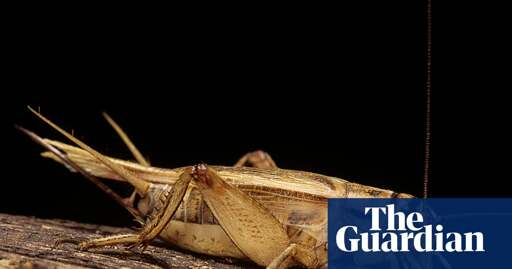
The behavioural cue of ‘flexible self-protection’ is a way to establish whether an animal feels pain, scientists say
Crickets that received the hot probe “overwhelmingly” directed their attention to the affected antenna – they groomed it more frequently, and tended to it over a longer period of time, he says. “They weren’t just agitated and flustered. They were directing their attention to the actual antennae that was hit with this hot probe.”
It’s not to warn the rest, it’s even way cooler.
The smell attracts carnivores, and tells them “Hey there’s some tasty herbivores over here” so they take care of the problem. The grass is snitching on the sheep.
Presumably that’s why we like the smell of freshly mown grass, too (but such statements are impossible to prove in evolutionary biology).
I see, that’s why sometimes we have to touch grass, so we can high five it for being a bro.
That’s cool AF, thanks.
“The Grass is Snitching on the Sheep” sounds like the ramblings of a madman but here it’s just awesome.