I’m happy with my slightly modded Ender 3 Pro, but if I ever upgrade the Snapmaker U1 looks nice. I’ll only buy from a company that supports open source firmware. Bambu is trash, unfortunately every 3D printing related YouTuber seems to have happily taken a sponsorship from them so they are everywhere now. I hate it.
The problem with Bambu is they are not trash at all. Their printers are high-quality, and the way they integrate with their proprietary slicer (that they totally stole from the community before locking it down) and MakerWorld is genuinely excellent.
I have 3 Bambu printers. I don’t buy their products anymore (my newest printer is an SV-08 max), but I still use the ones I have and they’re excellent, easy machines. And if someone new comes to me wanting a starter “just click print and it works” solution, I’m still likely to point them towards an A1 mini. They’re cheap and work great out of the box with zero handholding from me required.
And that’s why I kinda hate them. They don’t have to be dickheads, but choose to be. Their products are fantastic, and I’d honestly be using Bambu Studio for them instead of Orca anyway.
Especially the makerworld integration for casual users. My wife puts about 80% of the print time on ours and it’s all from the android app, printing models she finds on the app. I though of getting a Prusa, but to be realistic I can’t even put the P1S in LAN only mode because that part won’t work, so I’m stuck with it for now.
Apparently their dual extruder implementation works far better than any other on the market which is a huge deal for printing supports that don’t stick. Several of my friends have them and all love the print quality (it’s far better than anything I’ve gotten out of my printers). The pricing is admittedly great too.
I don’t have any issues with my i3 so won’t be getting one anytime soon, but I absolutely see why people new to 3D printing will go straight to Bambu. It sucks that they actively chose to be bad for the open source community they built their company on top of.
To be fair all of the companies in the 3D printing industry built their business on the backs of the open source community and pretty much all of them are some level of shitty towards the community. Creality and most others regularly violate licenses by dragging their feet and only complying when people really complain. Even Prusa has started to back away from open source.
Bambu is just catching shit for being the Apple of 3D printing. They are trying the hardest to build a walled garden.
I’ve been interested in getting a 3d printer for a while now but am not deep into what’s out there, does the ender 3 pro require any cloud or services that I can’t run locally to function?
Edit: same question for the snapmaker U1.
Also, where do you source your fillament from? Any other ongoing maintenance requirements (material-wise)?
I want a 3d printer, not some new relationship with a corporation.
Ender 3 Pro is a completely offline printer. It has a microSD slot and a USB port, that’s it. No network connectivoty at all. It runs Marlin firmware which is a long-standing Arduino-based open source 3D printer firmware. It’s highly customizable and upgradable. I added a CR Touch bed probe to mine and rebuilt the firmware to enable the unified bed leveling features. It’s not the most user friendly but it’s a decent, cheap platform, fully open source, and puts out decent prints.
You can also run klipper on them if you want network connectivity. Granted you need a raspberry pi to run klipper so there is that.
After running klipper on my Ratrigs I can’t even consider Marlin anymore. Modifying a config file and restarting is less painful than having to compile and flash a bin for every modification or update.
That’s what I switched to about 2 months after getting my Ender 3 S1 Pro. Klipper running from a RPi, lets me push sliced files out over WiFi to the printer right from Orca. So much better than dealing with SD cards.
I’ve come from an ender 3 pro to a Bambu P1S with AMS. As others have said the Bambu environment makes it “apple-like” (for better or for worse) to print. Set up, to print is maybe an hour? You spend the majority of your time with the printer actually printing. Which is why everyone (I included) are so upset about how Bambu is handling this.
Meanwhile the ender you spend the majority of your time getting the printer settings right, adding mods, adding firmware, trying new slicers, bed leveling, etc. I spent so much more time tinkering with my ender than printing that i just gave up printing altogether.
If you want to just print things it’s really hard to beat a Bambu. If you want to tinker and actually learn what 3d printing does and how it works, other printers like an Ender is the way to go.
Thank you, this is very helpful information, too. Lucky for me, I like to reinvent the wheel from time to time for fun, so the more open option isn’t scary, though it does sound like there’s a decent chance my 3d printer will just be a dust collector what with all the other wheels I started reinventing but never finished. But I think I will add another hobby to the collection.
I went with the Qidi Q1 Pro and I’ve been very happy with it. Orca Slicer’s built in profiles for it have worked great so I didn’t have to tinker. It runs Fluidd so once it was connected to the local network I could monitor and control it that way (and it will display directly in Orca Slicer).
There is a setting in the printer’s interface to restrict it to local network only (and just to be absolutely certain I blocked it in my firewall as well). There are no penalties for not connecting it to the internet.
I don’t know much about the Snapmaker U1 other than what’s stated on this thread and on their site. Just looks like a more open alternative to Bambu if you need fancy features like multi filament printing.
I buy most of my filament from Micro Center (their Inland brand) and some I’ve gotten from Amazon.
Thanks for the quick replies! That snapmaker U1 looks great, but I do see that page referencing their app, so it could go either way, depending on whether their app is a mandatory part of the pathway.
The other one sounds like it might be a great way to get my daughter into more techy stuff, since she loves 3d printed stuff, so modifying it and needing to also modify the firmware might even be a plus for that.
I do see that page referencing their app, so it could go either way, depending on whether their app is a mandatory part of the pathway.
It looks like you can control it with vanilla Orcaslicer. See the last post in this Snapmaker forum thread, for instance. It may or may not be willing to take gcode through the USB port—the specs indicate it has one.
It looks to me like they’re continuing in their usual direction of fairly open software on mostly proprietary hardware.
I own a U1 and I use it completely offline from the internet. I upload files to it from OrcaSlicer or use the USB port.
I can even use the smart phone app on my local wifi network.


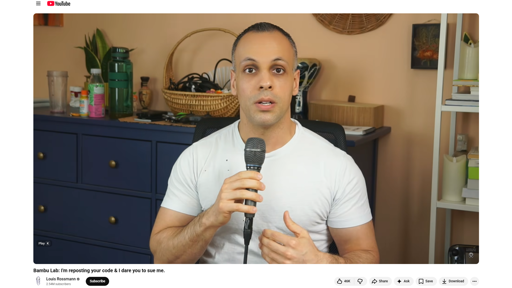
I’m happy with my slightly modded Ender 3 Pro, but if I ever upgrade the Snapmaker U1 looks nice. I’ll only buy from a company that supports open source firmware. Bambu is trash, unfortunately every 3D printing related YouTuber seems to have happily taken a sponsorship from them so they are everywhere now. I hate it.
The problem with Bambu is they are not trash at all. Their printers are high-quality, and the way they integrate with their proprietary slicer (that they totally stole from the community before locking it down) and MakerWorld is genuinely excellent.
I have 3 Bambu printers. I don’t buy their products anymore (my newest printer is an SV-08 max), but I still use the ones I have and they’re excellent, easy machines. And if someone new comes to me wanting a starter “just click print and it works” solution, I’m still likely to point them towards an A1 mini. They’re cheap and work great out of the box with zero handholding from me required.
And that’s why I kinda hate them. They don’t have to be dickheads, but choose to be. Their products are fantastic, and I’d honestly be using Bambu Studio for them instead of Orca anyway.
That’s the problem, it cannot be proprietary when based off slic3R. It’s not their property to lock down.
The slicer is not proprietary, but the networking plugin for printer communication is
deleted by creator
Especially the makerworld integration for casual users. My wife puts about 80% of the print time on ours and it’s all from the android app, printing models she finds on the app. I though of getting a Prusa, but to be realistic I can’t even put the P1S in LAN only mode because that part won’t work, so I’m stuck with it for now.
Apparently their dual extruder implementation works far better than any other on the market which is a huge deal for printing supports that don’t stick. Several of my friends have them and all love the print quality (it’s far better than anything I’ve gotten out of my printers). The pricing is admittedly great too.
I don’t have any issues with my i3 so won’t be getting one anytime soon, but I absolutely see why people new to 3D printing will go straight to Bambu. It sucks that they actively chose to be bad for the open source community they built their company on top of.
To be fair all of the companies in the 3D printing industry built their business on the backs of the open source community and pretty much all of them are some level of shitty towards the community. Creality and most others regularly violate licenses by dragging their feet and only complying when people really complain. Even Prusa has started to back away from open source.
Bambu is just catching shit for being the Apple of 3D printing. They are trying the hardest to build a walled garden.
I’ve been interested in getting a 3d printer for a while now but am not deep into what’s out there, does the ender 3 pro require any cloud or services that I can’t run locally to function?
Edit: same question for the snapmaker U1.
Also, where do you source your fillament from? Any other ongoing maintenance requirements (material-wise)?
I want a 3d printer, not some new relationship with a corporation.
Ender 3 Pro is a completely offline printer. It has a microSD slot and a USB port, that’s it. No network connectivoty at all. It runs Marlin firmware which is a long-standing Arduino-based open source 3D printer firmware. It’s highly customizable and upgradable. I added a CR Touch bed probe to mine and rebuilt the firmware to enable the unified bed leveling features. It’s not the most user friendly but it’s a decent, cheap platform, fully open source, and puts out decent prints.
You can also run klipper on them if you want network connectivity. Granted you need a raspberry pi to run klipper so there is that.
After running klipper on my Ratrigs I can’t even consider Marlin anymore. Modifying a config file and restarting is less painful than having to compile and flash a bin for every modification or update.
That’s what I switched to about 2 months after getting my Ender 3 S1 Pro. Klipper running from a RPi, lets me push sliced files out over WiFi to the printer right from Orca. So much better than dealing with SD cards.
I’ve come from an ender 3 pro to a Bambu P1S with AMS. As others have said the Bambu environment makes it “apple-like” (for better or for worse) to print. Set up, to print is maybe an hour? You spend the majority of your time with the printer actually printing. Which is why everyone (I included) are so upset about how Bambu is handling this.
Meanwhile the ender you spend the majority of your time getting the printer settings right, adding mods, adding firmware, trying new slicers, bed leveling, etc. I spent so much more time tinkering with my ender than printing that i just gave up printing altogether.
If you want to just print things it’s really hard to beat a Bambu. If you want to tinker and actually learn what 3d printing does and how it works, other printers like an Ender is the way to go.
Thank you, this is very helpful information, too. Lucky for me, I like to reinvent the wheel from time to time for fun, so the more open option isn’t scary, though it does sound like there’s a decent chance my 3d printer will just be a dust collector what with all the other wheels I started reinventing but never finished. But I think I will add another hobby to the collection.
I went with the Qidi Q1 Pro and I’ve been very happy with it. Orca Slicer’s built in profiles for it have worked great so I didn’t have to tinker. It runs Fluidd so once it was connected to the local network I could monitor and control it that way (and it will display directly in Orca Slicer).
There is a setting in the printer’s interface to restrict it to local network only (and just to be absolutely certain I blocked it in my firewall as well). There are no penalties for not connecting it to the internet.
I don’t know much about the Snapmaker U1 other than what’s stated on this thread and on their site. Just looks like a more open alternative to Bambu if you need fancy features like multi filament printing.
I buy most of my filament from Micro Center (their Inland brand) and some I’ve gotten from Amazon.
Thanks for the quick replies! That snapmaker U1 looks great, but I do see that page referencing their app, so it could go either way, depending on whether their app is a mandatory part of the pathway.
The other one sounds like it might be a great way to get my daughter into more techy stuff, since she loves 3d printed stuff, so modifying it and needing to also modify the firmware might even be a plus for that.
It looks like you can control it with vanilla Orcaslicer. See the last post in this Snapmaker forum thread, for instance. It may or may not be willing to take gcode through the USB port—the specs indicate it has one.
It looks to me like they’re continuing in their usual direction of fairly open software on mostly proprietary hardware.
I own a U1 and I use it completely offline from the internet. I upload files to it from OrcaSlicer or use the USB port. I can even use the smart phone app on my local wifi network.