
If you are interested in privacy you are probably interested in password storage … plus I wanted everyone to know about the inevitable future enshitification of this product. Spread the word and replacement recommendations are welcome too.

  • tomatolung@sopuli.xyz
    link
    fedilink
    arrow-up
    1
    ·
    50 minutes ago

    The Article says:

    A Note for Vaultwarden Users

    Whether self-hosting stays viable long-term is the real question worth sitting with.

    Right now it works because Bitwarden’s clients are open source and the server API is public. Vaultwarden implements that API, and the official apps can’t tell the difference. That depends on Bitwarden continuing to publish open source clients and not restricting which servers they’ll talk to — neither of which is guaranteed under new management.

    The brake on the worst case: self-hosting is a listed Enterprise feature that generates real revenue. Killing it upsets paying business customers. That matters.

    The catch: what Bitwarden sells to enterprises is their own official server stack, not Vaultwarden. Vaultwarden exists in a space they’ve tolerated but never endorsed. If the calculus shifts, the tolerance ends without any announcement. Just let the API drift until compatibility breaks on its own.

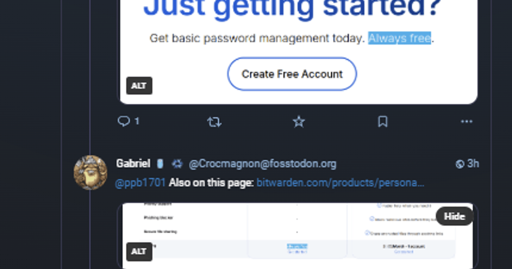
    I don’t think that’s imminent. But I also thought the free tier commitment was ironclad, and “Always free” isn’t on the page anymore.The real safety net is that Bitwarden’s clients are Apache 2.0 licensed. A fork would need a rebrand to stay clear of the trademark — different name, tweaked UI, same engine — but that’s a speed bump, not a wall. The web vault works through any browser regardless of what happens to the apps, so worst case you’d lose autofill temporarily while a fork caught up. Inconvenient, not catastrophic. Vaultwarden itself is already proof the model works.

    Watch the clients. If they go closed, the community will notice fast, and the fork will follow.