

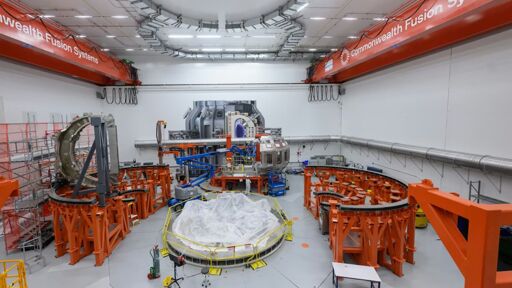
Commonwealth Fusion Systems (CFS) has verified the core plasma physics assumptions for its upcoming ARC fusion power plant following a peer-reviewed study published in the Journal of Plasma Physics.
The research confirms the ARC reactor design aligns with known physics, allowing the company to shift its focus toward detailed hardware engineering…
According to the validated models, the ARC plant will produce approximately 1.1 gigawatts (GW) of fusion power to generate 400 megawatts (MW) of net electricity for the grid…
CFS engineers are using this simulation framework to optimize upcoming design iterations, adjusting dimensions like tokamak width and divertor length to refine reactor performance before manufacturing begins.
That said, fusion (and fission as well) isn’t really a great buffer because you don’t really want to be switching it on and off. It’s so expensive that it’s only really economical to run it constantly 24/7. So while fusion could be an awesome and perfectly consistent base load, it doesn’t solve the energy variability problems.
Ultimately utilizing renewables just requires some amount of energy storage and/or quick to activate gas generators.