Model vertex count has a negligible influence on size. Model data is small (provided the textures aren’t baked in), and modern GPUs can render ten thousand separately animated instances of the same base model simultaneously when using the right techniques.
It’s the insanely high-resolution textures and audio that bloat install size. That and including the same files many times to reduce HDD seek time, but that’s finally becoming less common as SSDs take over (or at least it was until the current component shortage).
I miss when HD texture packs were separate downloads. If I’m only running a game in 1080p, downloading a hundred gigabytes of 8k textures I’ll never use is a colossal waste of bandwidth and disk space.
Motion blur and depth-of-field were bad enough. Now we have AI upscaling and frame gen that absolutely destroy fine details, but are almost required to get a high framerate in some games due to a lack of optimization (I’m looking at you, half of all released Unreal Engine 5 titles).
I remember being appalled when Titanfall 1 had a separate 80 GB download just for the audio because they couldn’t be bothered to compress it. Audio compression has been largely a solved problem for 20 years now, even if the result is somewhat lossy.
If I’m only running a game in 1080p, downloading a hundred gigabytes of 8k textures I’ll never use is a colossal waste of bandwidth and disk space.
I kinda wonder if there’s a visible difference between native 1080p textures and those that are downscaled from a higher resolution. I imagine there isn’t, but I am curious about it.
My favorite instance of unnecessary file bloat was due to a bug. The Microsoft Store and Epic Games versions of Fallout 3 would download the full game once for every single translation the game supported, with every translation in its own subfolder. A nine gig game ended up taking over forty gigs of hard drive space.
And then there’s shit like ARK: Survival Evolved that requires the better part of a terabyte with all the DLC. Infuriatingly they did eventually reduce the install size, but only for the terrible UE5 port that nobody asked for.
And on the opposite end of things, Helldivers 2 reduced their install size by over a hundred gigs (down to around twenty total) by simply removing duplicate data from the game files, if anyone was wondering how expensive that HDD seek time optimization I mentioned was in disk space.
Massively depends on where the texture is used. If it’s for a main character that gets closeups, body and especially detailed textures can be massive and can add up fast even when compressed. Little low contrast details can definitely work fine and go unnoticed next to super hifi textures while being small themselves, though so many just make everything hifi. Bleh.
I miss when games went for lowfi art instead of the modern deluge of AAA pseudo-cinema 100G+ games or friendslop with the art direction of a two day game jam… (obviously there are outliers, but the industry trends are disappointing lately)


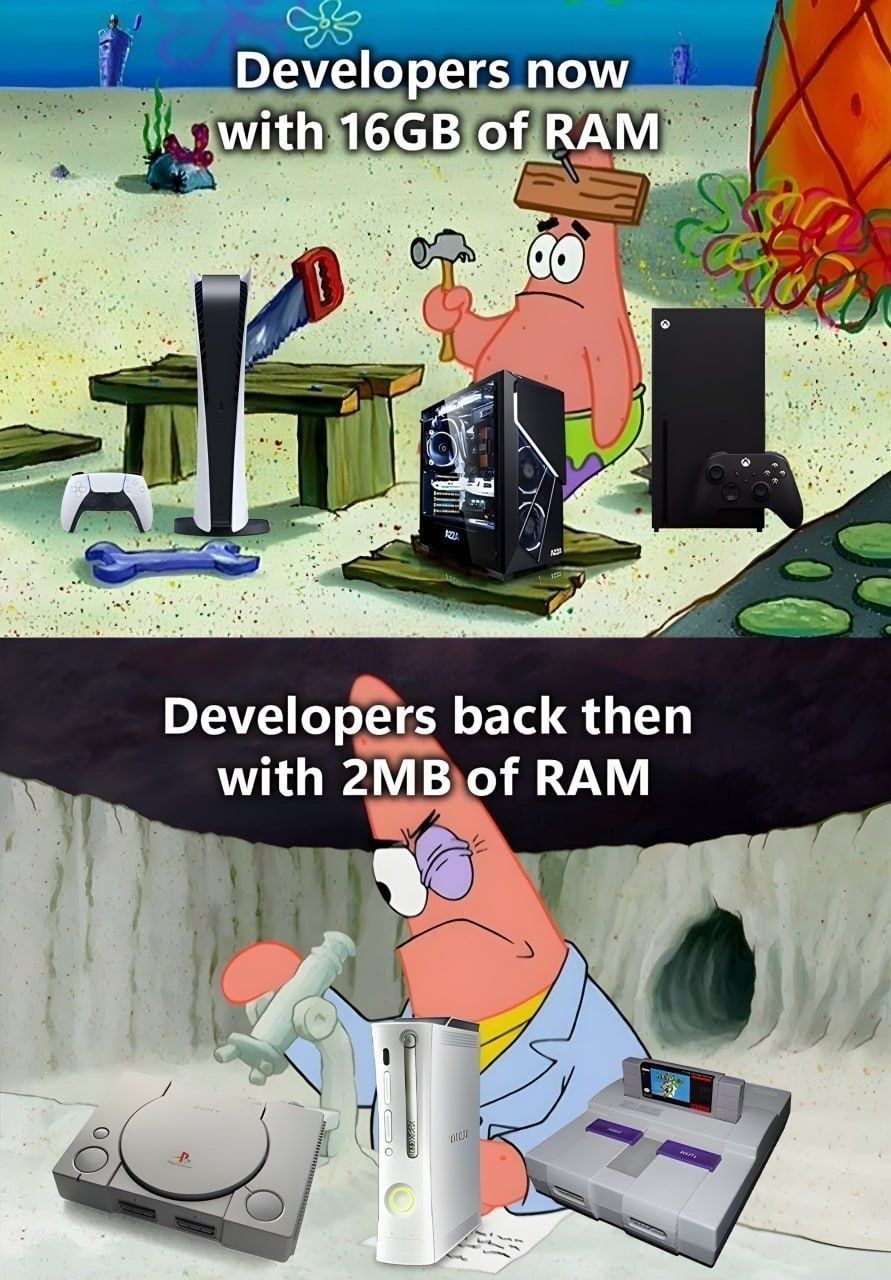
Model vertex count has a negligible influence on size. Model data is small (provided the textures aren’t baked in), and modern GPUs can render ten thousand separately animated instances of the same base model simultaneously when using the right techniques.
It’s the insanely high-resolution textures and audio that bloat install size. That and including the same files many times to reduce HDD seek time, but that’s finally becoming less common as SSDs take over (or at least it was until the current component shortage).
I miss when HD texture packs were separate downloads. If I’m only running a game in 1080p, downloading a hundred gigabytes of 8k textures I’ll never use is a colossal waste of bandwidth and disk space.
We need those super hi-res textures so that we can put a bunch of blurry effects on top.
Motion blur and depth-of-field were bad enough. Now we have AI upscaling and frame gen that absolutely destroy fine details, but are almost required to get a high framerate in some games due to a lack of optimization (I’m looking at you, half of all released Unreal Engine 5 titles).
I remember being appalled when Titanfall 1 had a separate 80 GB download just for the audio because they couldn’t be bothered to compress it. Audio compression has been largely a solved problem for 20 years now, even if the result is somewhat lossy.
I kinda wonder if there’s a visible difference between native 1080p textures and those that are downscaled from a higher resolution. I imagine there isn’t, but I am curious about it.
My favorite instance of unnecessary file bloat was due to a bug. The Microsoft Store and Epic Games versions of Fallout 3 would download the full game once for every single translation the game supported, with every translation in its own subfolder. A nine gig game ended up taking over forty gigs of hard drive space.
And then there’s shit like ARK: Survival Evolved that requires the better part of a terabyte with all the DLC. Infuriatingly they did eventually reduce the install size, but only for the terrible UE5 port that nobody asked for.
And on the opposite end of things, Helldivers 2 reduced their install size by over a hundred gigs (down to around twenty total) by simply removing duplicate data from the game files, if anyone was wondering how expensive that HDD seek time optimization I mentioned was in disk space.
Massively depends on where the texture is used. If it’s for a main character that gets closeups, body and especially detailed textures can be massive and can add up fast even when compressed. Little low contrast details can definitely work fine and go unnoticed next to super hifi textures while being small themselves, though so many just make everything hifi. Bleh.
I miss when games went for lowfi art instead of the modern deluge of AAA pseudo-cinema 100G+ games or friendslop with the art direction of a two day game jam… (obviously there are outliers, but the industry trends are disappointing lately)
FLAC is pretty good compression.