- 658 Posts
- 1.49K Comments



 1·8 hours ago
Of course. I just don’t think “I can do it, therefore Denmark can do it” is that good of an argument.

I don’t agree with their decision, but migrating any large organization to new software is typically a lot more difficult than migrating a single home user.


 12·23 hours ago
Oh, that reminds me: is Haiku still a slop-free OS?
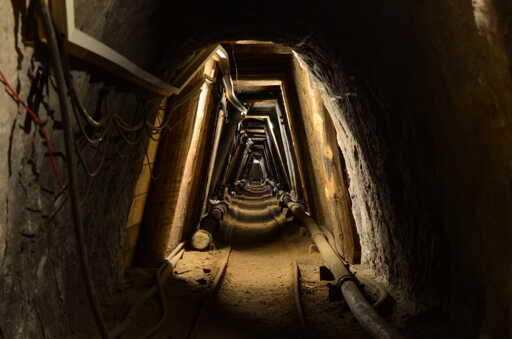
Just don’t use OpenAI or Anthropic cloud models for reverse engineering your TV’s APIs. This guy got banned from OpenAI for doing this research on his Samsung TV, and there are reports of Anthropic models starting to refuse reverse engineering tasks, having been given new guidance. Apparently proles learning about the corporate surveillance they’re under is a step too far.

 251·4 days ago
Boycott it. Don’t give money to J K Rowling, one of the most poisonous people in the UK.
 90·4 days ago
I could have been a master hacker, but I only tried 1, 2 and 3 then gave up. Curse my lack of persistence!
 16·4 days ago
Are you talking about used ones? There are no new ones for less than a thousand.
Maybe it’s more: funny how areas that use voting machines come up Republican.
There was a story recently about how a lot of voters are just asking AI who they should vote for. So vibe voting is effectively happening. Good job the AI companies aren’t all run by fascists or anything.
Or maybe he has a relative who’s good with the cyber.
A security model that depends on every random IOT device receiving timely firmware updates for its entire lifetime is not designed for the world we actually live in.
It’s commonly used and you often see the abbreviation AITM these days. You’re right about the reason.
My Vanadium just refused all 12 connections. But maybe some of the DNS blocking or Suricata on my LAN might have helped.


His face has meanness and insecurity written all over it. In orange.

 17·10 days ago
Distributed, self-repairing storage would seem to be the way to go. Anna’s Archive is huge so practically it might be necessary to prioritize the most threatened books. And someone would need to pay for the storage, whether it’s in data centres or in people’s homes. I remember many years ago experimenting with Freenet and Tahoe-LAFS, but I don’t know if anyone’s using systems like this for books, or if they have the adoption they’d need to be really robust.
 47·10 days ago
“You’ve read your last free article.”
Do they know how ominous that sounds? It reads like they got mad at my freeloading and sent out a hitman.
 5·10 days ago
Trump and Epstein.







An electron meeting a positron will apparently release 1.022 MeV of energy. I’m no physicist but my understanding is that this isn’t huge (it converts to 1.637×10⁻¹³ Joules). For comparison, fission of a uranium-235 nucleus releases about 200 MeV.