

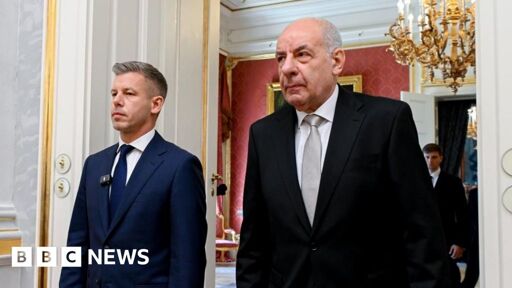
The Hungarian parliament has voted to remove President Tamás Sulyok from office, who was widely seen as a loyalist of former prime minister Viktor Orbán who lost power in April after 16 years.
Prime Minister Péter Magyar’s Tisza party used its two thirds majority to steamroll through the 17th amendment to the constitution, ending the term of Sulyok and the head of the Constitutional Court Péter Polt.
…
Orbán himself has hardly been seen in public, and refused to take his seat in parliament. On Monday, he left Hungary to watch the finals of the football World Cup in the US.
There is growing anger with Orbán within what is left of Fidesz. Many feel bewildered by his absence.
…
Changing the constitution to end terms is still suspicious. Orban stepping down after a regular election shows that the system worked. Why not wait until they are regularly replaced? With the 2/3 majority there was always the option to change the constitution if they abused their position of power.
if you let the comprised parts of governments stay as is, you will never get rid of the old fallen regime.
i agree this is not an elegant solution but it sure is effective.
also keep in mind that it’s just the preparation for a new process where they will literally write a new constitution from scratch, and they don’t want to deal with fidesz puppets. they need real feedback where they go wrong and Sulyok just signs everything without question…
Trolling as per usual
Having a controversial opinion as per usual. You can look up my history, I have that opinion about the term terminations since the plan was first announced.
You don’t see the times when I agree because then I don’t write a comment.
I think messing with the separation of power is a severe issue that shouldn’t be accepted just because the right person won. Having somebody in those positions that doesn’t automatically agree is a good thing.
But is the current president separated from power?
The claim is the current president is a Fidesz supporter, rather than an independent onlooker ensuring democratic process.
Presidents/Kings in Europe’s role is to stop a parliament in case they begin to transition into authoritarianism or enact laws that are indisputably against the people.
There’s a few systems that differ, such as the French at which the president is responsible for foreign politics
Basically, I understand your concerns.
One reason that could justify this approach is the deliberate abuse of the political system by right-wing enemies of democracy: Even back in the Weimar Republic, and now in many Western countries, the goal of the right wing is not to eliminate democracy from the outside but to undermine it from within. This is also the case in Hungary and, for example, Poland. (In Poland, the current government’s agenda is severely constrained by the president, who is an ally of the right-wing populist PiS party. As a result, many decisions made by the previous government cannot be reversed because they do not align with the president’s ideology.)
It follows that enemies of democracy are far more dangerous when in office than when they are not, because they can use their power to hold the system hostage.
Whether Peter Magyar is truly a genuine alternative to Orbán or whether he now intends to reshape the system to his own advantage remains to be seen; however, the chance of real change will in any case be smaller if the Orbán clique retains access to various offices and positions of power even after the election.
Also they probably saw what happend in the US when Biden tried to stick to old norms and barely did anything about Trumps abuse of power during his first term.