cross-posted from: https://lemmy.world/post/49853131
Feels to me like GrapheneOS did exactly what it should, passing the US border test with flying colours!
Funny part about this lawsuit: “With a little planning ahead of time, you can always download the data you need once you get to where you’re going,”
You must log in or register to comment.
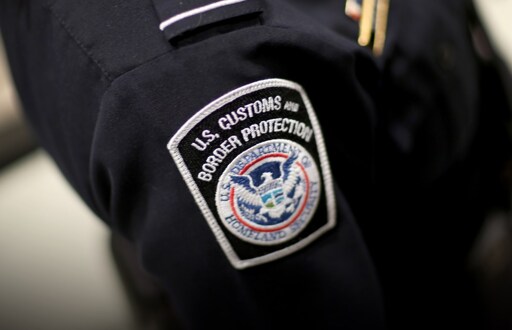
claimed they did not need a warrant to search Tunick’s phone because he had not yet crossed the U.S. border.
Also no right to search / seize his phone then. US law doesn’t apply on non-US soil.
If it’s not US soil, it’s not a detention, it’s a rendition, a kidnapping.
Also, I don’t know how citizenship works I this respect in the US, but in my country a citizen cannot be denied entry. It can be detained upon entering, but by then you are in sovereign soil.
Anyone know if this feature is available on Murena e/os? Can’t seem to find it :(
Good.
That’s legal, fuck you. It’s my data, and I want it (gone) now!

this was a streisand effect for me because i didn’t have duress password set up on my grapheneos phone (security & privacy => device unlock) before but i do now! :D
best promotion ever haha What is it? FU-123?
I imagine the best duress PIN is something you’d actually see a “normal” person set as a PIN, like their birth year or something innocuous and easy to remember (and easily believed by whoever’s demanding your PIN), while their real PIN would be longer or more abstract.
Yeah, you actually gotta remember it too! So a 1234 pword is kind of great
Or Jenny’s phone number.
8 6 7 5 3 0 9
Honestly I would use a stupid basic one that someone might try and use if they were guessing. Like a duress pin of 1-1-1-1, 1-2-3-4 or 2-4-6-8. It gets the people who take the device and then try and break into it without your permission as it’s almost certain they will at least try one of those three.
Worst case scenario they ask you and you say what it is and they give you a blank stare of “really?..” it’s not like they wouldn’t try a pin you gave them.
This is why I’m never going to the US until all this shit is fixed. Which will probably be never
I lost interest of ever visiting again when they started collecting fingerprints from everyone visiting.
Where are you located? Biometric passports needs your fingerprints since ages already.
Tourists going to the US and US residents leaving should take a burner phone.
Citizens too, at this point.
Definitely
Perfectly legal. Unless they were legally charged and ordered by a court to preserve data considered to be used in a crime, they can’t be charged with shit. Cops don’t dictate this, courts do, AND that scope only applies to an active prosecution anyway.
Legality seems to be a fairytale concept in the USA, except for oligarchs. They get full legal coverage.
Perfectly legal. Unless they were legally charged and ordered by a court to preserve data considered to be used in a crime, they can’t be charged with shit. Cops don’t dictate this, courts do, AND that scope only applies to an active prosecution anyway.
I’m not a lawyer, so I’m not arguing that you’re wrong here, but the article describes the federal law the journalist was charged with. It seems very broad, and it’s a bullshit law, but from what’s here, it seems more grey area than perfectly legal. All of 2232 seems to require knowledge (which it seems like he had, but might be arguable) and action. You could argue that the journalist didn’t take any affirmative action to wipe the phone. The action that wiped it was the feds entering a code.
Yeah, you’re wrong in a number of different ways. No, you’re not a lawyer.
What you linked to is precedent par notice. Every single subordinate literally mentions notice.
A law enforcement officer of ANY type is not able able to issue that notice.
There’s a bunch of legislation and case law saying that searches are OK within x (50?) miles of a border crossing which covers something like 90% of the population because they count international airports.
So it might get sticky for the person.
100 miles, but it does not include airports. https://www.aclu.org/know-your-rights/border-zone
Search is not the same thing. Search means they CAN legally search. It absolutely does mean that wiping your phone prevented, obstructed, or obscured a SEARCH. Search all you fucking want, that data is gone. It’s not retroactively comparable.
That being said, had there been a judge that said “You can’t wipe your phone, because you are being charged with a crime, and we believe there is evidence of this crime on your phone, and here is why…”
Way different, and these laws only exist to prevent law enforcement from being caught in a cyclical legal roundabout in court related to the 4th amendment, and even then, many defense lawyers get “gray area” material data evidence thrown out because of Miranda Rights, or illegal searches by law enforcement of data harvested when the defendent was not properly advised or advocated for their ability to refuse.
Murderers get off for this shit because Cops get overzealous and don’t follow the letter of the law or chain of custody in evidentiary collection.
From the article
“The government’s indictment, which contains a typo (“Untied States Code”), accuses Tunick of allegedly providing a passcode to border agents that caused the phone to “delete the digital contents,” prior to the device being seized.”
“When Tunick provided his passcode and the authorities entered it, “the screen went blank, flashed several times and the phone appeared to restart.” The authorities seized his phone anyway, before telling him that he was free to go and could enter the United States.”
Yes, and only JUDGES are able to make that determination.
There is no stature in Federal or State law that says this is a crime, and no superceded precedent for this.
It depends. If the police suspect the owner has evidence of some sort on the phone, destroying it can lead to a tampering with evidence charge from the police.
A tampering charge doesn’t have to be from a court order. If someone eats or dumps out drugs where the police can’t collect the physical drug, it will stick.
But in the story’s case, it falls within the 100 miles of the US boarder (called a boarder search exception) a warrant, probable cause, or RAS aren’t needed here. It’s considered a reasonable search so the 4th amendment is limited here.
There is a lot to it and really don’t think this is the best format for it here.
It does not depend. 4th amendment is superceded by any state law, and it’s SUPER clear that unless a crime has been committed and prosecutorial procedures are in place, no search or seizure is legal.
That’s the whole point.
Good. Annoying to rebuild his phone, but better than handing it to fascists who don’t even have a lawful court order for it.
In all likelihood they kept his phone and will retain possession until charges are dismissed. Get a burner phone and wipe it before going through security. I assume if they see your phone is “fresh” they’ll take it on suspicion anyway.
If you change phones regularly you can use an old phone. No need to buy a new one.
Would you want the phone back after it’s been in their hands? I wouldn’t trust them to leave it alone.
I mean yeah, might be a fun reverse-engineering project to look for any backdoors or other modifications to the device.
Hmm. Maybe DHS can fuck all the way off?
I may be about to move to a town near the border, and I fully plan on visiting Mexico as frequently as I can. It’s one of the things I’m most excited about about moving there.
I will 100% be getting a second cheap phone, and only taking that when I cross the border.