What about driverless trains?
Double less crashes.
I honestly doubt it, since the vast majority of crashes occur when there’s something not working (e.g. signal won’t turn to green, track detection system not working) - scenarios where driverless trains need human intervention anyway.
I think he was joking
You think people would do that? Go onto the internet and tell jokes?
Are… are you serious?
I’m the joker, baby.
OK ok ok ok OK… (lol) yes, he was probably joking. I thought it might be interesting to add the information anyway, in case anyone took it seriously (seems like a logical conclusion at first glance, after all)
There was very nasty train crash in Spain a few years ago because the driver was speeding and the train derailed.
Exceptions prove the rule. On top of that, that crash occurred on the border between two train control systems (ETCS and ASFA, if I remember correctly), where there ended up being quite a gap in train protection. As much as the problem was the speeding driver, it was also a dangerous gap in train control where whoever planned it really screwed up.
Sure, my point is that as rare as they are, there are human error accidents that could be avoided if we switched to self-driving trains (and they proved safe). They are already in use at airports and commuter lines.
Problem is, what is the tradeoff. So you switch to driverless trains. First of all, it has only worked in completely isolated systems until now (no mainline railways). Then, you have the problem that when something goes wrong, the consequences in terms of delays are much larger, often making the news, because there’s no one there that can just “quickly do something” to get around the problem and keep going. People tend to get stuck in trains for long times when issues arise - see the REM in Montreal. What’s the consequence of unreliable public transit? People tend to avoid it more, often switching back to their cars for important trips - a much more dangerous form of transportation.
So how many lives is this “what if” worth? How much can a driver “quickly do” if a train breaks down, anyway?
It’s not even a “what if”. And besides, there’s a saying in the railroad: the safest train is a stopped train. In other words, as soon as you start moving a train, you increase the level of danger, no matter what you do. That’s a tradeoff we make as a society. And that tradeoff is much higher in cars than in trains (hence, why public transit can legitimately be seen as a lifesaving measure).
How much a driver can do if a train breaks down depends on the train and how much the driver knows about his engine. Unfortunately, with a lot of the engines being computer controlled, the amount a driver can do has reduced - but there are still plenty of things a driver can repair. And sometimes it’s just a matter of bypassing problems. For example, there’s a problem on the track and you need to give the driver explicit instructions on how to proceed and what to watch for. That’s not something you can easily tell a self driving train to do - that train will most likely be stuck until someone remotes in. Assuming, of course, that the remote connection isn’t shot. Then you’re absolutely screwed.
And even if the train breaks down completely, it’s still important to have someone there so that the passengers aren’t left alone. Who can help evacuate the train if necessary. Who can communicate to the passengers and be there directly if there are specific problems that need to be addressed.
I got the joke. :)
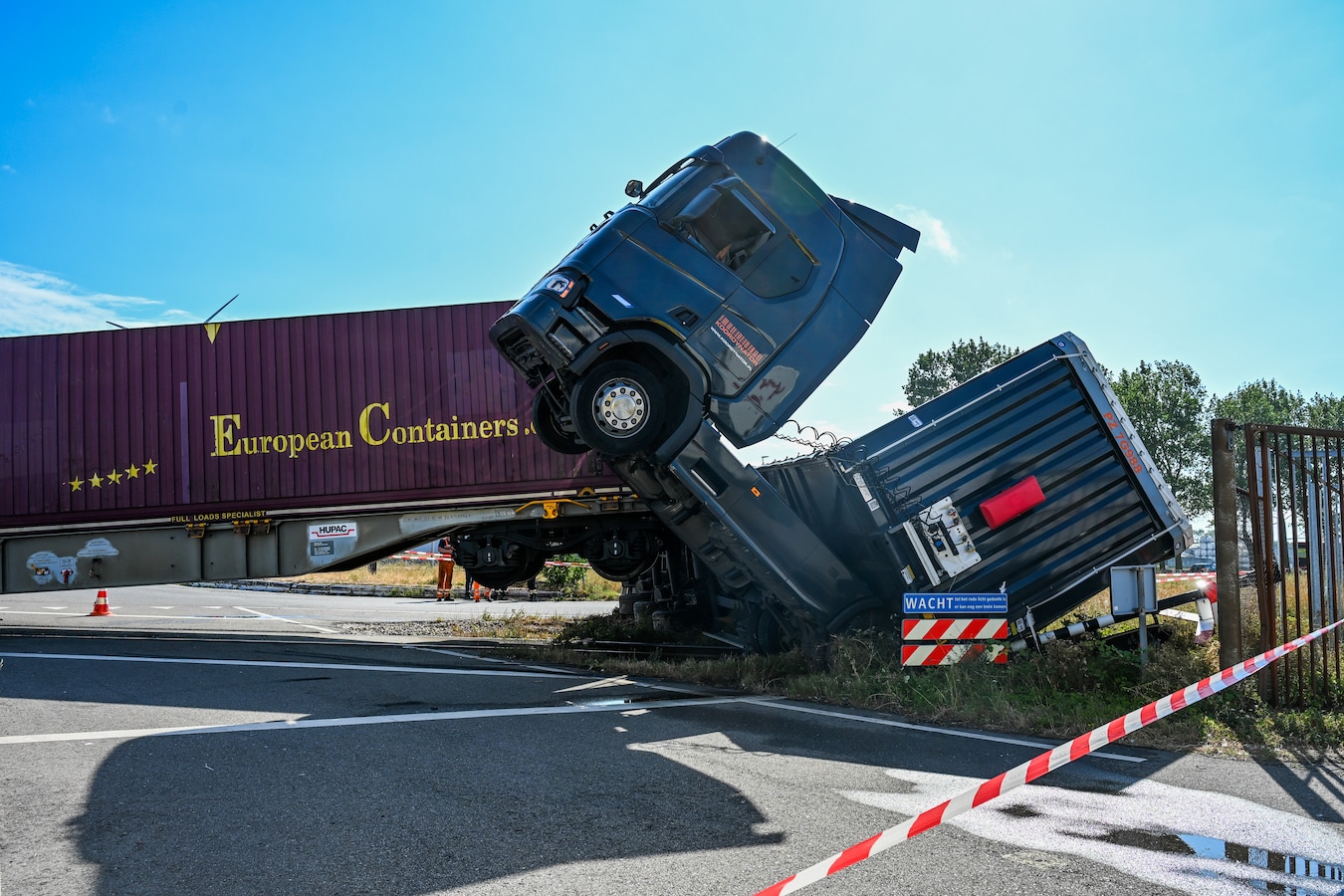
And do you know what trains and trams crash into? Its not other trains and trams…
Trains sometimes crash into each other. It isn’t common, but it happens
Or the environment.
Actually in my city a tram crashed on another tram literally two days ago. Also train hitting trains is a thing. But yes, trams and trains crashing into trams and trains because the tram/train driver’s action sure is near zero compared to the number of trams crashing into cars because of the car driver’s action.
Edit: so today another crash happened here, must be a shitty week for whoever insures these people:
Hello Rotterdam!
👋
I was going to comment that the only train I have personally seen hit something, hit a car.
They do
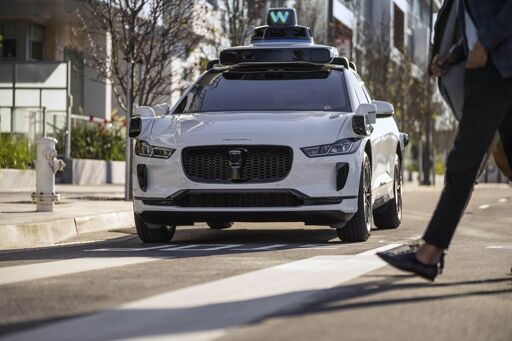
Also, humans driving cars, because it’s pretty easy to have fewer ‘crashes’ when you just omit a heap of crashes.
“the analysis excluded minor incidents involving Waymos that would likely not have been reported to the police had a human been driving,”
¯_(ツ)_/¯ I get your point but also I get their point, they are trying to make the data comparable to the data they are comparing too. It just so happens it makes them look better too.
As a European, I hope this shit stays off of our streets forever.
Yay for more traffic accidents!
Idk if you realize how many less car accidents europeans have per capita
We could have even less if we allow progress.
Maybe, but the increase in surveillance, emergency service obstruction, and the weird traffic problems start to dominate the discussion on cost benefits.
Imo, remote car services like waymo wanted to expand they would target more car oriented cities: mexico city, vancouver BC, etc.
You’re confusing driverless cars with machines that reduce traffic accidents. Driverless cars are machines that detect when an accident is unavoidable and quickly disables self-driving so the accident can count as human-caused in the crash statistics.
Yes, I know the lemmy meme, but that’s about tesla autopilot, where the driver always has the responsibility anyway. This is about self driving cars.
wait hear me out. what if the driverless cars had special roads built for them and they were larger so they could carry more passangers!
Or bicycles!
Driverless bicycles!
Those by definition can’t exist - a bicycle must be powered through muscles for a significant portion, about 25-50% at least. Even electric bicycles still are mainly muscle-powered.
So you’re saying that technically they’re all driverless?
Electric bicycle enthusiasts are in shambles
Interesting. Same data in USA says the robo taxis were almost twice as likely per million miles (I last checked few months to half a year ago) to be in incident as human drivers.
As usual, Musk is most likely the one skewing the statistics.
His cars, whether on commercial “full self driving” mode (which it isn’t, at all) or whether they’re the commercial robo-taxis, have all kinds of driving and safety issues. Almost everyone other than Musk has very few issues.
But if you’re on rails, how are you supposed to steer out of the way of obstacles? That would never work
-Some politician probably
The problem is Americans hate other Americans. And they’d rather do the hating from inside their own death cage.
Our local LRT crashes into cars so regularly, there’s a tally on the subreddit sidebar.
I wish all the money poured into AI instead went into mass transit.
100% true, but currently the areas these waymos are active aren’t going to install trains or rail lines. The Phoenix area Waymo operates in for instance is your typical asphalt hellscape that wouldn’t work well with trains because of how the area was designed for cars (rip). Not ideal but I rather drive next to a waymo than a human in these areas, the humans are insane drivers.
Yes yes fuck cars but this is an improvement imo
Phoenix is a perfect city for trolley/tram lines. You have perfectly straight gigantic roads laid out in an uninterrupted grid. It would be quite easy to run rails down the middle of the streets.
Dear GOD this city looks like a synthetic nightmare, I love not living around any centrally planned cities.

Phoenix has many problems, I don’t think that’s one of them.
The Bay Area which actually has some public transit? They’ve been active here before any of the other sites (although they allowed public rides in Phoenix earlier).
deleted by creator
Maybe because the car industry keeps lobbying against public transport
deleted by creator
Taxis have been a thing for a long time, why do you want a car that runs on predictions? Not to mention the cameras that can probably stare at you from every angle not to mention that most likely operators from third world country can see that data easily.
Public transport is one of the most optimal solution to any city, it’s cheap, you’ll get some steps in since it doesn’t drop you directly to your location, cleans up the air and reduces noise.
deleted by creator
Said like someone who’s never been to a place with a halfway decent rail system. But yeah its the trains fault, not the moneyed interest forcing you to take a single cabin rail car that can ride on surface streets, and barely recognize a person in a crosswalk.
Self driving cars would work fine if the roads weren’t designed for human use (traffic lights, lanes etc). They would all just flow like a flock of birds. Unfortunately, redesigning the roads all in one go would be more difficult than convincing Americans to use a sensible unit of measurement.
Sadly you can’t redesign roads for non-human use as it’s humans living in cities, not waymos.
Cities should be designed for people, not cars
I’m talking about roads here. Thanks for the input.
Bikes, motorcycles and pedestrians also use roads. Unless you mean making a specialized network that nothing else is allowed on. But then you’ll also need secondary roads for everything else.