In my experience, American roads are built to support much higher speeds than the speed limit is set. Going 10-20mph over the limit doesn’t feel particularly unsafe on the wide, straight roads.
On the other side, it felt crazy to drive the speed limit on (for example) the narrow, windy roads in Ireland. The limit there felt like a literal maximum, whereas in the US it feels like the minimum.
As noted car enthusiast NotJustBikes has said, driving is not a conscious activity. We drive to what feels right, to a degree. A road built to support 100kph will always have speeder problems until layers of traffic calming are put in place.
UK B road limits are in fact limits (as opposed to North American suggested minimums), often being little more than millennia old cart paths with asphalt applied
I think we just need to pull people over for speeding until they get it that speeding is not OK. Like the signs are right there, and driving SHOULD be a conscious activity. If people are not driving consciously they should lose their car and license.
Driving consciously is bound to be less safe. Any activity you’ve done a thousand times, if you start overthinking what you’re doing, you make more mistakes.
Just design the roads for the speed you want people to go and 99.9% of drivers will slow down without giving it a second thought. You design a road for 130 km/h, people will go around 130 km/h not the 90 km/h limit you’ve posted. Etc.
Driving consciously is bound to be less safe. Any activity you’ve done a thousand times, if you start overthinking what you’re doing, you make more mistakes.
That’s complete nonsense, i didn’t say overthinking but absolutely you should be paying attention. You’re actually arguing that not consciously doing things is safer? Pay attention, when you a speed limit sign, follow it. That’s all I’m asking for, that’s not overthinking. In fact speeding is overthinking, “sign says 40 but im good to go 45 or even 47”. THAT is overthinking.
Just pulling more people over for speeding is how you turn it into a revenue generating exercise. Law enforcement’s goal should be improving safety, not maximizing revenue.
Designing roads to encourage people to drive an appropriate speed is more effective, even when the road blocks aren’t staffed.
Note: but I’ll fight against destructive speed bumps, maybe all speed bumps. They’re usually just annoying and damaging without really helping. It should also not be a goal to damage my car if I drive at the speed the rest of the road is designed for. Heck, a speed bump warning may be more effective. Either way: fix the road the right way
and you’re here in the US? I ask because yeah i constantly see people taking turns way too fast and drifting into the next lane or even the shoulder, people disregarding cones, people going 20mph over land bridges for no reason than other than in the US we just assume you go 10mph faster over a land bridge just because. People speeding up in front of yellow lights and then just getting there late and running the red anyway. Like daily, like at each intersection this happens.
yes, i’m all in favor of best practices when it comes to designing roads, but people here drive like crazy assholes and they rather risk the occasional crash than drive sensibly for the road conditions like you say. Tons of people on their phones swerving in and out of traffic. Yes, let’s improve the infrastructure 100%, but there really is a problem here of people disregarding basic driving safety on top of that.
I’ve seen people here describe it as the most European part of the US, but yeah.
I do see it - straight and wide roads have more distracted drivers, more speeders, more dangers, especially for pedestrians and cyclists. But we also have a lot of narrow, winding roads with utility poles right on the edges, deer warnings, etc. you have to pay attention
If you look at the design documents for the roads in your area, usually available in plain old PDF files at your State DOT website… it usually states both the designed speed, and what the posted speed will be.
If it’s a modern road, it is almost certainly designed for 5-10mph over what the posted limit will be. Because they know most traffic will speed, and that is accounted for in the road design, regardless of the posted limit sign.
It’s wild to me that someone heard this logic and said “makes sense”.
Like, I get it from an engineering perspective. You find out the maximum capacity of a bridge, account for extremes like multiple heavy loads, find the point of failure, and then engineer in a safety factor. Making sure your bridge can handle your theoretical maximum several times over.
But, we aren’t dealing with people seeing a strong bridge and thinking “nice, I can carry more stuff in my car” and encourage a larger capacity. The capacity they carry is already limited by their vehicle. They aren’t even thinking about the bridges capacity.
With road design. The road controls the capacity (speed) directly to the user of the road. There is a physical speed that if their car reaches they will crash. They interact with it directly.
Designing a road that increases that speed at which a guaranteed crash will happen is primarily just increasing the lethality of said crash. That’s the primary part of “safety” that the design guideline is controlling.
It’s saying. “Hey, if you go too fast for the road conditions, don’t worry. We made sure that the road was designed so that when you reach that speed you’ll have less time to react and more chance of dying”.
Also, “everyone speeds” is bull shit. Every speeds down a zero intersection straight road with a posted speed limit 15 MPH under what the road was designed for. It’s a fucking self fulfilling prophecy.
It’s saying. “Hey, if you go too fast for the road conditions, don’t worry. We made sure that the road was designed so that when you reach that speed you’ll have less time to react and more chance of dying”.
That’s not at all what’s being said. Knowing the speed people will want to drive with a specific design, doesn’t make it inherently “too fast”, its the exact opposite. The road designers are literally designing what the road condition will feel like to drivers, then taking the human factor into account to set a sensible limit instead of an arbitrary one.
If they know the road design will make people drive 50mph, and that most people drive 5mph over the posted limit, they post a 45mph limit. Driving at 50mph down that road is not “too fast”, that’s literally what was designed to feel correct.
There have been several studies over the years about posted versus real world speeds. Including studies of the same road with the posted speed being changed and monitoring driver behavior. They found that regardless of what the posted sign says, people usually drove about the same speed on that road. The minimum and maximum speeds varied with different signs as some people used that number directly, but the average of all traffic stayed the same regardless of the signage because that’s the speed that felt correct for that roadway. In some cases that was under the posted limit, in others that average was up to 10 over the posted limit.
Every speeds down a zero intersection straight road with a posted speed limit 15 MPH under what the road was designed for. It’s a fucking self fulfilling prophecy.
Most roads do not have posted speed limits that vary dramatically from the speed that feels right on that road, because they’re designed for a specific speed and posted with that consideration. Artificially low speed limits are not common. They’re usually from a speed being changed years after the road was designed and built, so it wasn’t intended to have drivers at that speed and also wasn’t physically changed to help reinforce that speed subconsciously, or from a town trying to boost ticket revenue.
That’s not at all what’s being said. Knowing the speed people will want to drive with a specific design, doesn’t make it inherently “too fast”, its the exact opposite.
You quoted and replied to my hyperbolic conclusion instead of the substance of what I was saying. Which is why I don’t really disagree, on the face of it, with anything you said.
The problem is not in individual roads or individual road designs. Though we often have to use the thought of an individual road to describe the problem. Which is what I was doing through analogy. The problem is that there is nothing put into the design to account for the impact on the way people drive based on the design parameters themselves.
It is a feedback loop that is not being taken into consideration by the design guidelines of American road infrastructure. The very basic “post the height of the bridge as 1 ft lower than it actually is” is being applied to speed limits and road design. When this type of thinking is far too simplistic for a much more complex system of human interaction with the road and other humans themselves.
The truck driver that drives a 10ft tall truck that fits under a bridge with a posted 9 ft 11in tall sign doesn’t think “hmmm I bet I could fit my 10ft 1in truck under here as well”.
But drivers do have these more complex thoughts and interactions with the road that they drive down every day.
My post was more a criticism of the use of speed limits in general. Which is why I was being hyperbolic. But I should have been more clear.
I am in favor of the design choice that "the driver should not even need to know the limit. They should be incentivized by the design to drive at a speed that is both safe for themselves, other drivers, and above all, pedestrians.
When I was in Appalachia, on the mountain roads, many are very narrow, and winding. Speed limits often like 40, and you can’t go more than that without crashing unless you have a motorcycle or something. It’s not a suggestion, it’s the maximum you can do on the curves.
Furthermore, even though that’s the maximum, the safest speed on mountain roads is the one you feel comfortable with. Even though I’m experienced driving in the mountains and can comfortably go that limit I’m not gonna be too annoyed at the car from Florida in front of me going 15mph under. I will get extremely annoyed when they don’t use the pull out spots or if they accelerate up to the speed limit in the passing zones though.
@Semi_Hemi_Demigod@jj4211 And US insurance companies will consider it not your fault if you wreck your car by hitting one of the deer, as if it’s not possible to slow down and take precautions when and where deer are likely to be present.


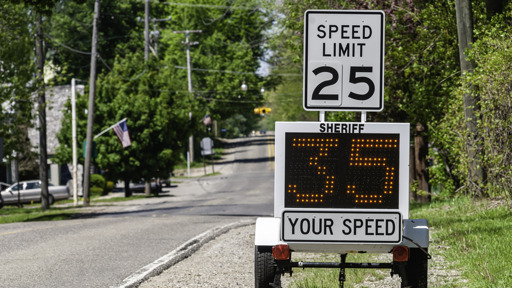
In my experience, American roads are built to support much higher speeds than the speed limit is set. Going 10-20mph over the limit doesn’t feel particularly unsafe on the wide, straight roads.
On the other side, it felt crazy to drive the speed limit on (for example) the narrow, windy roads in Ireland. The limit there felt like a literal maximum, whereas in the US it feels like the minimum.
As noted car enthusiast NotJustBikes has said, driving is not a conscious activity. We drive to what feels right, to a degree. A road built to support 100kph will always have speeder problems until layers of traffic calming are put in place.
UK B road limits are in fact limits (as opposed to North American suggested minimums), often being little more than millennia old cart paths with asphalt applied
I think we just need to pull people over for speeding until they get it that speeding is not OK. Like the signs are right there, and driving SHOULD be a conscious activity. If people are not driving consciously they should lose their car and license.
Driving consciously is bound to be less safe. Any activity you’ve done a thousand times, if you start overthinking what you’re doing, you make more mistakes.
Just design the roads for the speed you want people to go and 99.9% of drivers will slow down without giving it a second thought. You design a road for 130 km/h, people will go around 130 km/h not the 90 km/h limit you’ve posted. Etc.
That’s complete nonsense, i didn’t say overthinking but absolutely you should be paying attention. You’re actually arguing that not consciously doing things is safer? Pay attention, when you a speed limit sign, follow it. That’s all I’m asking for, that’s not overthinking. In fact speeding is overthinking, “sign says 40 but im good to go 45 or even 47”. THAT is overthinking.
deleted by creator
Just pulling more people over for speeding is how you turn it into a revenue generating exercise. Law enforcement’s goal should be improving safety, not maximizing revenue.
Designing roads to encourage people to drive an appropriate speed is more effective, even when the road blocks aren’t staffed.
Note: but I’ll fight against destructive speed bumps, maybe all speed bumps. They’re usually just annoying and damaging without really helping. It should also not be a goal to damage my car if I drive at the speed the rest of the road is designed for. Heck, a speed bump warning may be more effective. Either way: fix the road the right way
and you’re here in the US? I ask because yeah i constantly see people taking turns way too fast and drifting into the next lane or even the shoulder, people disregarding cones, people going 20mph over land bridges for no reason than other than in the US we just assume you go 10mph faster over a land bridge just because. People speeding up in front of yellow lights and then just getting there late and running the red anyway. Like daily, like at each intersection this happens.
yes, i’m all in favor of best practices when it comes to designing roads, but people here drive like crazy assholes and they rather risk the occasional crash than drive sensibly for the road conditions like you say. Tons of people on their phones swerving in and out of traffic. Yes, let’s improve the infrastructure 100%, but there really is a problem here of people disregarding basic driving safety on top of that.
I’ve seen people here describe it as the most European part of the US, but yeah.
I do see it - straight and wide roads have more distracted drivers, more speeders, more dangers, especially for pedestrians and cyclists. But we also have a lot of narrow, winding roads with utility poles right on the edges, deer warnings, etc. you have to pay attention
deleted by creator
If you look at the design documents for the roads in your area, usually available in plain old PDF files at your State DOT website… it usually states both the designed speed, and what the posted speed will be.
If it’s a modern road, it is almost certainly designed for 5-10mph over what the posted limit will be. Because they know most traffic will speed, and that is accounted for in the road design, regardless of the posted limit sign.
It’s wild to me that someone heard this logic and said “makes sense”.
Like, I get it from an engineering perspective. You find out the maximum capacity of a bridge, account for extremes like multiple heavy loads, find the point of failure, and then engineer in a safety factor. Making sure your bridge can handle your theoretical maximum several times over.
But, we aren’t dealing with people seeing a strong bridge and thinking “nice, I can carry more stuff in my car” and encourage a larger capacity. The capacity they carry is already limited by their vehicle. They aren’t even thinking about the bridges capacity.
With road design. The road controls the capacity (speed) directly to the user of the road. There is a physical speed that if their car reaches they will crash. They interact with it directly.
Designing a road that increases that speed at which a guaranteed crash will happen is primarily just increasing the lethality of said crash. That’s the primary part of “safety” that the design guideline is controlling.
It’s saying. “Hey, if you go too fast for the road conditions, don’t worry. We made sure that the road was designed so that when you reach that speed you’ll have less time to react and more chance of dying”.
Also, “everyone speeds” is bull shit. Every speeds down a zero intersection straight road with a posted speed limit 15 MPH under what the road was designed for. It’s a fucking self fulfilling prophecy.
That’s not at all what’s being said. Knowing the speed people will want to drive with a specific design, doesn’t make it inherently “too fast”, its the exact opposite. The road designers are literally designing what the road condition will feel like to drivers, then taking the human factor into account to set a sensible limit instead of an arbitrary one.
If they know the road design will make people drive 50mph, and that most people drive 5mph over the posted limit, they post a 45mph limit. Driving at 50mph down that road is not “too fast”, that’s literally what was designed to feel correct.
There have been several studies over the years about posted versus real world speeds. Including studies of the same road with the posted speed being changed and monitoring driver behavior. They found that regardless of what the posted sign says, people usually drove about the same speed on that road. The minimum and maximum speeds varied with different signs as some people used that number directly, but the average of all traffic stayed the same regardless of the signage because that’s the speed that felt correct for that roadway. In some cases that was under the posted limit, in others that average was up to 10 over the posted limit.
Most roads do not have posted speed limits that vary dramatically from the speed that feels right on that road, because they’re designed for a specific speed and posted with that consideration. Artificially low speed limits are not common. They’re usually from a speed being changed years after the road was designed and built, so it wasn’t intended to have drivers at that speed and also wasn’t physically changed to help reinforce that speed subconsciously, or from a town trying to boost ticket revenue.
You quoted and replied to my hyperbolic conclusion instead of the substance of what I was saying. Which is why I don’t really disagree, on the face of it, with anything you said.
The problem is not in individual roads or individual road designs. Though we often have to use the thought of an individual road to describe the problem. Which is what I was doing through analogy. The problem is that there is nothing put into the design to account for the impact on the way people drive based on the design parameters themselves.
It is a feedback loop that is not being taken into consideration by the design guidelines of American road infrastructure. The very basic “post the height of the bridge as 1 ft lower than it actually is” is being applied to speed limits and road design. When this type of thinking is far too simplistic for a much more complex system of human interaction with the road and other humans themselves.
The truck driver that drives a 10ft tall truck that fits under a bridge with a posted 9 ft 11in tall sign doesn’t think “hmmm I bet I could fit my 10ft 1in truck under here as well”.
But drivers do have these more complex thoughts and interactions with the road that they drive down every day.
My post was more a criticism of the use of speed limits in general. Which is why I was being hyperbolic. But I should have been more clear.
I am in favor of the design choice that "the driver should not even need to know the limit. They should be incentivized by the design to drive at a speed that is both safe for themselves, other drivers, and above all, pedestrians.
When I was in Appalachia, on the mountain roads, many are very narrow, and winding. Speed limits often like 40, and you can’t go more than that without crashing unless you have a motorcycle or something. It’s not a suggestion, it’s the maximum you can do on the curves.
Furthermore, even though that’s the maximum, the safest speed on mountain roads is the one you feel comfortable with. Even though I’m experienced driving in the mountains and can comfortably go that limit I’m not gonna be too annoyed at the car from Florida in front of me going 15mph under. I will get extremely annoyed when they don’t use the pull out spots or if they accelerate up to the speed limit in the passing zones though.
You are right about American freeways. City roads tend to have a lower speed limit that is probably appropriate and it would be unsafe to go faster.
Rural America will have little roads with deer and intersections at blind curves and say 55 mph seems about right.
I have noticed the opposite, having driven in multiple countries. American urban speeds are dangerously higher while the highway speeds are set lower.
And the residents will do 65 on them and complain about the tourists who do 45. I know, I’ve been both.
@Semi_Hemi_Demigod @jj4211 And US insurance companies will consider it not your fault if you wreck your car by hitting one of the deer, as if it’s not possible to slow down and take precautions when and where deer are likely to be present.