So, for anyone else who became curious after this exchange:
I tried to look up how many there actually are. It’s hard to give a single number, since there are many different ways to count them, but vaguely speaking it’s in the range of dozens to a few hundred. GPS specifically has had 83 satellites built, of which 31 are currently operational, but most of the others still exist, they’re just parked in a higher orbit for retirement. There’s also GLONASS, BeiDou, Galileo, QZSS, and IRNSS/Navic. QZSS and IRNSS don’t have as many satellites, and the rest are kinda roughly similar in number (e.g. GLONASS has had 146 built and 24 currently operational).
So yeah. Nowhere near hundreds of thousands. Even Starlink, which now comprises more than half of the total satellites of any kind in orbit, has only about 10,000.


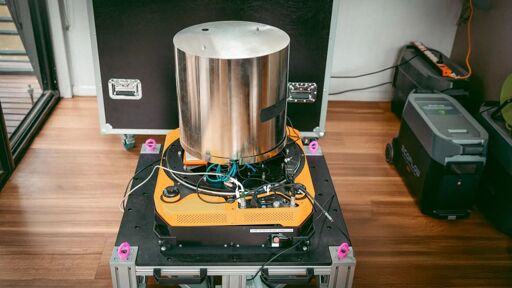
Navigation with a suitcase sized device that doesn’t rely on hundreds of thousands of satellites? Honestly this sounds great.
Let me guess you think GPS alone can track someone.
Not even thousands
Not even hundreds
Try 31
You’re literally off by a factor of 3225
Hundred of thousands of satellites? Are you on mushrooms or something?
So, for anyone else who became curious after this exchange:
I tried to look up how many there actually are. It’s hard to give a single number, since there are many different ways to count them, but vaguely speaking it’s in the range of dozens to a few hundred. GPS specifically has had 83 satellites built, of which 31 are currently operational, but most of the others still exist, they’re just parked in a higher orbit for retirement. There’s also GLONASS, BeiDou, Galileo, QZSS, and IRNSS/Navic. QZSS and IRNSS don’t have as many satellites, and the rest are kinda roughly similar in number (e.g. GLONASS has had 146 built and 24 currently operational).
So yeah. Nowhere near hundreds of thousands. Even Starlink, which now comprises more than half of the total satellites of any kind in orbit, has only about 10,000.
Of all the acronyms they could have decided on, this was the correct choice.
It’ll get scuttled by the intelligence community so they can use it in the intelligence community.
Wait until you hear about compasses and maps!
In the middle of the ocean? Wouldn’t that require a sextant, night time, and a lot of expertise?
Wait until you hear about inertial navigation!
And an extremely accurate clock (depending on how accurate you want your location to be).
https://en.wikipedia.org/wiki/Marine_chronometer
All you really need is to see the Jovian eclipses.