I didn’t realize you were talking about performance in the kernel, which I think will be incredibly hard to measure. That that’s usually the main focus of enterprise investment into Linux, so I very much doubt that an LLM is coming in and making improvements there, but maybe it’s happening. As far as I can tell all the latest things are security scans, which usually will result in worse performance since the goal isn’t speed but safety.


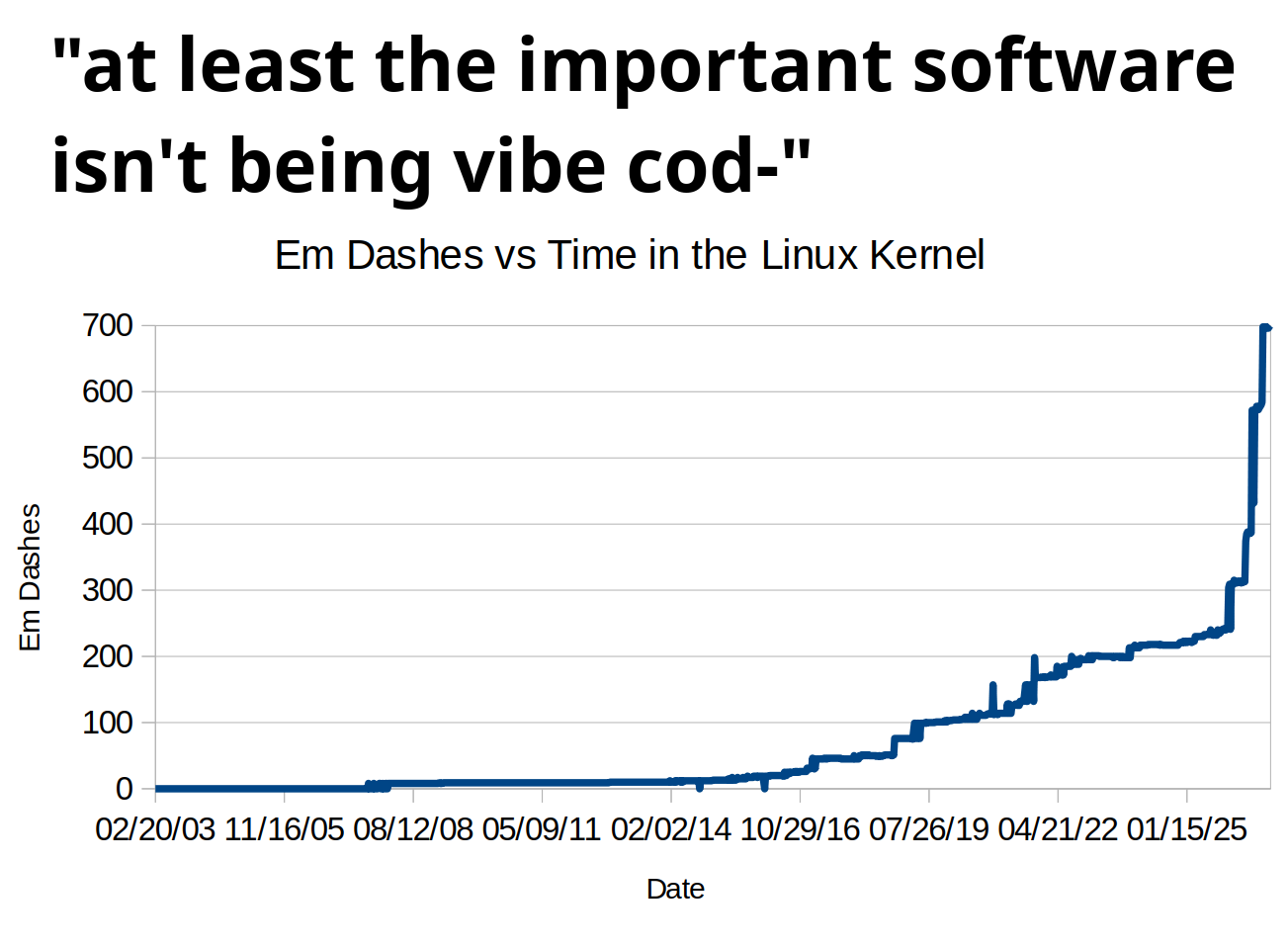
I didn’t realize you were talking about performance in the kernel, which I think will be incredibly hard to measure. That that’s usually the main focus of enterprise investment into Linux, so I very much doubt that an LLM is coming in and making improvements there, but maybe it’s happening. As far as I can tell all the latest things are security scans, which usually will result in worse performance since the goal isn’t speed but safety.
This comment chain is specifically referencing a single LLM-assisted patch that Linus Torvalds posted to the mailing list for review a few days ago that solves a longstanding performance problem that interacts with enough things parts of the kernel that there are only a handful of people in the world qualified to deal with it, and that none of them have had the time to investigate and fix properly until just now. https://www.tomshardware.com/software/linux/linus-torvalds-posts-his-first-llm-assisted-patch-to-the-linux-kernel-after-issuing-clear-pro-ai-directives-the-bossman-makes-use-of-ai-tooling-himself