It’s a deductive fact that we are one step removed from, at best. That remoteness strips it of nearly all useful application or explanatory power.
All mathematical propositions might be characterized as tautologies depending upon your philosophy of math. I am willing to grant, for the sake of argument, that the proof is “true,” strictly speaking. But unless we can actually explain why that is the case in a way the human brain can comprehend, it has effectively yielded no interesting nor useful insight. We don’t accumulate facts for the love of facts, we do so within a larger context of inquiry and systematizing knowledge.
It would be as if there was an Oracle to whom we presented randomly generated proofs to, and the Oracle told us “yes” or “no.” From our perspective, we would not be able to meaningfully differentiate between these answers without understanding the reasoning for them. We would simply have to trust the Oracle as a matter of inductive reliability. Given infinite monkeys and infinite type writers we may eventually acquire a list of theorems the Oracle says are “true,” but we would gain no insight into the world, and likely be unable to apply those “facts” in other contexts where it matters. Most people have been treating the Rieman Hypothesis as all BUT proven for a while now. Perhaps some negligible quantity of skeptics will come over from doubt to belief, but besides that, I do not predict the AI solution will fundamentally change mathematics.
The oracle you describe would also be incredibly valuable. To determine if something is true or false, reliably, instantly? Amazing.
Yet you tried to describe it as something bad, something we’d have to blindly trust. And that would indeed be a huge stain. But RH is proven in lean code, which it self is not a trust-me-bro machine, but is well understood and agreed to be valid.
I don’t think you understood the force of my objection regarding mathematical propositions being tautologies.
If I were to write 42=(x), and x was in this instance a randomly generated 500,000 page combination of randomly generated mathematical operations, the Oracle could tell me whether the proposition was true or not. But it would not be USEFUL, and it would not be EXPLANATORY. It would be the equivalent of saying “42=42,” which of course it does, but that is simply a restatement or demonstration of law of identity. Without telling us anything interesting about how the equation works or why, it may as well be like knowing how many grains of sand exist on the Beach of Normandy on the day after D-Day. You might have a fact, but who cares? Is it doing anything in your larger system of knowledge? Could everyone just assume that there was SOME number that was true, and still go about their work and lives without knowing the precise number? That’s roughly where we were at prior to this ‘proof.’
I am not saying the Oracle would be useless. Surely it would be quite useful. But presenting incomprehensible and absurdly complicated mathematical propositions to the Oracle would not tell us anything useful, and would diminish our relationship to mathematical knowledge from deductive to inductive, which is a severe degradation in epistemic status as traditionally understood.
Yes, but even this is exaggerating the truth. It was unproven but widely accepted as “almost definitely true” because it kind of has to be. All this did was move the needle from “almost definitely true” to “definitely true” and if it didn’t create any new interesting math to do that or if the proof can’t be distilled down to something usable or understandable by other theoretical mathematicians then it’s not really meaningful. Folks already knew it was going to be proven true eventually, the interesting part is how. This version of how is not interesting or useful. At best this is net neutral, at worst this discourages other mathematicians from creating a creative or elegant solution that actually means something. Rarely in theoretical math is “we proved this” the important bit, it’s almost always “look at the neat trick we used to prove this” because it’s that neat trick that can and often does have real world applications (or is used in another proof). This AI proof has none of this

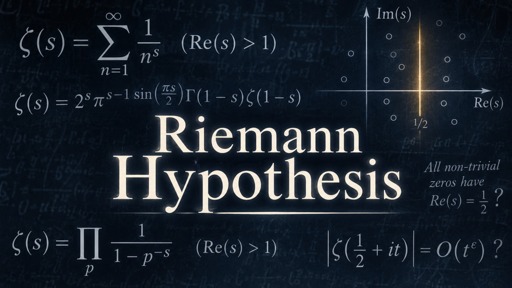
It still turns a hypothesis into a fact.
It’s a deductive fact that we are one step removed from, at best. That remoteness strips it of nearly all useful application or explanatory power.
All mathematical propositions might be characterized as tautologies depending upon your philosophy of math. I am willing to grant, for the sake of argument, that the proof is “true,” strictly speaking. But unless we can actually explain why that is the case in a way the human brain can comprehend, it has effectively yielded no interesting nor useful insight. We don’t accumulate facts for the love of facts, we do so within a larger context of inquiry and systematizing knowledge.
It would be as if there was an Oracle to whom we presented randomly generated proofs to, and the Oracle told us “yes” or “no.” From our perspective, we would not be able to meaningfully differentiate between these answers without understanding the reasoning for them. We would simply have to trust the Oracle as a matter of inductive reliability. Given infinite monkeys and infinite type writers we may eventually acquire a list of theorems the Oracle says are “true,” but we would gain no insight into the world, and likely be unable to apply those “facts” in other contexts where it matters. Most people have been treating the Rieman Hypothesis as all BUT proven for a while now. Perhaps some negligible quantity of skeptics will come over from doubt to belief, but besides that, I do not predict the AI solution will fundamentally change mathematics.
I’m not saying it’s perfect, but it has value.
The oracle you describe would also be incredibly valuable. To determine if something is true or false, reliably, instantly? Amazing.
Yet you tried to describe it as something bad, something we’d have to blindly trust. And that would indeed be a huge stain. But RH is proven in lean code, which it self is not a trust-me-bro machine, but is well understood and agreed to be valid.
I don’t think you understood the force of my objection regarding mathematical propositions being tautologies.
If I were to write 42=(x), and x was in this instance a randomly generated 500,000 page combination of randomly generated mathematical operations, the Oracle could tell me whether the proposition was true or not. But it would not be USEFUL, and it would not be EXPLANATORY. It would be the equivalent of saying “42=42,” which of course it does, but that is simply a restatement or demonstration of law of identity. Without telling us anything interesting about how the equation works or why, it may as well be like knowing how many grains of sand exist on the Beach of Normandy on the day after D-Day. You might have a fact, but who cares? Is it doing anything in your larger system of knowledge? Could everyone just assume that there was SOME number that was true, and still go about their work and lives without knowing the precise number? That’s roughly where we were at prior to this ‘proof.’
I am not saying the Oracle would be useless. Surely it would be quite useful. But presenting incomprehensible and absurdly complicated mathematical propositions to the Oracle would not tell us anything useful, and would diminish our relationship to mathematical knowledge from deductive to inductive, which is a severe degradation in epistemic status as traditionally understood.
Yes, but even this is exaggerating the truth. It was unproven but widely accepted as “almost definitely true” because it kind of has to be. All this did was move the needle from “almost definitely true” to “definitely true” and if it didn’t create any new interesting math to do that or if the proof can’t be distilled down to something usable or understandable by other theoretical mathematicians then it’s not really meaningful. Folks already knew it was going to be proven true eventually, the interesting part is how. This version of how is not interesting or useful. At best this is net neutral, at worst this discourages other mathematicians from creating a creative or elegant solution that actually means something. Rarely in theoretical math is “we proved this” the important bit, it’s almost always “look at the neat trick we used to prove this” because it’s that neat trick that can and often does have real world applications (or is used in another proof). This AI proof has none of this