

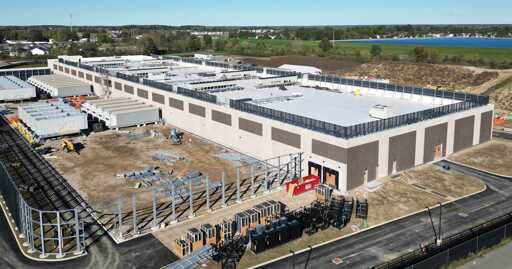
Think tank Energy Innovation proposes a faster, cheaper, and cleaner route for powering off-grid data centers: giant heat batteries that are fueled by low-cost solar and wind.
They could even use the heat they produce that currently only creates costs for them to fuel these batteries. Getting 40% of the heat produced back as energy to feed it into the system would be financially very wise, since the heat produced is closely coupled with the amount of energy they use in the first place.
No, you cant do that, that would be breaking thermodynamics. You cant use waste heat to power the same process that generated it.
The waste heat that comes out of a computer is at ~100 degrees, the heat battery wants to be up at many 100s to 1000. In order to move heat from the colder side at the computer to the hotter side at the better it would be slow and would have to expend energy to move it. So you would be spending additional energy to to store that energy and you would need additional cooling to move the heat away from the computers in order to not cook them.
It would only be breaking thermodynamics if creating that heat is your primary goal. Otherwise the wasted energy is energy, it doesn’t matter if 100W of heat is generated by a server or by burning coal, it’s energy that can be used.
See, the Google server that provides 80% of the district heating for a city in Finland.
Right, but the difference there is that you are allowing heat to flow from hot (the coolant from the data centre) to cold (room temperature). This would be forcing the waste heat up a temperature gradient into a hotter heat battery. That requires additional work.
we have a refrigeration cycle that enables
concentratingmoving heat. using the heat generated to feed it into thermal batteries will not be enough on it’s own, but it could provide additional efficiency.Edit: I just realized my thinking error. Can only provide a base temperature. Better than nothing tho!
Right, but those refrigeration cycles take energy to run themselves, and by design slow down the flow of heat away from the computers you are trying to cool.
It is possible you could somewhat* decrease the amount of fresh electricity used if you massively overbuilt you cooling to include incredibly inefficient active cooling pushing heat from the computers to a battery 2 or 3 times it’s temperature. But the whole concept of a battery making sense relies upon cheap power for part of the day and much less the other part of the day (e.g. solar). Why would you want to massively overspend on cooling in order to use less of the abundant intermittent power you want to take advantage of?
* the difference in efficiency between using a heat pump to push heat into your battery from a coolant outflow at 100 degrees and one from outside at 0 degrees is only about 10%