(Edit: real answer) For most acknowledgements, I double-tap a light — beams, brakes, or hazards depending on current lighting conditions and relative position of other driver — because most things I would say to them are two beats long:
One insight was the different behavior when a light turned green with someone at the front making a left turn.
Where I grew up that person would just have to wait, but in the city where I went to college they’d let one car turn left before opposing traffic started.
It was a bit of a culture shock being honked at for obeying the actual law.
I don’t think oncoming traffic “lets” the first car go. It’s more that if the person in the front of the left turn queue is on the ball and ready to go, he’ll scoot out while the oncoming drivers are typically looking up from their instagram or TikTok or whatever and understanding that they need to drive again.
If you mean that the way I think, in Los Angeles when you’re going to make a left turn at a light without a red arrow, AND there’s enough clear road ahead on your left for you to turn into, you’re expected to “post up” into the intersection while you wait for opposing traffic to clear. Which often it never does until the light turns yellow, or even red. Then you’re expected to make your turn on the red, and the car behind you is allowed to follow you if they’ve got their front wheels over the line into the intersection. The cross traffic has to wait until you’ve cleared the box. “Two cars on a red.” Of course if it’s an especially large intersection, it’s possible for the first car and second car to post up so far that a third car can get those wheels over, and all three can make their escape from the box after the light changes. But the cross traffic considers this rude.
I’ve mostly seen the double-flick of lights to mean either “Go ahead, make your move, I see you and I won’t hit you” (to pedestrians or someone waiting to turn into/out of a driveway in heavy traffic) or “turn on your lights you idiot, it’s pouring rain.” But it’s always heavy traffic in Southern California, and it never rains, but man, it pours.
One long honk : PAY ATTENTION! Right now to avoid an accident!
One short honk: hey bud, not mad but the light changed, or similar. Also used when I see someone I know.
Two short honks: did not respond to one short honk. Also used when I was the one to fuck up - accompanied by head nod/bow, arms up with hands upturned, mouthing “I’m sorry”, and/or similar gestures.
Two long honks: you did something bad, like turning out in front of me with not enough room. I’m yelling about it!
Combination of short and long honks: I’m pissed at what you just did. Mad enough that I want to shame you, at least enough to make your next several minutes awkward. Given the chance I’m flipping you off, or simply shaking my head in acknowledgment of your shame.
The only issue I’d see with that convention is that in many scenarios in which you’d use it — other driver makes room for you to merge, brakes early to let you turn left, and so forth — you (should) already have half of the hazard lights actively repeating, which could muddle the message. But otherwise I like it.
Another random convention I learned early on was rapid triple-tap beams (i.e., like a strobe) = “speed trap ahead”
because most things I would say to them are two beats long
LOL. Doesn’t that mean it’s completely ambiguous? There’s plenty of awful things you could say in 2 beats.
I imagine that people flash twice because once could be a mistake, twice demonstrates intent. Three would make me wonder whether it’s an ongoing flashing light.
Well granted, it’s high-context communication. But I’m willing to bet you’d know what I meant if you were trying to merge and I double-tapped lights.
Three would make me wonder if it’s an ongoing flashing light.
Yeah IME three is less general, usually reserved for a problem or need for caution, like if someone is driving at night with all their lights out or a visible chassis/drivetrain issue, or there’s a cop/wreck ahead.
I’m willing to bet you’d know what I meant if you were trying to merge and I double-tapped lights.
Yeah if you’re in the lane I’m merging into then two taps means “it’s ok for you to merge in because there’s enough room for you”. That’s more than 2 beats though.
Maybe you mean “o kay” or “yes merge” or “no stop” or “look out” or “nice car”
Oh you mean the two-syllable thing. That was more for the joke lol
I think it works as a rule of thumb: if message is simple enough that context makes it obvious, two blinks will suffice. But no, it wouldn’t be useful as an actual lexical cypher.
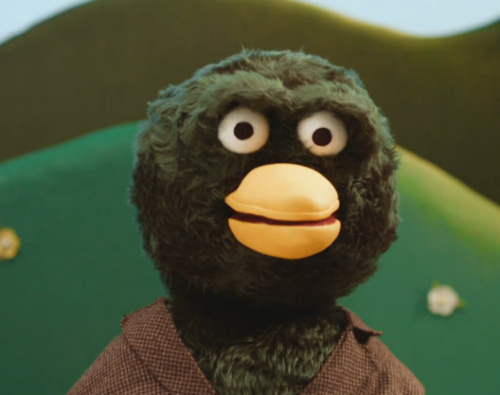

(Edit: real answer) For most acknowledgements, I double-tap a light — beams, brakes, or hazards depending on current lighting conditions and relative position of other driver — because most things I would say to them are two beats long:
I once got an A on an anthropology paper by analyzing body language in vehicles and different driving cultures in different places.
Rock on. Were there any instances of local parlance you found peculiar or surprising?
One insight was the different behavior when a light turned green with someone at the front making a left turn.
Where I grew up that person would just have to wait, but in the city where I went to college they’d let one car turn left before opposing traffic started.
It was a bit of a culture shock being honked at for obeying the actual law.
I don’t think oncoming traffic “lets” the first car go. It’s more that if the person in the front of the left turn queue is on the ball and ready to go, he’ll scoot out while the oncoming drivers are typically looking up from their instagram or TikTok or whatever and understanding that they need to drive again.
I’ve done that before when I’m in a hurry, but this was actually people waiting for that initial left turn.
Also this was back before smart phones, so things may have changed. Culture evolves.
If you mean that the way I think, in Los Angeles when you’re going to make a left turn at a light without a red arrow, AND there’s enough clear road ahead on your left for you to turn into, you’re expected to “post up” into the intersection while you wait for opposing traffic to clear. Which often it never does until the light turns yellow, or even red. Then you’re expected to make your turn on the red, and the car behind you is allowed to follow you if they’ve got their front wheels over the line into the intersection. The cross traffic has to wait until you’ve cleared the box. “Two cars on a red.” Of course if it’s an especially large intersection, it’s possible for the first car and second car to post up so far that a third car can get those wheels over, and all three can make their escape from the box after the light changes. But the cross traffic considers this rude.
I’ve mostly seen the double-flick of lights to mean either “Go ahead, make your move, I see you and I won’t hit you” (to pedestrians or someone waiting to turn into/out of a driveway in heavy traffic) or “turn on your lights you idiot, it’s pouring rain.” But it’s always heavy traffic in Southern California, and it never rains, but man, it pours.
For me, I go with:
One long honk : PAY ATTENTION! Right now to avoid an accident!
One short honk: hey bud, not mad but the light changed, or similar. Also used when I see someone I know.
Two short honks: did not respond to one short honk. Also used when I was the one to fuck up - accompanied by head nod/bow, arms up with hands upturned, mouthing “I’m sorry”, and/or similar gestures.
Two long honks: you did something bad, like turning out in front of me with not enough room. I’m yelling about it!
Combination of short and long honks: I’m pissed at what you just did. Mad enough that I want to shame you, at least enough to make your next several minutes awkward. Given the chance I’m flipping you off, or simply shaking my head in acknowledgment of your shame.
I remember reading a while back that the hazards twice = thank you.
I’d certainly interpret it that way if it fit.
The only issue I’d see with that convention is that in many scenarios in which you’d use it — other driver makes room for you to merge, brakes early to let you turn left, and so forth — you (should) already have half of the hazard lights actively repeating, which could muddle the message. But otherwise I like it.
Another random convention I learned early on was rapid triple-tap beams (i.e., like a strobe) = “speed trap ahead”
LOL. Doesn’t that mean it’s completely ambiguous? There’s plenty of awful things you could say in 2 beats.
I imagine that people flash twice because once could be a mistake, twice demonstrates intent. Three would make me wonder whether it’s an ongoing flashing light.
I think generally one long flash is a negative acknowledgement or warning, 2 quick flashes is positive, and 3 or more is back to negative
I dont think any of that is a generally accepted code.
Well granted, it’s high-context communication. But I’m willing to bet you’d know what I meant if you were trying to merge and I double-tapped lights.
Yeah IME three is less general, usually reserved for a problem or need for caution, like if someone is driving at night with all their lights out or a visible chassis/drivetrain issue, or there’s a cop/wreck ahead.
Yeah if you’re in the lane I’m merging into then two taps means “it’s ok for you to merge in because there’s enough room for you”. That’s more than 2 beats though.
Maybe you mean “o kay” or “yes merge” or “no stop” or “look out” or “nice car”
Oh you mean the two-syllable thing. That was more for the joke lol
I think it works as a rule of thumb: if message is simple enough that context makes it obvious, two blinks will suffice. But no, it wouldn’t be useful as an actual lexical cypher.