

cross-posted from: https://feddit.it/post/28637207
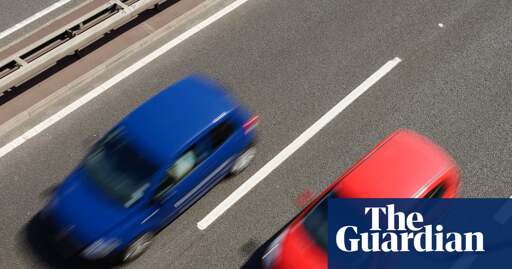
Those who use the bike know this very well: in the city, speeding motorists overtaking other cars, only get one thing: they arrive first to the next red.
With a simple model, the author estimated the probability that one car that overtakes another, will then be reached again at a later red light. Then he estimated the probability that the same thing will happen when there are multiple successive traffic lights, as usual in the cities.
The result is that as fast as an aggressive driver goes, the presence of multiple traffic lights makes it virtually certain that a slower driver will catch up
So, if someone aggressively overcomes you, when you reach him at the next traffic light, you can tell him that it is mathematically proven that he/she is an idiot.
In addition, this study has implications for the 30 km/h city, demonstrating how in urban areas the traffic lights determine the travel times, not the maximum speed reachable between one traffic light and the next.
The original scientific article is here: https://royalsocietypublishing.org/rsos/article/13/4/260310/481212/The-Voorhees-law-of-traffic-a-stochastic-model
crossposted from: https://poliversity.it/users/rivoluzioneurbanamobilita/statuses/116419204210303856
If your commute is 30 minutes, you’d need to drive twice as fast to do it in 15 minutes. So, in the 35MPH zone, you need to do 70, and in the 50MPH zone, you need to do 100–consistently. Which is clearly impossible. If you follow this logic through to a realistic conclusion, you end up at saving at most two or so minutes by speeding as much as you can. Congratulations, you got home two minutes earlier, what will you do with all that free time?
Also, the idea that you’ve “saved time” is a bit silly. It’s not like you can bank that time. You’re not going to start work two minutes earlier every day, and end up with ten minutes of “free time” at the end of the work week. You get to work two minutes earlier, or maybe two minutes less late, and you get home two minutes earlier, but that’s the extent of the “savings”. So what?
Do yourself and everyone else a favor, leave for work two minutes earlier and have a nice, easy commute. Stop being a dick, it’s not your road, it’s not your right, and it doesn’t help you at all. Learn to control yourself, grow up, gain some emotional maturity, stop speeding around, you look like an idiot.
people aren’t rational or thoughtful about it. they are emotional.
it feels good to feel fast, it feels bad to feel slow. regardless of the real time involved.
hence why it’s more fun to drive a shitty car fast, than a fast car the same speed, because the shitty car feels way faster because cars designed for real speed feel slow at high speeds.
my dad was a genuinely awful driver. it was all about his feelings, never about actually getting anywhere safer or faster.
that said, sometimes you can save several minutes driving faster, but it’s more about timing the light cycle than speed.
Not to mention that all the extra money which you will need for a car, instead of using public transport or a bike, will require extra paid work time which in many (not all) cases will annihilate any time savings you might have had.
I think the 2 hours I save every day using my car instead of the public transports are more valuable of what I need to spend to use the car.
The average travel speed of cars in cities is typically not more than about 35 km/h. Within a city, you are not likely to save that much time.
If you take into account the time table of the public transportation and that maybe you need to change two or more bus lines then yes, you can save that much time.
I partially agree with you though, in a city the public transportation is better but only if you use it during the rush hours (even if I need to be honest, here it is slowly getting better also during off hours) and if you can just hop on a bus|tram|metro and arrive to you destination. If you cannot, then it make no difference with a cars.
Bus with line changes is usually slower than by bike. Why not compare with the for most people fastest option, if your criticism is speed?
Because I don’t like biking 30k in the morning at -20 with a meter of snow on roads with assholes and no shoulder?
Urban spread and car infrastructure is a cancer, but sadly it often means the only viable option is a car.
Moving soon closer to work though. So that’ll help.
Because I am sure that line changes are the more common situation.
It is not related to the traffic, but yes, there are places where you can add up time to leave earlier at the end of the week (or have a couple more PTO days a month).