Self hosting an llm ain’t the same thing as self hosting nextcloud for your docs and calendar. Yes there are small models but their output is laughable
Small models are improving and becoming more capable. The quality of local LLMs is basically unbounded. The context size of local LLMs is bounded by hardware. So local LLMs can be very capable for small, self-contained tasks.
qwen 3.6 35b running locally:
Write a Python script that can pull weather data from public sources and provide the high and low temperature for the current day in Miami, FL.
Single shot. No tool/internet use, so it didn’t pull this script from elsewhere.
import requests
defget_miami_weather():
# Miami, FL coordinates
LATITUDE = 25.7617
LONGITUDE = -80.1918# Open-Meteo API URL (free, no API key required)
url = (
f"https://api.open-meteo.com/v1/forecast?"f"latitude={LATITUDE}&longitude={LONGITUDE}"f"&daily=temperature_2m_max,temperature_2m_min"f"&timezone=auto"
)
try:
response = requests.get(url, timeout=10)
response.raise_for_status() # Raises error for 4xx/5xx HTTP status codes
data = response.json()
# Index 0 corresponds to the current day
high_c = data["daily"]["temperature_2m_max"][0]
low_c = data["daily"]["temperature_2m_min"][0]
# Convert to Fahrenheit (commonly used in the US)
high_f = (high_c * 9/5) + 32
low_f = (low_c * 9/5) + 32print("🌤️ Miami, FL Weather for Today:")
print(f"High: {high_f:.1f}°F ({high_c:.1f}°C)")
print(f"Low: {low_f:.1f}°F ({low_c:.1f}°C)")
except requests.exceptions.HTTPError as http_err:
print(f"❌ HTTP error occurred: {http_err}")
except requests.exceptions.ConnectionError:
print("❌ Error: Could not connect to the weather API.")
except requests.exceptions.Timeout:
print("❌ Error: Request timed out.")
except requests.exceptions.RequestException as err:
print(f"❌ An error occurred: {err}")
except KeyError as key_err:
print(f"❌ Error parsing data: Missing expected key {key_err}")
except Exception as err:
print(f"❌ Unexpected error: {err}")
if __name__ == "__main__":
get_miami_weather()
I tried to keep the size and scope within something that would reasonably fit in a comment. Looks pretty decent to me, but I can’t write Python myself. Never learned. I double-checked the LAT & LON of Miami, and it’s spot on.
It did take 47 seconds, while a cloud LLM would probably take 5 or less.
All I’m saying is local LLM isn’t garbage and it is getting better all the time.
It’s a MacBook Pro. 36GB of ram. I am sure Macs have some kind of gpu and I understand it somehow combines GPU ram with system ram, but I don’t really know Mac hardware very well.
It’s beefy for a laptop, but the desktop I built for myself several years ago had 32 GB of ram and a GTX 1660, so I’m guessing they are similar in capability. I gave that to my daughter, so I can’t run a comparison right now.
EDIT: After doing just a bit of research, I’ve learned the unified memory architecture that Macs use, while not ideal for many purposes, is actually a big advantage for running larger inference models. So it’s possible that this particular model wouldn’t run at all on my Linux box or would run much slower because the full model wouldn’t fit in the 6GB of VRAM and create a lot of memory thrashing.
You can use something like KoboldCPP on Linux, which allows both RAM and VRAM combined to run a model. O’course, not as fast when compared to pure VRAM or the Mac approach, but it is an option. I use my 128gb RAM with some GPUs for running models.
Speed depends on how much of the model is on VRAM, and the dense/MoE architecture of that model. The RAM’s benefit is more about having the ability to run the model in the first place. In any case, a dense Qwen3.6 27b would take up about 27-33gb-ish of memory, plus whatever context size you set.
Upcoming implementation of MTP will increase the size of models, but in exchange, they will also run faster. About a 30%ish boost for dense models, a bit less for Mixture of Expert varieties, from the looks of it.
When I’ve tried running a ~14 gigabyte distillation of whatever model it is I was trying to run, it would come out super slow at I believe 50/50 GPU to CPU. It gets so slow it was just more bearable to run a 7 or 8 b model that would actually fit entirely in VRAM and run entirely on GPU. Also made the rest of computer usage more bearable.
To be fair I do only have a 6 core 6 thread CPU though. It shot up to 600% usage so even the DDR4 memory wasn’t really bottlenecking it. I suspect a 9950X would fare a lot better.
Yup, you want memory accessible to the GPU for local AI. AMD Strix Point and Mac devices are popular options. CPU can run LLMs but very slowly. I’ve got 32 GB of RAM and 8 VRAM and it’s borderline useless for models that don’t fit in the VRAM.
qwen 3.6 is awesome, but 48-64gb is still real money these days. (though 32gb on dedicated separate machine is also more money). Sonnet 3.5 to opus 4.5 level benchmarks. and the online cost metrics for 27b and 35b are way off considering the overall usefulness of a 48-64gb machine (inclusive of gpu vram for 35b) which even in single, non batching, use could displace $5-$7/day of use.
Local costs are much lower than online costs in linked chart, but if online, there are better models
Sorry, but I think the point about local AI not necessarily being evil is the tangent here.
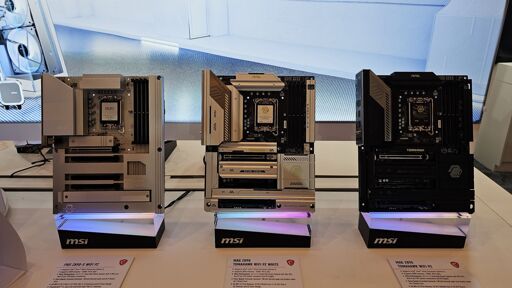
The OP is about motherboard shortages, which is being driven by the big AI companies and is making hardware unaffordable for normal users
The top level reply to that is about how that’s bad because it removes the ability for people to be in control of their own computing
Then someone comes in, saying “yeah, but you can host your own AI so that it’s not evil so not all AI is bad”
Then someone points out that you can only host your AI if you can afford the hardware to do so which, as the OP and the comment you replied to pointed out, is getting really hard to do.


You can’t self host anything when the hardware is no longer affordable.
Self hosting an llm ain’t the same thing as self hosting nextcloud for your docs and calendar. Yes there are small models but their output is laughable
Small models are improving and becoming more capable. The quality of local LLMs is basically unbounded. The context size of local LLMs is bounded by hardware. So local LLMs can be very capable for small, self-contained tasks.
qwen 3.6 35b running locally:
Single shot. No tool/internet use, so it didn’t pull this script from elsewhere.
import requests

def get_miami_weather():
    # Miami, FL coordinates
    LATITUDE = 25.7617
    LONGITUDE = -80.1918

    # Open-Meteo API URL (free, no API key required)
    url = (
        f"https://api.open-meteo.com/v1/forecast?"
        f"latitude={LATITUDE}&longitude={LONGITUDE}"
        f"&daily=temperature_2m_max,temperature_2m_min"
        f"&timezone=auto"
    )

    try:
        response = requests.get(url, timeout=10)
        response.raise_for_status()  # Raises error for 4xx/5xx HTTP status codes
        data = response.json()

        # Index 0 corresponds to the current day
        high_c = data["daily"]["temperature_2m_max"][0]
        low_c = data["daily"]["temperature_2m_min"][0]

        # Convert to Fahrenheit (commonly used in the US)
        high_f = (high_c * 9/5) + 32
        low_f = (low_c * 9/5) + 32

        print("🌤️  Miami, FL Weather for Today:")
        print(f"High: {high_f:.1f}°F ({high_c:.1f}°C)")
        print(f"Low:  {low_f:.1f}°F ({low_c:.1f}°C)")

    except requests.exceptions.HTTPError as http_err:
        print(f"❌ HTTP error occurred: {http_err}")
    except requests.exceptions.ConnectionError:
        print("❌ Error: Could not connect to the weather API.")
    except requests.exceptions.Timeout:
        print("❌ Error: Request timed out.")
    except requests.exceptions.RequestException as err:
        print(f"❌ An error occurred: {err}")
    except KeyError as key_err:
        print(f"❌ Error parsing data: Missing expected key {key_err}")
    except Exception as err:
        print(f"❌ Unexpected error: {err}")

if __name__ == "__main__":
    get_miami_weather()
Output:
I tried to keep the size and scope within something that would reasonably fit in a comment. Looks pretty decent to me, but I can’t write Python myself. Never learned. I double-checked the LAT & LON of Miami, and it’s spot on.
It did take 47 seconds, while a cloud LLM would probably take 5 or less.
All I’m saying is local LLM isn’t garbage and it is getting better all the time.
That’s interesting.
How much ram did it use while running?
If you used a GPU, how much does it cost in today’s prices?
It’s a MacBook Pro. 36GB of ram. I am sure Macs have some kind of gpu and I understand it somehow combines GPU ram with system ram, but I don’t really know Mac hardware very well.
It’s beefy for a laptop, but the desktop I built for myself several years ago had 32 GB of ram and a GTX 1660, so I’m guessing they are similar in capability. I gave that to my daughter, so I can’t run a comparison right now.
EDIT: After doing just a bit of research, I’ve learned the unified memory architecture that Macs use, while not ideal for many purposes, is actually a big advantage for running larger inference models. So it’s possible that this particular model wouldn’t run at all on my Linux box or would run much slower because the full model wouldn’t fit in the 6GB of VRAM and create a lot of memory thrashing.
You can use something like KoboldCPP on Linux, which allows both RAM and VRAM combined to run a model. O’course, not as fast when compared to pure VRAM or the Mac approach, but it is an option. I use my 128gb RAM with some GPUs for running models.
Ollama and llama.cpp allow it too but it’s super slow in my experience.
Speed depends on how much of the model is on VRAM, and the dense/MoE architecture of that model. The RAM’s benefit is more about having the ability to run the model in the first place. In any case, a dense Qwen3.6 27b would take up about 27-33gb-ish of memory, plus whatever context size you set.
Upcoming implementation of MTP will increase the size of models, but in exchange, they will also run faster. About a 30%ish boost for dense models, a bit less for Mixture of Expert varieties, from the looks of it.
When I’ve tried running a ~14 gigabyte distillation of whatever model it is I was trying to run, it would come out super slow at I believe 50/50 GPU to CPU. It gets so slow it was just more bearable to run a 7 or 8 b model that would actually fit entirely in VRAM and run entirely on GPU. Also made the rest of computer usage more bearable.
To be fair I do only have a 6 core 6 thread CPU though. It shot up to 600% usage so even the DDR4 memory wasn’t really bottlenecking it. I suspect a 9950X would fare a lot better.
Yup, you want memory accessible to the GPU for local AI. AMD Strix Point and Mac devices are popular options. CPU can run LLMs but very slowly. I’ve got 32 GB of RAM and 8 VRAM and it’s borderline useless for models that don’t fit in the VRAM.
decent performance on 6gb gpu without quantization: https://www.youtube.com/watch?v=8F_5pdcD3HY&t=9s
Now show the output for an 8b model. The only one I’m capable of running
Gemma 4 e2b is pretty impressive for its size.
This area of computer is improving very fast. I truely belive the future of this is locally installed open models
How much ram and what gpu do you have?
https://lemmy.zip/comment/26338870
qwen 3.6 is awesome, but 48-64gb is still real money these days. (though 32gb on dedicated separate machine is also more money). Sonnet 3.5 to opus 4.5 level benchmarks. and the online cost metrics for 27b and 35b are way off considering the overall usefulness of a 48-64gb machine (inclusive of gpu vram for 35b) which even in single, non batching, use could displace $5-$7/day of use.
Local costs are much lower than online costs in linked chart, but if online, there are better models
Depends on if you even need a better model though. Can you run a good enough model is what matters for the most part.
Or available. Companies have pre-sold years worth of inventory to AI companies.
I recently saw a Hacker News article on people running some Deepseek V4 Flash variant on macOS, which is a surprisingly capable model for its size
You see hot that’s tangential to what you’re replying to?
Your point is completely valid, but in another discussion.
Sorry, but I think the point about local AI not necessarily being evil is the tangent here.
The OP is about motherboard shortages, which is being driven by the big AI companies and is making hardware unaffordable for normal users
The top level reply to that is about how that’s bad because it removes the ability for people to be in control of their own computing
Then someone comes in, saying “yeah, but you can host your own AI so that it’s not evil so not all AI is bad”
Then someone points out that you can only host your AI if you can afford the hardware to do so which, as the OP and the comment you replied to pointed out, is getting really hard to do.
Only when you ignore what was literally the first premise and conclusion.