
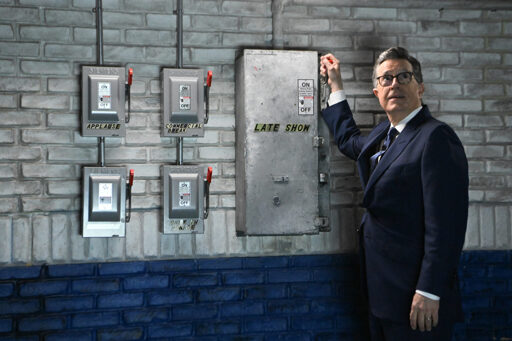
A CBS spokesperson rushed to the defense of the network’s censorship apparatus, giving statements to industry trade publications like Variety and Deadline, claiming that CBS Studios had actually financed and secretly produced the public-access episode in collaboration with Monroe Community Media. “As is our regular practice, we send copyright notices to unauthorized websites that post copyrighted content from CBS and our network/studio talent,” the spokesperson asserted, insisting the copyright enforcement was simply routine intellectual-property protection.
But that explanation raised more questions than it answered. Nothing in the broadcast identified CBS or Paramount as producers. There was no corporate copyright message at the end of the hour; instead, an independent, Chicago-based studio was listed as the production company. Colbert also spent much of the episode openly mocking Paramount and CBS in ways that strongly suggested they were not exactly thrilled with the project. So viewers were understandably skeptical that the corporation had lovingly funded an anti-corporate guerrilla comedy special only to immediately suppress its circulation online.
After a backlash erupted, CBS quickly retreated, announcing it would “waive further enforcement” pending additional review.
Friendly reminder that boycotts are about financially hurting the target. There are ways to enjoy the entertainment you like without funding the bastards 🏴☠️🏴☠️🏴☠️
You arrrrr correct.
There are also ways to hurt them more financially than just boycotting. Boycott companies who advertise with them too!
Boycott as a protest measure is most effective if it is applied closest to the source of contention. A drop in subscriptions, viewers and other typical KPI is much more visible to the direct target. If they look at their charts and see a dip, they’ll look for events and changes they made shortly before.
A company that advertises with them likely also advertises with others so the cause of “suddenly people hate us” being “someone else is something” is harder to identify. Odds are, your message would be diluted to the point of being illegible.
Of course, like all protests, they heavily depend on participation, whichever option you go for.
It’s not a crime if you do it while you are naked. [hotwires Lamborghini in the buff]
oh man. I practically can’t commit a crime then.