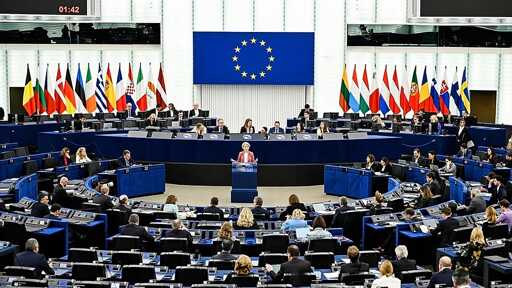
Twelve countries have already backed the initiative, with repeated obstruction by Viktor Orbán's Hungary increasingly fuelling calls for reform. #EuropeNews
A fair system (and our current system, in theory) is based on the principle of “one person, one vote.”
Accordingly, the large countries would have to have significantly more votes than the small ones, in proportion to their population.
Because right now, I don’t quite understand why the vote of a Luxembourg citizen is worth as much as that of 100,000 Germans. In my opinion, that has little to do with fairness… at least as long as the large countries are still footing the bulk of the budget.
To put it bluntly: If, in a village of 100 people, only one person had the right to a personal veto, we certainly wouldn’t be talking about an equitable, fair system.
The problem is that in the system you propose, smaller countries would have near zero incentive to participate because they’d always be overridden by larger countries.
Agreed that there may be issues such as Orban, but that’s a poor excuse to completely overwhelm other small countries’ opinions.
The problem is that in the system you propose, smaller countries would have near zero incentive to participate because they’d always be overridden by larger countries.
I get the problem and I don’t claim that my thoughts would be a ideal solution.
Currently, however, we face the opposite problem: The larger countries are increasingly being asked why they bear the lion’s share of the costs only to then have their sovereignty restricted by countries like Hungary (EU law takes precedence over national law).
Both problems—the lack of representation for both the small and the large countries—pose a threat to the alliance in their own ways.
I don’t know which of the two is more serious… but intuitively, I would say that a withdrawal by the large countries would hit the alliance much harder than one by the small ones, since a large portion of the budget (from which small states in particular benefit greatly) would then be lost.
The problem with large countries potentially leaving is that everybody loses out on global power impact. It would only be viable, imho, of the difference of opinions would be vast and would constantly have a negative impact.
After all, nobody agrees with somebody else all of the time.
A lot of other things would need to change first in the EU before we could even consider this objection to be relevant, and aside from that it is common to have minority protections or required super-majority rules that also in theory give a minority greater power than what their number alone would give them.
But as it stands, the EU is a voluntary association of states and not a federal state, and it would have never been so successful if it were something else. In fact, it would likely desintegrate relatively quickly if the people that push for less independence of the states get their way. Most likely it would devolve into a rump union with France and Germany, plus a few client states that are economically too dependent to leave. Proponents of this call that a union of two speeds, but in reality it would be the death of the EU.
In fact, it would likely desintegrate relatively quickly if the people that push for less independence of the states get their way.
I get your point but I guess this is where out views differ.
In my view, cooperation beats competition—always.
The problem with the unanimity rule is that it makes the EU as a whole extremely vulnerable to outside influence. Russia, China, the U.S.—none of these nations has an interest in a functioning EU. A divided continent at war with itself would be much better for these power centers, in line with the “divide and conquer” principle. Currently, it’s enough for these powerful blocs (relative to the individual EU states) to focus their resources on exerting influence in a single member state to paralyze the entire bloc. In the turbulent times ahead, THAT will be the end of the EU—not a further increase in cooperation among the states.
If further integration is not possible due to the individual states’ aspirations for sovereignty, we at least need a two-speed EU to secure the EU’s global position by further increasing the cost advantages of cooperation.
And to put it in utilitarian terms: In exchange for limiting their sovereignty, the small countries gain maximum benefits through cooperation with the bloc’s major economic powers. I see no other scenario in which a voluntary or involuntary reduction in sovereignty would lead to such benefits… which is why the EU is such an attractive and successful model.
It’s not “increased cooperation” if the larger states impose their will onto the smaller states, that is coercion.
And I think you misunderstand what makes the EU attractive for member states. It is exactly that the EU isn’t an imperial power where the core rules over the perifery that makes it attractive.
You might think that the EU can only survive among the big sharks by becoming one itself, but this is neither desireable on principle, nor is it so clear cut. Historically, alliances of nations often defeated imperial powers, both economically and militarily.
Historically, many alliances have been broken up and subjugated through deliberate outside influence as well…
Let’s hope you’re right and I’m wrong.
When I look around the continent today, however, I’m worried that self-serving politicians in a representative system will destroy the alliance of states out of personal greed… even if you’re fundamentally right.
/edit:
It’s not “increased cooperation” if the larger states impose their will onto the smaller states
So what’s your problem with a two-speed EU? Or did I misunderstand you?
Under this model, the small countries retain their veto power, but those that wish to do so can deepen their cooperation independently of that, without it being binding on the rest.
A rump EU where one or two larger states rule over some economically dependent client states in their perifery is not attractive to join, hence the “two-speed” EU might as well be called a dead EU.
If individual EU member states want to cooperate more closely (for example, by harmonizing national standards, deposit-return systems, or who knows what else), this must be possible without a small EU member state blocking it with a veto.
There are now three ways to achieve this: Either the participating countries create another confederation alongside the EU to facilitate this voluntary cooperation, or the countries do so in the form of a “two-speed EU.”, or we get or we’ll end up with a hodgepodge of bilateral and multilateral agreements (which is exactly what the Union was formed to prevent). I fail to see why a small EU member state should have the right to veto a decision made among several other EU partners that does not affect it.
As far as I understand, that’s the “two-speed EU” approach.


A thought on this:
A fair system (and our current system, in theory) is based on the principle of “one person, one vote.”
Accordingly, the large countries would have to have significantly more votes than the small ones, in proportion to their population.
Because right now, I don’t quite understand why the vote of a Luxembourg citizen is worth as much as that of 100,000 Germans. In my opinion, that has little to do with fairness… at least as long as the large countries are still footing the bulk of the budget.
To put it bluntly: If, in a village of 100 people, only one person had the right to a personal veto, we certainly wouldn’t be talking about an equitable, fair system.
The problem is that in the system you propose, smaller countries would have near zero incentive to participate because they’d always be overridden by larger countries.
Agreed that there may be issues such as Orban, but that’s a poor excuse to completely overwhelm other small countries’ opinions.
I get the problem and I don’t claim that my thoughts would be a ideal solution.
Currently, however, we face the opposite problem: The larger countries are increasingly being asked why they bear the lion’s share of the costs only to then have their sovereignty restricted by countries like Hungary (EU law takes precedence over national law).
Both problems—the lack of representation for both the small and the large countries—pose a threat to the alliance in their own ways.
I don’t know which of the two is more serious… but intuitively, I would say that a withdrawal by the large countries would hit the alliance much harder than one by the small ones, since a large portion of the budget (from which small states in particular benefit greatly) would then be lost.
The problem with large countries potentially leaving is that everybody loses out on global power impact. It would only be viable, imho, of the difference of opinions would be vast and would constantly have a negative impact.
After all, nobody agrees with somebody else all of the time.
A lot of other things would need to change first in the EU before we could even consider this objection to be relevant, and aside from that it is common to have minority protections or required super-majority rules that also in theory give a minority greater power than what their number alone would give them.
But as it stands, the EU is a voluntary association of states and not a federal state, and it would have never been so successful if it were something else. In fact, it would likely desintegrate relatively quickly if the people that push for less independence of the states get their way. Most likely it would devolve into a rump union with France and Germany, plus a few client states that are economically too dependent to leave. Proponents of this call that a union of two speeds, but in reality it would be the death of the EU.
I get your point but I guess this is where out views differ.
In my view, cooperation beats competition—always.
The problem with the unanimity rule is that it makes the EU as a whole extremely vulnerable to outside influence. Russia, China, the U.S.—none of these nations has an interest in a functioning EU. A divided continent at war with itself would be much better for these power centers, in line with the “divide and conquer” principle. Currently, it’s enough for these powerful blocs (relative to the individual EU states) to focus their resources on exerting influence in a single member state to paralyze the entire bloc. In the turbulent times ahead, THAT will be the end of the EU—not a further increase in cooperation among the states.
If further integration is not possible due to the individual states’ aspirations for sovereignty, we at least need a two-speed EU to secure the EU’s global position by further increasing the cost advantages of cooperation.
And to put it in utilitarian terms: In exchange for limiting their sovereignty, the small countries gain maximum benefits through cooperation with the bloc’s major economic powers. I see no other scenario in which a voluntary or involuntary reduction in sovereignty would lead to such benefits… which is why the EU is such an attractive and successful model.
It’s not “increased cooperation” if the larger states impose their will onto the smaller states, that is coercion.
And I think you misunderstand what makes the EU attractive for member states. It is exactly that the EU isn’t an imperial power where the core rules over the perifery that makes it attractive.
You might think that the EU can only survive among the big sharks by becoming one itself, but this is neither desireable on principle, nor is it so clear cut. Historically, alliances of nations often defeated imperial powers, both economically and militarily.
Historically, many alliances have been broken up and subjugated through deliberate outside influence as well…
Let’s hope you’re right and I’m wrong.
When I look around the continent today, however, I’m worried that self-serving politicians in a representative system will destroy the alliance of states out of personal greed… even if you’re fundamentally right.
/edit:
It is if it happens on a voluntary basis.
If it is voluntary then there is obviously no need to remove veto powers.
So what’s your problem with a two-speed EU? Or did I misunderstand you?
Under this model, the small countries retain their veto power, but those that wish to do so can deepen their cooperation independently of that, without it being binding on the rest.
A rump EU where one or two larger states rule over some economically dependent client states in their perifery is not attractive to join, hence the “two-speed” EU might as well be called a dead EU.
I don’t quite get it.
If individual EU member states want to cooperate more closely (for example, by harmonizing national standards, deposit-return systems, or who knows what else), this must be possible without a small EU member state blocking it with a veto.
There are now three ways to achieve this: Either the participating countries create another confederation alongside the EU to facilitate this voluntary cooperation, or the countries do so in the form of a “two-speed EU.”, or we get or we’ll end up with a hodgepodge of bilateral and multilateral agreements (which is exactly what the Union was formed to prevent). I fail to see why a small EU member state should have the right to veto a decision made among several other EU partners that does not affect it.
As far as I understand, that’s the “two-speed EU” approach.