KPop Demon Hunters was a resounding success for Netflix, coming out of nowhere to become the platform’s most-watched movie of all time and spawning several of last year’s biggest pop hits. It was less of a success for Demon Hunter, the Christian metal band that presumably has been getting mogged in the search bar ever…
They’ve been a band with a trademarked name for 25 years. Netflix used that same name as part if the movie title. The band can show measurable harm to their trademarked brand, by citing Google search results for Demon Hunter.
I can’t imagine Netflix would change the name of the movie, but paying the band for the damage to their trademark, and compensation for having to rebrand and trademark a new band name is a reasonable cost of success for Netflix.
The thing they have to fight though is that when you register for a trademark, it doesnt apply to every sector.
Apple cannot for example and sue farm conglomerates for using the word apple on their actual apples. They do not hold the trademark in terms of produce.
For example, Nintendo lost a trademark to a supermarket in I think costa rica named “Super Mario” (it was a supermarket owned by a guy named mario), because Nintendo did not own the trademark rights to supermarkets(however they held one for food products branded it, so the same supermarket could not name their home branded products super mario)
Its a matter if the band holds the trademark for movies, as the band in the show itself is not called Demon Hunters (its Hunter/x)
The movie title is referring to a fictional band, so even if you google “demon hunters band” you’re almost certainly going to get K-Pop Demon Hunters nowadays. I wouldn’t even know how to search for them and reliably get them to show up.
…well except this news story has gone viral so now they DO show up on top. The internet is weird man.
search engine SEOs are a separate issue than trademarks though. there isn’t any law that im aware of that requires search engines to be neutral on how searches are organized (or even if something shows at all). If Demon Hunter wants to fight against not being able to be found, theyd essentially for example, be fighting against every corporate who uses DMCA powers to force google to remove some links from being indexed.
What search engine do you use that respects that type of search now? I’ve found that for years now Google just ignores the -pop or sometimes just ignores the “-“ and adds the thing I’m trying to avoid directly to the search query.
I don’t think Kagi are unfair charging a subscription, it means they have financial incentives which aren’t mass cyberstalking like the adtech search providers. If a commercial service is free, you are almost certainly the real product.
I’m happy with their pricing and service level, while I prefer to self-host good luck self-hosting a search engine.
I don’t think they’re unfair at all for charging, and the price isn’t outrageous or anything. It’s just something I can do without having. I have other ways of ducking out of ads or being tracked.
That’s probably why they chose Apple as an example in the first place. Apple Computers was allowed to continue using the name because their computer business didn’t overlap Apple Corps’ music business.
You are right, but this isn’t a video game versus a grocery store chain comparison here. It’s a real life band vs a movie of a fictional band. The question of trademark infringement is not necessarily even about direct competition or intentional use. It is about whether a reasonable consumer of their product might confuse the two names/logos.
Were the movie just about some typical warriors fighting demons and otherwise just sharing a similar name, I doubt that they would have much of a case due to lack of overlap. But as the film is about a band (even if the band itself has a different name), and the actual soundtrack for this fictional band is immensely popular and carries the film name, and they’re selling live shows with the artists who created the actual music under the same name. I think they could make a really good case about consumer confusion.
Edit: They even demonstrate actual consumer confusion that has already occurred in their court filing.
To prove their point, included in the filing is an email from a person who spent $500 on top-tier tickets to a Demon Hunter concert in Albany, thinking they were purchasing admission to a KPop Demon Hunters event for their children, aged five and six.
The thing they have to fight though is that when you register for a trademark, it doesn’t apply to every sector.
Absolutely true! Which is why it’s good that they’re both in the entertainment sector.
And I’m sure it’s a non zero percentage of people who do think the fictional band is called Demon Hunters. But that may not even matter. There is a lot of overlap, being both in entertainment, and about music and bands etc. Hell, both are even about actual demons! This is a Christian metal band after all.
First names literally cannot be trademakred for living beings, but they can for commerce purposes so long as said commerced entity doesn’t also attempt to sue Mario for also using his born name on a non-trademarked product.
A notable high-profile legal defeat over first name usage involves reality star Kylie Jenner losing a trademark opposition against international pop singer Kylie Minogue.
Basically, the name Kylie is perceived by the public as a first name, NOT a brand and therefore is unenforceable in a court of law. They can continue with the trademark all they want, but their limited to only suing other companies, not humans using the name.
They got the trademark as soon as they started marketing their band. They may not have registered the trademark until 2022. Things like trademarks and copyright are implicit to the creator. Registering them just makes it easier for others to find your work and deter infringement and makes filing some paperwork, namely lawsuits, much easier.
Trademark law is all about how much the target market overlaps. Since they are a band and the movie is about a fictional band, they might have something
Yet Apple has Apple. Trademarks are about markets. You can make a purse called Apple but you cant make computer hardware or software called apple without at least a C&D from Apple. Demon Hunters is so less generic than Apple and they probably only have it in music and maybe visual arts because of music videos.
Yes, and it’s an excellent example that Apple the record label trademark was valid yet Apple the computer company could use it in a separate context, but had to change when they did iTunes.
Here it’s squarely in the same market. The cited example of customer confusion about a concert event works strongly in their favor.
It does work in their favor, even I personally disagree with the concept that you can trademark existing common terms in a restrictive way. It’s been going on for over half a century, so that fight has been lost.
Seems like it depends on what the outlet wants to spin.
One article cited the trademark for recorded music and merchandise in 2022, but vaguely said there was a separate trademark for performance, but that was left unspecified. That article seemed to want to induce a narrative of opportunistic trademark, but even then that’s perhaps a bit of a stretch as they wouldn’t have known it would have gone down as a media sensation that soon, though it had been announced as a thing.
However, another article explained that the performance trademark was registered in 2014. That is pretty unambiguously way before Netflix would have even had it as a thought.
Their case is shit, its frankly a miracle they were even able to trademark “Demon Hunters” because it’s so generic. I see this going nowhere.
How many band names would not be considered generic independent of context? The Cure is trademarked, R.E.M. is trademarked, Queen is trademarked… Famously Apple computers ran up against Apple records trademark and it was deemed both ok for Apple Computer to continue without declaring it genericized, just that they were trademark in their respective markets. Until iTunes, then Apple had to change the arrangement.
“No. Don’t be ridiculous. Demon Hunter is trademarked by a band no one has ever heard of. We call ourselves ‘Demon Stalkers’ to avoid an infringement lawsuit.”
my dude, Coke is generic. in the steel industry. there are hundreds if not thousands of coke companies. In the food industry? If there are more than one Coke company, they are subsidiaries of the Coca Cola Company.
I see what you mean and I understand how it’s more serious than it sounds as first. However, a band shouldn’t be able to lay claim to every version of demon hunter in media. Will they go after Wow for the class named such? How about the various animes with some variation in their title? Sure they can protect brand in a musical space, but that extends over to movies? When the movie title quietly literally describes exactly the protagonists?
You’re right. They might be able to win this case, but shouldn’t.
Absolutely agree. They shouldn’t be able to go after every use of demon hunters. And they aren’t. They’re only going after the one that’s caused actual demonstrable damage to the use of their trademark.
The risk the band took when naming themselves behind a concept. Irrespective of their personal harm, reaching across mediums to claim the name from a movie is the same as reaching to a video game. The concept of hunting demons is exponentially older than this bands formation in 2000. Hell, the Abrahamic demons they sing about aren’t even in the same mythology as Korean shamanic demons. The band should not get to lay claim all these different interpretations from their name alone. This is even more egregious than Buc-ee’s sueing any store with a cartoon animal logo, since at least they are both stores selling physical goods. Demon Hunter the band can’t even muster that much of a claim.
Well see how this plays out. While I’m definitely not rooting for Netflix, I am decidedly rooting against cross genre, cultural and medium trade mark overreach.
The band should not get to lay claim all these different interpretations from their name alone.
Which is exactly what they’re NOT doing. They had a name that was working for them for 25 years. They never sued anyone over using that name, because none of the other uses caused any problem for them. But now one has. When trying to find and identify a band named demon hunters, there is confusion with the movie. People can’t find the actual band any more. It’s only right for Netflix to compensate them for that harm.
I’m sure they’ll settle out of court, and come up with a new band name. Demon Slayers sounds obvious to me. Or maybe The First Demon Hunters.
Well, I don’t want to argue so it seems like we’re gonna have to agree to disagree. But I do feel like you are misunderstanding how trademark works.
Trademark only protects against customer confusion, not other projects becoming popular. Reasonable people looking for the band who instead find links to the movie are not likely to think the movie and the band are the same project or brand.
When a consumer knows what goods or services you offer, what other goods or services might they reasonably expect you to offer?× For example, if you sell hot dog buns, a consumer may expect you to sell hamburger buns and loaves of bread.
It’s irrelevant that the movie is now showing higher on search results. The relevance of trademark will apply to other touring bands selling music under the name Demon Hunter, or names like “D. Hunter” / “Demons Hunted” or if the movie characters were styled after the IRL band, they might have a case. But an all male metal using Christian imagery and prayer band is quite different than a fictional all female pop band that does dance fighting. The content of the 90+ minute film is sustainably different than the content of 3-4 minute religious metal song.
However I’ve said my piece and I don’t wish to belabour the point further. Time will tell who wins, but according to actual mechanics of trademark law the court will only rule for the band if they can show reasonable people confuse the musicians for a movie, which I think would be an unrealistic accomplishment.
No the movie is putting on a show and tour with the same name which is confusing consumers, as the band has proven, and that goes against their trademark.
I really don’t understand the logic you all have. Is this general ignorance of trademarks or some Netflix dick sucking that’s happening?
Yes and no. While they have the older brand, the term “Demon Hunter” could easily discounted as a generic and therefore not worthy of protection.
Microsoft skirted this issue with Windows (which is officially “Microsoft Windows”), and they can easily prove that their brand is associated with their product. But a third class niche band? I would not bet on it.
I don’t see how you could be right on this. It’s not generic and the band has used that mark for decades even if it was unregistered. If you use a brand for commerce that’s your proof you hold that mark. They had it for 25 years. Imo Netflix did cause them harm. I bet they do have a case here.
You keep saying it’s generic, but you clearly don’t understand the term as used with trade marks. Generic means it describes a product. So “Step up” couldn’t be used for a stair company as competitors couldn’t then describe “adding a step up to your front door”, or whatever, without risking infringement.
Genericisation then is when a trade mark becomes used descriptively - dumpster, is a classic example, another is jeep.
“Demon Hunters” would be generic if the business operation was hunting supernatural beasts and a judge determined that to be a real occupation … a singer/songwriter who called themselves “Solo Artist” would be generic.
There’s acquired distinctiveness too, which is why “pianoman” could be a trade mark (I’m not sure if it is, probably still not distinctive enough).
Sort of reminds me of when Apple moved into music, and Apple (music publisher) started dragging out documents that said they couldn’t do that.
Money won that case, and will win this one. Netflix could just pay them to go away, but honestly this case in 2 days has probably got more people hearing about Demon Hunter (the band) than 25 years of touring ever did…
yeah, the trademark wouldn’t extend to the movie, but it definitely could extend to concerts. they just need to adjust the name a little and make it clear which is which, which could legitimately involve both adjusting the names of their concerts in an amicable agreement. you’d think the kpop would be enough differentiation tho, but my wife educates the littles. i won’t say we’ve met some stupid parents, but we’ve met some exhausted parents.


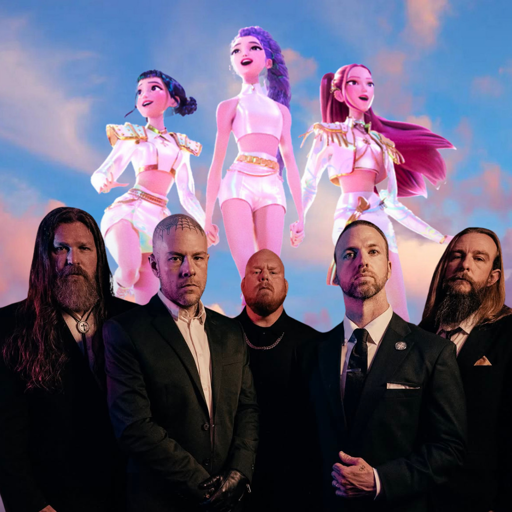
They actually have a decent case here.
They’ve been a band with a trademarked name for 25 years. Netflix used that same name as part if the movie title. The band can show measurable harm to their trademarked brand, by citing Google search results for Demon Hunter.
I can’t imagine Netflix would change the name of the movie, but paying the band for the damage to their trademark, and compensation for having to rebrand and trademark a new band name is a reasonable cost of success for Netflix.
In short, it isn’t very Oniony
The thing they have to fight though is that when you register for a trademark, it doesnt apply to every sector. Apple cannot for example and sue farm conglomerates for using the word apple on their actual apples. They do not hold the trademark in terms of produce.
For example, Nintendo lost a trademark to a supermarket in I think costa rica named “Super Mario” (it was a supermarket owned by a guy named mario), because Nintendo did not own the trademark rights to supermarkets(however they held one for food products branded it, so the same supermarket could not name their home branded products super mario)
Its a matter if the band holds the trademark for movies, as the band in the show itself is not called Demon Hunters (its Hunter/x)
The movie title is referring to a fictional band, so even if you google “demon hunters band” you’re almost certainly going to get K-Pop Demon Hunters nowadays. I wouldn’t even know how to search for them and reliably get them to show up.
…well except this news story has gone viral so now they DO show up on top. The internet is weird man.
search engine SEOs are a separate issue than trademarks though. there isn’t any law that im aware of that requires search engines to be neutral on how searches are organized (or even if something shows at all). If Demon Hunter wants to fight against not being able to be found, theyd essentially for example, be fighting against every corporate who uses DMCA powers to force google to remove some links from being indexed.
They’re not suing Google though right? They’re suing Netflix.
It’s about being able to easily demonstrate harm to their brand by making it difficult to find them with a normal search.
By using the old ways of search fu.
“Demon Hunter Christian Rock -pop -k-pop -k-pop”
What search engine do you use that respects that type of search now? I’ve found that for years now Google just ignores the -pop or sometimes just ignores the “-“ and adds the thing I’m trying to avoid directly to the search query.
Yeah. Google started ignoring you more and more with it over the past like 5 years or so, but duckduckgo still uses it correctly.
So Bing.
kagi.
I hate monthly subscription anything, though. I don’t want to pay $5 a month to search for things. Duckduckgo is fine, and it also works with -
I don’t think Kagi are unfair charging a subscription, it means they have financial incentives which aren’t mass cyberstalking like the adtech search providers. If a commercial service is free, you are almost certainly the real product.
I’m happy with their pricing and service level, while I prefer to self-host good luck self-hosting a search engine.
I don’t think they’re unfair at all for charging, and the price isn’t outrageous or anything. It’s just something I can do without having. I have other ways of ducking out of ads or being tracked.
deleted by creator
It’s hilarious that you use Apple as an example. https://en.wikipedia.org/wiki/Apple_Corps_v_Apple_Computer
I think they are or did also sue Apple Theaters even tho Apple Theaters was operating long before Apple TV.
It’s like the Buc-ees gas station suing an underwear company because they had a squirrel logo (Buc—ees logo is a beaver).
That’s probably why they chose Apple as an example in the first place. Apple Computers was allowed to continue using the name because their computer business didn’t overlap Apple Corps’ music business.
Sosume
You are right, but this isn’t a video game versus a grocery store chain comparison here. It’s a real life band vs a movie of a fictional band. The question of trademark infringement is not necessarily even about direct competition or intentional use. It is about whether a reasonable consumer of their product might confuse the two names/logos.
Were the movie just about some typical warriors fighting demons and otherwise just sharing a similar name, I doubt that they would have much of a case due to lack of overlap. But as the film is about a band (even if the band itself has a different name), and the actual soundtrack for this fictional band is immensely popular and carries the film name, and they’re selling live shows with the artists who created the actual music under the same name. I think they could make a really good case about consumer confusion.
Edit: They even demonstrate actual consumer confusion that has already occurred in their court filing.
Yes they have proof delivered straight to them that consumers are confused. I think they have a case.
Absolutely true! Which is why it’s good that they’re both in the entertainment sector.
And I’m sure it’s a non zero percentage of people who do think the fictional band is called Demon Hunters. But that may not even matter. There is a lot of overlap, being both in entertainment, and about music and bands etc. Hell, both are even about actual demons! This is a Christian metal band after all.
I wonder if using just Mario for the food would be fine.
Go to Super Mario’s and then get Mario’s lasagna!
First names literally cannot be trademakred for living beings, but they can for commerce purposes so long as said commerced entity doesn’t also attempt to sue Mario for also using his born name on a non-trademarked product.
I dont understand what you mean by the so long as part?
A notable high-profile legal defeat over first name usage involves reality star Kylie Jenner losing a trademark opposition against international pop singer Kylie Minogue.
Basically, the name Kylie is perceived by the public as a first name, NOT a brand and therefore is unenforceable in a court of law. They can continue with the trademark all they want, but their limited to only suing other companies, not humans using the name.
ah, gotcha. Thanks!
It does appear to have confused actual “morons in a hurry”, so yeah, maybe.
They trademarked “Demon Hunters” in 2022…
Their case is shit, its frankly a miracle they were even able to trademark “Demon Hunters” because it’s so generic. I see this going nowhere.
They got the trademark as soon as they started marketing their band. They may not have registered the trademark until 2022. Things like trademarks and copyright are implicit to the creator. Registering them just makes it easier for others to find your work and deter infringement and makes filing some paperwork, namely lawsuits, much easier.
Trademark law is all about how much the target market overlaps. Since they are a band and the movie is about a fictional band, they might have something
Yet Apple has Apple. Trademarks are about markets. You can make a purse called Apple but you cant make computer hardware or software called apple without at least a C&D from Apple. Demon Hunters is so less generic than Apple and they probably only have it in music and maybe visual arts because of music videos.
Ironically, Apple got the shit sued out of them for the name by the Beatles because it infringed on the name of their record label.
Yes, and it’s an excellent example that Apple the record label trademark was valid yet Apple the computer company could use it in a separate context, but had to change when they did iTunes.
Here it’s squarely in the same market. The cited example of customer confusion about a concert event works strongly in their favor.
It does work in their favor, even I personally disagree with the concept that you can trademark existing common terms in a restrictive way. It’s been going on for over half a century, so that fight has been lost.
This seems to be a bit mixed in reporting.
Seems like it depends on what the outlet wants to spin.
One article cited the trademark for recorded music and merchandise in 2022, but vaguely said there was a separate trademark for performance, but that was left unspecified. That article seemed to want to induce a narrative of opportunistic trademark, but even then that’s perhaps a bit of a stretch as they wouldn’t have known it would have gone down as a media sensation that soon, though it had been announced as a thing.
However, another article explained that the performance trademark was registered in 2014. That is pretty unambiguously way before Netflix would have even had it as a thought.
How many band names would not be considered generic independent of context? The Cure is trademarked, R.E.M. is trademarked, Queen is trademarked… Famously Apple computers ran up against Apple records trademark and it was deemed both ok for Apple Computer to continue without declaring it genericized, just that they were trademark in their respective markets. Until iTunes, then Apple had to change the arrangement.
Demon hunters is not generic. It doesn’t work the way you think. I hold a few trademarks.
“What do you do for a living?”
“I hunt demons.”
“So, you’re a demon hunter?”
“No. Don’t be ridiculous. Demon Hunter is trademarked by a band no one has ever heard of. We call ourselves ‘Demon Stalkers’ to avoid an infringement lawsuit.”
my dude, Coke is generic. in the steel industry. there are hundreds if not thousands of coke companies. In the food industry? If there are more than one Coke company, they are subsidiaries of the Coca Cola Company.
Far easier than you’d think. The patent office is understaffed and the rules for this kind of thing are fairly loose.
Netflix didn’t give the movie its title, how do you figure they are liable at all?
Even if the movie had been a Netflix production, how is netflix liable for the behaviour of a third party algorithm?
The title is a little misleading, Google searches aren’t involved, that was colour added by the author
Netflix is the distributor. They do approve the title it’s sold under.
It’s not about the search rankings directly, that’s just a signal of the effect of the trademark dilution for the band. It’s proof of the damage.
I see what you mean and I understand how it’s more serious than it sounds as first. However, a band shouldn’t be able to lay claim to every version of demon hunter in media. Will they go after Wow for the class named such? How about the various animes with some variation in their title? Sure they can protect brand in a musical space, but that extends over to movies? When the movie title quietly literally describes exactly the protagonists?
You’re right. They might be able to win this case, but shouldn’t.
Absolutely agree. They shouldn’t be able to go after every use of demon hunters. And they aren’t. They’re only going after the one that’s caused actual demonstrable damage to the use of their trademark.
The risk the band took when naming themselves behind a concept. Irrespective of their personal harm, reaching across mediums to claim the name from a movie is the same as reaching to a video game. The concept of hunting demons is exponentially older than this bands formation in 2000. Hell, the Abrahamic demons they sing about aren’t even in the same mythology as Korean shamanic demons. The band should not get to lay claim all these different interpretations from their name alone. This is even more egregious than Buc-ee’s sueing any store with a cartoon animal logo, since at least they are both stores selling physical goods. Demon Hunter the band can’t even muster that much of a claim.
Well see how this plays out. While I’m definitely not rooting for Netflix, I am decidedly rooting against cross genre, cultural and medium trade mark overreach.
Which is exactly what they’re NOT doing. They had a name that was working for them for 25 years. They never sued anyone over using that name, because none of the other uses caused any problem for them. But now one has. When trying to find and identify a band named demon hunters, there is confusion with the movie. People can’t find the actual band any more. It’s only right for Netflix to compensate them for that harm.
I’m sure they’ll settle out of court, and come up with a new band name.
Demon Slayers sounds obvious to me. Or maybe The First Demon Hunters.
Well, I don’t want to argue so it seems like we’re gonna have to agree to disagree. But I do feel like you are misunderstanding how trademark works.
Trademark only protects against customer confusion, not other projects becoming popular. Reasonable people looking for the band who instead find links to the movie are not likely to think the movie and the band are the same project or brand.
Look at the examples from the patent office .
It’s irrelevant that the movie is now showing higher on search results. The relevance of trademark will apply to other touring bands selling music under the name Demon Hunter, or names like “D. Hunter” / “Demons Hunted” or if the movie characters were styled after the IRL band, they might have a case. But an all male metal using Christian imagery and prayer band is quite different than a fictional all female pop band that does dance fighting. The content of the 90+ minute film is sustainably different than the content of 3-4 minute religious metal song.
However I’ve said my piece and I don’t wish to belabour the point further. Time will tell who wins, but according to actual mechanics of trademark law the court will only rule for the band if they can show reasonable people confuse the musicians for a movie, which I think would be an unrealistic accomplishment.
They have an email from a confused consumer asking for a refund due to them mixing up the band with the movie. They absolutely have a case.
This isn’t about the movie, its about the live concerts that Netflix is doing under the name Kpop demon hunters.
No the movie is putting on a show and tour with the same name which is confusing consumers, as the band has proven, and that goes against their trademark.
I really don’t understand the logic you all have. Is this general ignorance of trademarks or some Netflix dick sucking that’s happening?
Yes and no. While they have the older brand, the term “Demon Hunter” could easily discounted as a generic and therefore not worthy of protection.
Microsoft skirted this issue with Windows (which is officially “Microsoft Windows”), and they can easily prove that their brand is associated with their product. But a third class niche band? I would not bet on it.
I don’t see how you could be right on this. It’s not generic and the band has used that mark for decades even if it was unregistered. If you use a brand for commerce that’s your proof you hold that mark. They had it for 25 years. Imo Netflix did cause them harm. I bet they do have a case here.
It was probably not registered because it is generic.
You keep saying it’s generic, but you clearly don’t understand the term as used with trade marks. Generic means it describes a product. So “Step up” couldn’t be used for a stair company as competitors couldn’t then describe “adding a step up to your front door”, or whatever, without risking infringement.
Genericisation then is when a trade mark becomes used descriptively - dumpster, is a classic example, another is jeep.
“Demon Hunters” would be generic if the business operation was hunting supernatural beasts and a judge determined that to be a real occupation … a singer/songwriter who called themselves “Solo Artist” would be generic.
There’s acquired distinctiveness too, which is why “pianoman” could be a trade mark (I’m not sure if it is, probably still not distinctive enough).
Sort of reminds me of when Apple moved into music, and Apple (music publisher) started dragging out documents that said they couldn’t do that.
Money won that case, and will win this one. Netflix could just pay them to go away, but honestly this case in 2 days has probably got more people hearing about Demon Hunter (the band) than 25 years of touring ever did…
Yeah this is weird, this seems specfically why these laws exist.
And to be fair, no matter what sum they have to pay, it’ll be pocket change for Netflix at most.
yeah, the trademark wouldn’t extend to the movie, but it definitely could extend to concerts. they just need to adjust the name a little and make it clear which is which, which could legitimately involve both adjusting the names of their concerts in an amicable agreement. you’d think the kpop would be enough differentiation tho, but my wife educates the littles. i won’t say we’ve met some stupid parents, but we’ve met some exhausted parents.
Watch the Legal Eagle video on John Oliver Vs. Buckee’s. There’s a huge uphill battle here for this band no one has ever heard of.
I did. Court would be a coin toss. They’ll settle.
Offer them tree-fiddy
lol they have no case at all.
I hadn’t thought of that. It’s a compelling point.
You should really become a litigator.
They’re just going to settle out of court anyway, so I guess we’ll never know.
Good enough to get a settlement, at any rate.