Corporations still use checks—particularly to pay debt and penalties and such—because it’s a better deal for them: the debt is counted as having been paid immediately, but it takes a few days for the money to actually transfer. That’s more time for that money to generate interest for them. On a payment of millions, that’s worthwhile to them. Electronic transfers remove the money from the sending account immediately, so they don’t get that extra bonus interest.
That’s it? 10kg? And clankers seem to think that’s about 11-12L. So I can load a heavy duty duffel with about 4mil and its only about 40kg. Easy peasy.
In this case, it would actually be beneficiary to use checks because they can do it via cashier check to guarantee that it’s going to deposit and also it makes the paper trail to help protect against the I wasn’t paid or this person never got the money claim.
Not that I don’t believe that checks are not ancient outdated technology as well, but I do agree there are some rare occasions where it makes more sense to use a check versus having to deal with a wire transfer or paying in physical denomination.
What’s the process and why is it so arduous? Here it’s just account name, bank number, account number and you can expect it next day (or instant using modern methods). Sure beats going to the bank…
I’m not sure where you are located but, in the US it’s those 3 pieces of information as well. I think checks in the case of validity and legal situations make a lot more sense. Not everyone will have that information at hand, nor do they have banks that are willing to allow them or charge a fee for them. It’s also 2 pieces of information more than a cashiers check would require, and discloses where the destination of the funds is going to anyone involved which includes both the handler and the person who is giving you money, where with a cashiers check you can deposit or cash those most anywhere that manages checks, be it your bank, an opposing bank, walmart etc. It also helps with the actual paper trail as you have a physical piece of paper confirming you are going to be receiving the amount, where a wire is fully digital and if something messed up along the way, it can take weeks to resolve the issue. You can’t screw a cashiers check up without really trying, it’s weighted against the bank itself instead of the person or entity that is owing the money, which means it can’t bounce(like normal checks can), and it only needs your name which, the court and the payer should already know, where a wire transfer can be screwed up by a simple typo of the numbers.
The processing speeds are also night and day. You mentioned next day but, that is likely because because your bank is doing you a favor with it. A wire transfer can take up to 5-7 business days to actually transfer, in some cases it can even take up to a couple weeks. Cashier checks are handled similar to government checks and are legally mandated (at least in the US) to be cleared next day. Wire transfers to my knowledge do not have this obligation.
Thanks for the concise explanation! Sounds like quite the hassle indeed.
My home country is Australia and it’s basically the polar opposite. A direct deposit (what we call a wire transfer) is always less than 24 hours and never costs anything to the account holders. Even for hundreds of thousands of dollars (such as when purchasing property).
There’s also a secondary system called Osko and if both banks support it the transfer is instant (and still free). Salaries must be paid using direct deposit (to ensure an electronic ‘paper trail’). No one with a job or government benefits is unbanked. For at least the last 35 years everyone opens their first bank account at elementary school, where the (former) government bank attends and sets up a fee free account for each child. There are no account fees. Only 15% of transactions in Australia involve cash money, and almost all others are direct deposit or direct debit with about 0.1% being cheques.
If for some reason an individual doesn’t have an app with their account info on it they will carry it in their wallet. Many people have an email address attached to their account anyway and you can use the email address instead for sending a direct deposit. Most businesses still require the Bank/Account number instead though.
The number of people with a cheque book is statistically insignificant. The government will cease using cheques by 2028, and they will be completely abolished by 2030. I haven’t seen a cheque in the last 20 years in Europe, Asia or Oceania. The last time I saw one was in 2023 in Las Vegas.
Yeah, it sounds like it’s much better implemented there. I’ve always found it stupid that in today’s age of everything being digital, that it could take more than a day for money to go from point A to point B, especially since it’s not like trucks are being loaded with gold or money or anything like that, its all centrally managed anyway, from what I understand, the us attempted to start a system back in 2023 that would allow for real-time transfers of small denominations, when they got a scare that blockchain was gaining traction, but I don’t think it ever went anywhere.
Bank accounts are very different in the states, through, while a good portion of the people here do have bank accounts. There are a handful that just never open one. They exclusively cash their checks at a store like Walmart or something like that that handles check services (which have a fee to do). ACH is generally free as long as it’s a deposit, wire transfer out is sometimes fee’d and the same with wire transfer in. And some banks don’t easily show your routing or your account number in order to be able to set up a transfer. Like I have four banks myself and of those four banks, one of them I have to call to get that information. One fees me on wire out with no fee on deposit, a one restricts how much I can wire out at a time (I think it’s 300 daily) and the last one I have no issues. Only 2 of them show the info needed for it right in the app. I agree that 90% of the time. I would much rather have a wire transfer, but it can be a hassle at times.
Checks are nice when you don’t want acquiesce to the anti-privacy account making nonsense or pay the “convenience” fee some companies pull on their websites. With the added bonus of in order to get their money they need to take extra steps and have a real person process the payment because the company dicked around. Checks are awesome.
In the U.S. checks are still a very common way to pay bills for businesses. The reason: checks are cheaper. ACH fees are more expensive.
In other countries the reverse is true. Checks cost money while ACH is free. So everyone does ACH and checks are almost unheard of.
In the U.S. it’s faster and easier to reimburse myself from the my business account with a check to my personal account. Its truly ridiculous process. I print out a check from the business software and sign the check. I then remote deposit the check into my personal account (endorsing then back) with my phone. The check never leaves my desk.
It costs me under $0.03 (cost of the check) to do it this way. ACH fees are $5/transaction for essentially the same thing.
My mom still writes checks for all her bills, then the shut-off notices and the checks cross in the mail, and she ends up getting her electricity cut off. I’m trying to get her to use the Internet to pay her bills, but she acts like I’m stupid for suggesting any other way than mailing a check.
its old, not 2026, it’s American they have a zillion banks and they’re stuck in the 1990s with banking. I have an old cheque book as an antique from yesteryear here in Australia where cheques are no longer used. (EFT everywhere)
I mean in fairness most people in America use credit/debit cards or echecks for day-to-day transactions. Paper checks are mostly for when corporations or slow-moving bureaucratic arms of the government want to sit on your money for as long as possible.
I’ve often found it’s sometimes cheaper to pay some bills by check. The cost of a postage stamp can be lower than the “convenience fee” of paying online.
So you pay to use online banking? European banks started charging for everything else to force people online. They save a lot of money now that there are basically no more bank offices left. And cheques haven’t been in use since the 90s
Tell that to French old ladies. I’ve had the pleasure of waiting in line at the supermarket check out while Granny in front writes a cheque for her groceries, far more recently than you’d expect!


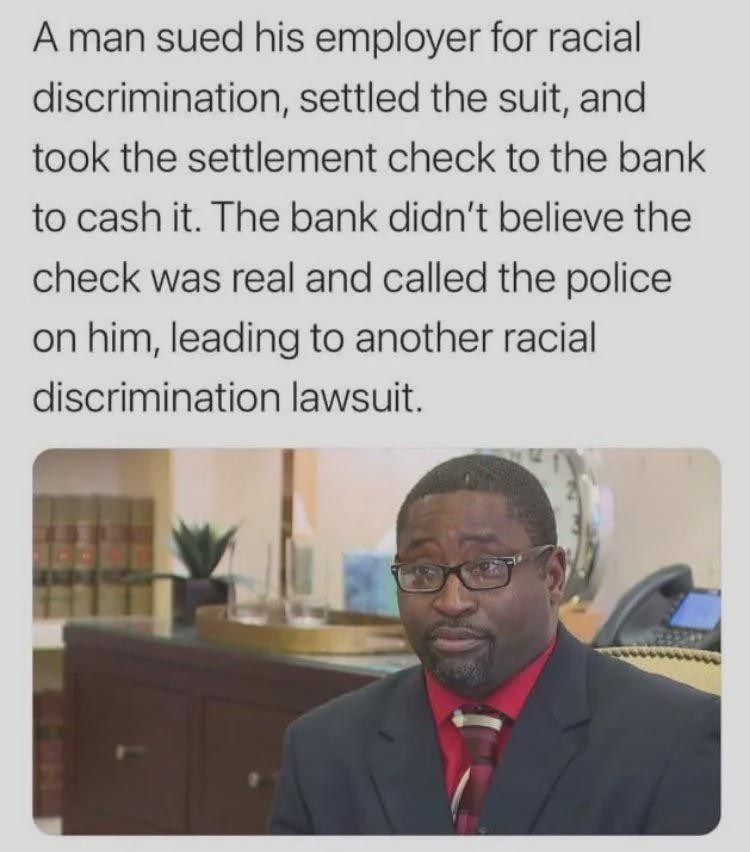
Why do they apparently still use cheques in 2026?
Corporations still use checks—particularly to pay debt and penalties and such—because it’s a better deal for them: the debt is counted as having been paid immediately, but it takes a few days for the money to actually transfer. That’s more time for that money to generate interest for them. On a payment of millions, that’s worthwhile to them. Electronic transfers remove the money from the sending account immediately, so they don’t get that extra bonus interest.
Because metal briefcases stuffed with unmarked bills is too cliche.
They are also very heavy.
$1000000 in $100 is 22 lbs.
The logistics alone make most heist movies improbable.
I guess I’m confused. You think ~20 lbs is unmanageably heavy for a million dollars?
Nobody in a heist is stealing just a million.
These heists are for hundreds of millions of dollars., and they’re carrying it out in a duffel.
That’s why they upgrade the shocks on their mini coopers…
That’s it? 10kg? And clankers seem to think that’s about 11-12L. So I can load a heavy duty duffel with about 4mil and its only about 40kg. Easy peasy.
This story is ancient. I remember seeing it circulate in the early 2010s.
In this case, it would actually be beneficiary to use checks because they can do it via cashier check to guarantee that it’s going to deposit and also it makes the paper trail to help protect against the I wasn’t paid or this person never got the money claim.
Not that I don’t believe that checks are not ancient outdated technology as well, but I do agree there are some rare occasions where it makes more sense to use a check versus having to deal with a wire transfer or paying in physical denomination.
What’s the process and why is it so arduous? Here it’s just account name, bank number, account number and you can expect it next day (or instant using modern methods). Sure beats going to the bank…
I’m not sure where you are located but, in the US it’s those 3 pieces of information as well. I think checks in the case of validity and legal situations make a lot more sense. Not everyone will have that information at hand, nor do they have banks that are willing to allow them or charge a fee for them. It’s also 2 pieces of information more than a cashiers check would require, and discloses where the destination of the funds is going to anyone involved which includes both the handler and the person who is giving you money, where with a cashiers check you can deposit or cash those most anywhere that manages checks, be it your bank, an opposing bank, walmart etc. It also helps with the actual paper trail as you have a physical piece of paper confirming you are going to be receiving the amount, where a wire is fully digital and if something messed up along the way, it can take weeks to resolve the issue. You can’t screw a cashiers check up without really trying, it’s weighted against the bank itself instead of the person or entity that is owing the money, which means it can’t bounce(like normal checks can), and it only needs your name which, the court and the payer should already know, where a wire transfer can be screwed up by a simple typo of the numbers.
The processing speeds are also night and day. You mentioned next day but, that is likely because because your bank is doing you a favor with it. A wire transfer can take up to 5-7 business days to actually transfer, in some cases it can even take up to a couple weeks. Cashier checks are handled similar to government checks and are legally mandated (at least in the US) to be cleared next day. Wire transfers to my knowledge do not have this obligation.
Thanks for the concise explanation! Sounds like quite the hassle indeed.
My home country is Australia and it’s basically the polar opposite. A direct deposit (what we call a wire transfer) is always less than 24 hours and never costs anything to the account holders. Even for hundreds of thousands of dollars (such as when purchasing property).
There’s also a secondary system called Osko and if both banks support it the transfer is instant (and still free). Salaries must be paid using direct deposit (to ensure an electronic ‘paper trail’). No one with a job or government benefits is unbanked. For at least the last 35 years everyone opens their first bank account at elementary school, where the (former) government bank attends and sets up a fee free account for each child. There are no account fees. Only 15% of transactions in Australia involve cash money, and almost all others are direct deposit or direct debit with about 0.1% being cheques.
If for some reason an individual doesn’t have an app with their account info on it they will carry it in their wallet. Many people have an email address attached to their account anyway and you can use the email address instead for sending a direct deposit. Most businesses still require the Bank/Account number instead though.
The number of people with a cheque book is statistically insignificant. The government will cease using cheques by 2028, and they will be completely abolished by 2030. I haven’t seen a cheque in the last 20 years in Europe, Asia or Oceania. The last time I saw one was in 2023 in Las Vegas.
Yeah, it sounds like it’s much better implemented there. I’ve always found it stupid that in today’s age of everything being digital, that it could take more than a day for money to go from point A to point B, especially since it’s not like trucks are being loaded with gold or money or anything like that, its all centrally managed anyway, from what I understand, the us attempted to start a system back in 2023 that would allow for real-time transfers of small denominations, when they got a scare that blockchain was gaining traction, but I don’t think it ever went anywhere.
Bank accounts are very different in the states, through, while a good portion of the people here do have bank accounts. There are a handful that just never open one. They exclusively cash their checks at a store like Walmart or something like that that handles check services (which have a fee to do). ACH is generally free as long as it’s a deposit, wire transfer out is sometimes fee’d and the same with wire transfer in. And some banks don’t easily show your routing or your account number in order to be able to set up a transfer. Like I have four banks myself and of those four banks, one of them I have to call to get that information. One fees me on wire out with no fee on deposit, a one restricts how much I can wire out at a time (I think it’s 300 daily) and the last one I have no issues. Only 2 of them show the info needed for it right in the app. I agree that 90% of the time. I would much rather have a wire transfer, but it can be a hassle at times.
Checks are nice when you don’t want acquiesce to the anti-privacy account making nonsense or pay the “convenience” fee some companies pull on their websites. With the added bonus of in order to get their money they need to take extra steps and have a real person process the payment because the company dicked around. Checks are awesome.
They may not be the most common method of payment, but they are regularly used.
It depends on the country you are in.
In the U.S. checks are still a very common way to pay bills for businesses. The reason: checks are cheaper. ACH fees are more expensive.
In other countries the reverse is true. Checks cost money while ACH is free. So everyone does ACH and checks are almost unheard of.
In the U.S. it’s faster and easier to reimburse myself from the my business account with a check to my personal account. Its truly ridiculous process. I print out a check from the business software and sign the check. I then remote deposit the check into my personal account (endorsing then back) with my phone. The check never leaves my desk.
It costs me under $0.03 (cost of the check) to do it this way. ACH fees are $5/transaction for essentially the same thing.
and you owe me €0.03 for looking up what ACH is.
I’ll send you a check. With the currency conversion and bank fees for processing, it will cost you €10.00 to deposit it.
I just get a bank transfer and it’s instantly in my account
My mom still writes checks for all her bills, then the shut-off notices and the checks cross in the mail, and she ends up getting her electricity cut off. I’m trying to get her to use the Internet to pay her bills, but she acts like I’m stupid for suggesting any other way than mailing a check.
They also still use cheques in 2026 though
Well they don’t so much anymore in 2026, but that’s not relevant to the story in the post
its old, not 2026, it’s American they have a zillion banks and they’re stuck in the 1990s with banking. I have an old cheque book as an antique from yesteryear here in Australia where cheques are no longer used. (EFT everywhere)
Some offices (not necessarily just banks) still want people to send documents by fax.
I mean in fairness most people in America use credit/debit cards or echecks for day-to-day transactions. Paper checks are mostly for when corporations or slow-moving bureaucratic arms of the government want to sit on your money for as long as possible.
I’ve often found it’s sometimes cheaper to pay some bills by check. The cost of a postage stamp can be lower than the “convenience fee” of paying online.
So you pay to use online banking? European banks started charging for everything else to force people online. They save a lot of money now that there are basically no more bank offices left. And cheques haven’t been in use since the 90s
Tell that to French old ladies. I’ve had the pleasure of waiting in line at the supermarket check out while Granny in front writes a cheque for her groceries, far more recently than you’d expect!
deleted by creator
Muricuhhhhh fuck yeahhhh freeeeeeedom
because a card bas a spending limite, while the checks dont