How do? Does this apply even if it’s a locally run LLM? Even if it’s done using green energy like Mistral? Even if all of the AI written code is carefully reviewed by professionals?
Is it a problem of making it too easy for people? If so, what is the correct amount of easiness for people? Shall we start taking clothing down to the river to scrub instead of using washing machines too?
The “no such thing as a bad tool” argument falls apart if you start thinking about it for longer than a few seconds. If you have a hammer made out of styrofoam, that’s a bad hammer.
Wtf are you doing eating with a fork that you couldn’t be doing with your bare fingers?
Preach. There was a lot of fuss made when I was in school about “humans are the only animals who use tools” - of course by then all kinds of animals had been documented clearly using tools, but they were still teaching the kiddos (self included) that “humans are special.”
I have been making and using software tools for 45 years, a tool is something you use to make a job easier, faster, cleaner, safer, a tool might make the impossible possible, but that’s far from a requirement for “tool-ness.”
I’ve read this article before. Found it very reductionist. For example, it says that weapons might be good for Ukraine, but they’re bad in general. You can’t just “in general” something like weapons or AI. They have thousands of different contexts and use cases. Sure, a weapon can make somebody homocidal in one context, but it might make somebody a militia in another context. AI can be a slop generator for a vibe coder, and a bug detection tool for Linus Torvalds.
I’m not a fan of how modern politics and social justice is so reductionist nowadays. “One aspect of X is bad, so we must reject X altogether”. Can we add even a little nuance to our discussions? This mindset is brainrot.
In other words, you found an article whose headline seems to make your point for you - which you probably didn’t even read or you might have an actual answer. I did read it, and found the reasoning spurious, like jumping through a series of philosophical hoops to prove all taxes are illegal or that birds don’t exist. The author’s example of a Chinese dish with an unusually large amount of chopped peppers being more easily eaten with chopsticks than with a fork, could just as well have been a bowl of broth that’s much easier to eat with a spoon than with chopsticks. All it demonstrates is that any tool can have appropriate and inappropriate use cases. They’re still just tools.


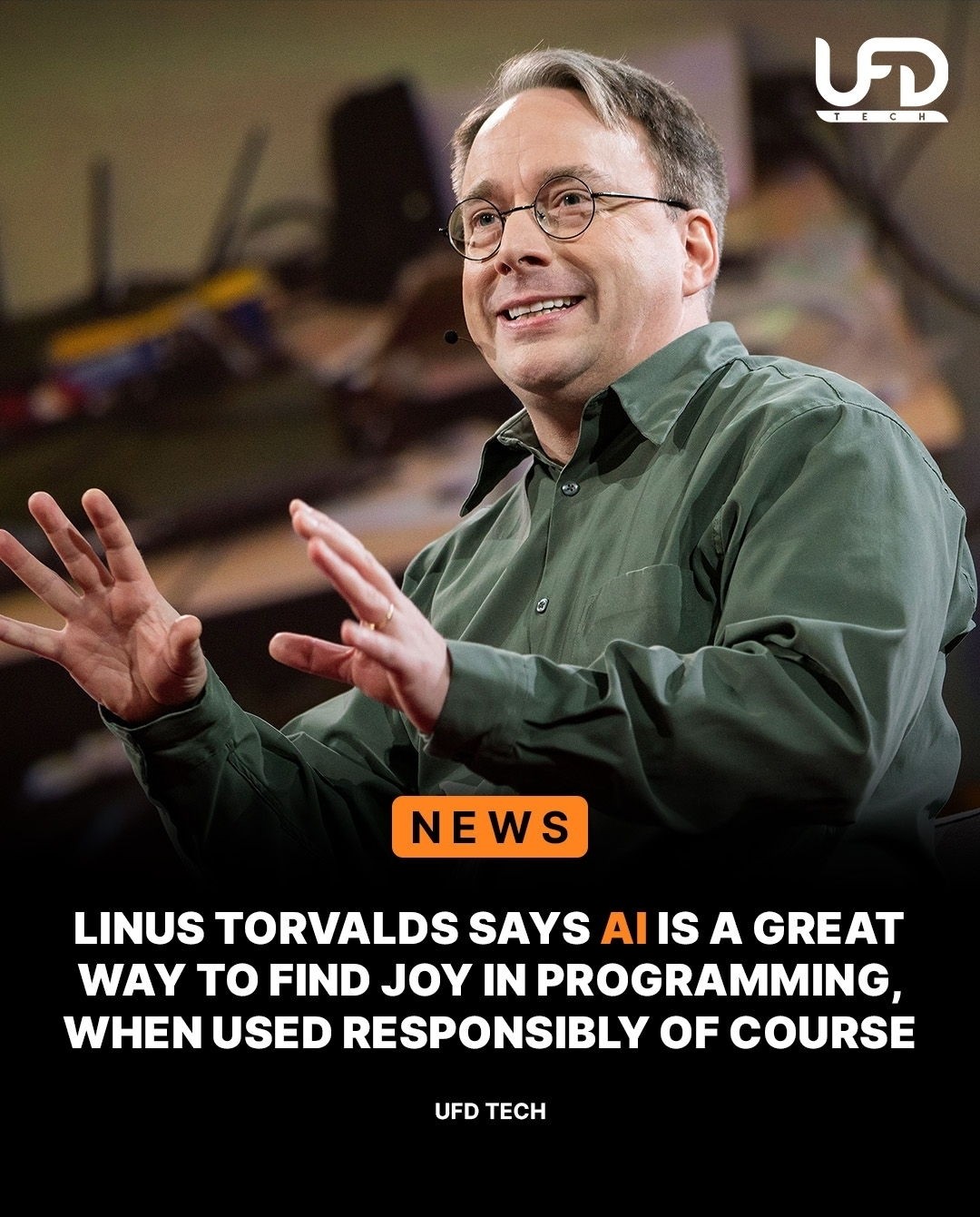
The fucking point that Linus misses is, using AI by itself is intrinsically the more irresponsible thing to do. Change my mind.
How do? Does this apply even if it’s a locally run LLM? Even if it’s done using green energy like Mistral? Even if all of the AI written code is carefully reviewed by professionals?
Is it a problem of making it too easy for people? If so, what is the correct amount of easiness for people? Shall we start taking clothing down to the river to scrub instead of using washing machines too?
attack it with ethics!
You are claiming it’s irresponsible, why do you say so?
AI is just a technology, how you use it makes it bad or not.
Nuclear is the cleanest safest energy we have, but you can also make bombs with it.
The “no such thing as a bad tool” argument falls apart if you start thinking about it for longer than a few seconds. If you have a hammer made out of styrofoam, that’s a bad hammer.
https://deadsimpletech.com/blog/no-such-thing-as-just-a-tool
Immediately goes on to using a fork as an example. Wtf are you doing eating with a fork that you couldn’t be doing with your bare fingers?
Argument is stupid, and falls apart at the first hint of critical thinking.
Preach. There was a lot of fuss made when I was in school about “humans are the only animals who use tools” - of course by then all kinds of animals had been documented clearly using tools, but they were still teaching the kiddos (self included) that “humans are special.”
I have been making and using software tools for 45 years, a tool is something you use to make a job easier, faster, cleaner, safer, a tool might make the impossible possible, but that’s far from a requirement for “tool-ness.”
I’ve read this article before. Found it very reductionist. For example, it says that weapons might be good for Ukraine, but they’re bad in general. You can’t just “in general” something like weapons or AI. They have thousands of different contexts and use cases. Sure, a weapon can make somebody homocidal in one context, but it might make somebody a militia in another context. AI can be a slop generator for a vibe coder, and a bug detection tool for Linus Torvalds.
I’m not a fan of how modern politics and social justice is so reductionist nowadays. “One aspect of X is bad, so we must reject X altogether”. Can we add even a little nuance to our discussions? This mindset is brainrot.
In other words, you found an article whose headline seems to make your point for you - which you probably didn’t even read or you might have an actual answer. I did read it, and found the reasoning spurious, like jumping through a series of philosophical hoops to prove all taxes are illegal or that birds don’t exist. The author’s example of a Chinese dish with an unusually large amount of chopped peppers being more easily eaten with chopsticks than with a fork, could just as well have been a bowl of broth that’s much easier to eat with a spoon than with chopsticks. All it demonstrates is that any tool can have appropriate and inappropriate use cases. They’re still just tools.
I read it
Did AI translate it for you first?
That doesn’t claim it’s intrinsically irresponsible. You can use AI responsibly
deleted by creator