Portugal hit 80% renewable electricity in January, saving €703 million on bills, securing the grid and spurring green projects—benefiting residents nationwide.
Most of Renewables in Portugal is hydro-generation so it’s highly dependent on amount of rain, in a country which the Global Warming models say it’s going to turn into pretty much a desert except in the coastal areas.
This is why just a year ago only 45% of electricity came from Renewables since, after 2 years of draught, most dams were pretty much empty, whilst right now the country has had so much rain in the last couple of months that dams are full to the brim and even have had to release excess water, and there are even floods around most major rivers.
Given the way things are going, Portugal needs to invest more in Solar since the very high capacity in terms of hidro-generation (a policy that dates all the way back to Fascist days, possibly the only good thing those types ever did for the country) will turn far less usefull with Global Warming.
The hydro generation is no longer as dominant as you suggest, but it has also 2 other important functions: water reservoir and energy battery: when there’s lots of wind that excess of energy is used to pump water upstream to some dams, that can produce energy at other time.
The strength of any renewable system is diversity of sources and mechanisms.
Yes, several dams in Portugal do have the capability of pumping water up to the top reservoir when there is excess power from other sources to latter use it for power production when conditions change.
However most don’t and for those, given that the long term trend is that hydro-generation is going to be a lot less effective in Portugal and in the meanwhile it’s already become less reliable, they’ll become a lot less effective, hence why Renewables in Portugal was just 45% a years ago when the country wasn’t having an unusually high-precipitation period like now and instead was at in its second year of draught conditions (a situation which has become much more common in the last couple of decades).
Further, solar is hugelly underdeveloped in what is one of the countries of Europe with the most sunshine, no doubt due to amongst other things policies that de facto reduce incentives for home solar all in the service of keeping the profits of politically well-connected local Power Companies high.
The country needs more solar generation, especially home generation as well as the kind of solar technologies - like molten salt solar concentrators - that are capable of keeping generating power at night.
In light of Global Warming trends there’s still a long way to go for Renewables in Portugal, IMHO, and local policies are still quite disjointed and poluted by politicians putting the interests of a handful of private companies above all else.


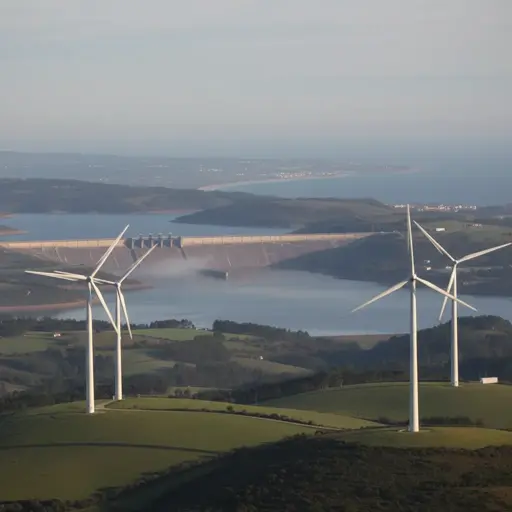
Most of Renewables in Portugal is hydro-generation so it’s highly dependent on amount of rain, in a country which the Global Warming models say it’s going to turn into pretty much a desert except in the coastal areas.
This is why just a year ago only 45% of electricity came from Renewables since, after 2 years of draught, most dams were pretty much empty, whilst right now the country has had so much rain in the last couple of months that dams are full to the brim and even have had to release excess water, and there are even floods around most major rivers.
Given the way things are going, Portugal needs to invest more in Solar since the very high capacity in terms of hidro-generation (a policy that dates all the way back to Fascist days, possibly the only good thing those types ever did for the country) will turn far less usefull with Global Warming.
The hydro generation is no longer as dominant as you suggest, but it has also 2 other important functions: water reservoir and energy battery: when there’s lots of wind that excess of energy is used to pump water upstream to some dams, that can produce energy at other time.
The strength of any renewable system is diversity of sources and mechanisms.
Yes, several dams in Portugal do have the capability of pumping water up to the top reservoir when there is excess power from other sources to latter use it for power production when conditions change.
However most don’t and for those, given that the long term trend is that hydro-generation is going to be a lot less effective in Portugal and in the meanwhile it’s already become less reliable, they’ll become a lot less effective, hence why Renewables in Portugal was just 45% a years ago when the country wasn’t having an unusually high-precipitation period like now and instead was at in its second year of draught conditions (a situation which has become much more common in the last couple of decades).
Further, solar is hugelly underdeveloped in what is one of the countries of Europe with the most sunshine, no doubt due to amongst other things policies that de facto reduce incentives for home solar all in the service of keeping the profits of politically well-connected local Power Companies high.
The country needs more solar generation, especially home generation as well as the kind of solar technologies - like molten salt solar concentrators - that are capable of keeping generating power at night.
In light of Global Warming trends there’s still a long way to go for Renewables in Portugal, IMHO, and local policies are still quite disjointed and poluted by politicians putting the interests of a handful of private companies above all else.