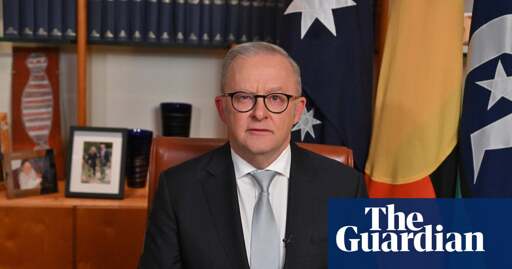
The prime minister sought to assure Australians it was still business as normal but said workers should consider taking public transport to conserve fuel supplies for those who didn’t have the option.
Public transport is presented like the last and shittiest option. What about long-term plans of solving this dependency on Putin, Iran and such? It’s to buy more oil and stockpile it? My god, grow some balls already and commit to making public transport better to avoid such a collapse in the future! Let Aussies have alternatives, don’t keep them hostages of the situation.
P.S. admittedly I live in a luxury because I live in the Netherlands and pay ~300 EUR (500 AUD) for transport annually, which is 40% bike maintenance and 60% the rare use of public transport. But then again, is it completely impossible for other cities to have even part of their citizens served by these modes of transport?
Currently, we can only dream of having such cycling systems in place. Canberra comes closest to the Netherlands in having planned-for bike paths in many parts of the city from its early days. In most of our other cities it is difficult to impossible to do because of the road and street design and bike paths can only be developed in small sections of cities. I think you’d find the same problem in many European cities. You are very lucky to have such a practical, and community-minded (and flat) country which is so ideal for cycling.
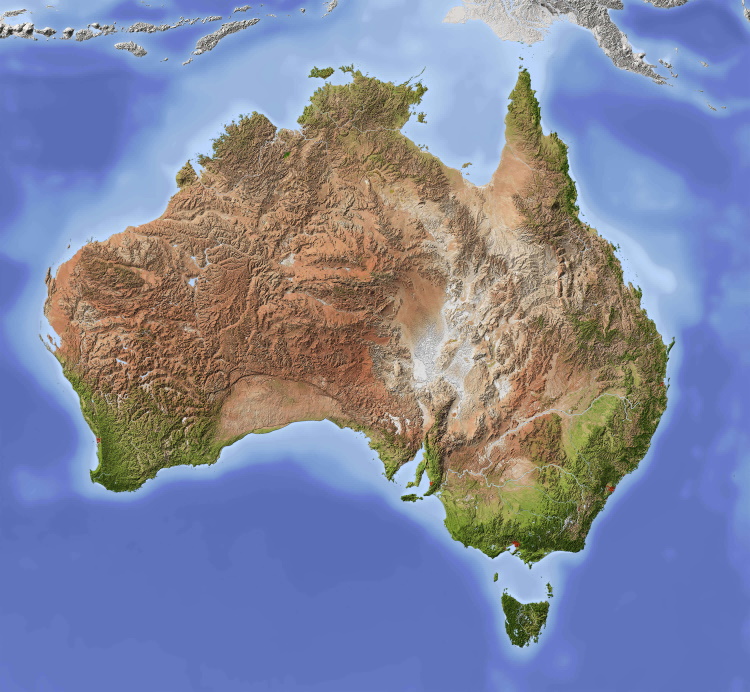
Its not really fair to compare public transport in Australia to other nations. Europe for example has ~200 people per km2, Australia has 3. It’s horrifically inefficient public transport due to the small user volume and large distance covered
I think density is not as important as frequently perceived because the vast majority of trips happen intra-city (in any country in the world). So even in Austrlia, we’re speaking about how to get e.g. from Melbourne to Melbourne.
Yeah, but even travel within the city from a population density perspective, Paris for example has 3,800 km2 Melbourne has 554km2. It’s much harder to fund the same infrastructure without the volume of travel
I wonder, how do they calculate the population density for Melbourne? Is it what’s in EU cities would be defined as the “Metropolitan area” or the “inner-city Urban area”? From this picture I wouldn’t actually exclude that they could mean a wider radius, = “the Metropolitan area”. This would be somewhat close to Paris then, because Paris is at 698.976 pop / km2. Though still less densely populated, admittedly.
Honestly, after living in the Netherlands for long enough, also in cities that have only a fraction of Melbourne’s density, I’m quite convinced that density is just an excuse pushed so hard by oil and car companies that we’ve grown to accept it without critical analysis. But it’s hard to overcome this thinking, because as minimumchips puts it above, all these calculations feel like hippie/nonsense/unrealistic if you’ve never actually seen how an alternative can feel like. I especially like that gif specifically - shows it well :)
By the way, if you want to try and see if videos of the alternatives could corrupt your soul - I highly recommend @NotJustBikes on youtube. For example, his most-popular video about “stroads” (street + road).
P.S. my kid has his own bike, so he safely cycles to school if I’m sick or just don’t feel like cycling with him.
I usually cycle with him in the morning though: it’s nice and refreshing before the work starts. We can chat on the way, and we have a tradition to look for cats and say it’s good when we find any along the way. Lemme maybe take a photo along the way and post it, so taht it’s not just empty words.
By all means, please do use the car when you go to your good mates! As I’m saying in the other comment below as well, I’m not asking you not to. I’m only saying it would be to your benefit if some part of the traffic would be served by trains or even bike lanes, too. Like, your trip would get faster because of that. Your trip on the car to your friends.
It wouldn’t though. Inner city people already use public transport or walk/bike for the most part. Not everyone that works in the city lives in the city though, and Australia is too big for any public transport solution to work efficiently or cost effectively.
By the way, you really faithfully downvoted all my neighbouring comments - even those where I share a picture of the Netherlands. That’s quite the dedication. I guess your car mobility is really important for you? Please keep in mind that I’m not advocating to take this away from you. Even in the city where I live right now, cars are the dominant transport. It’s just that those drivers are also happy when their kids return from school safely, by themselves. If that’s not “freedom” akin the one mentioned in your nickname, then what is?
I downvote comments that are making bad arguments and comparisons, doesn’t matter what it is. The Netherlands is not comparable to Australia. At all. Using them as an example makes no sense
The Netherlands is not comparable to Australia.
…
Using them as an example makes no sense
I disagree. I’ve lived in countries with almost as low population density as Australia, and in the Netherlands of course, and the biggest incompatibility there is between lands is people’s assumptions. You can absolutely transfer knowledge and best practices. Yes, lots of land can make “building out” cheaper in the initial stages. But if you notice that costs are rising and comfort goes down comparing to regions of the world that invested heavily in trains (or rarely, cycling infra), you know that cars are not the only option. Like, not throw cars out of the window. But add alternatives, removing pressure from fuel and car lanes. Yes, it works. Yes, it works outside of the Netherlands, too.
EDIT: by the way, I’ve visited Australia for a short while, too. I’m speaking from personal pain points and moments of positive amazement here.

As a European, I hate this type of speech:
Public transport is presented like the last and shittiest option. What about long-term plans of solving this dependency on Putin, Iran and such? It’s to buy more oil and stockpile it? My god, grow some balls already and commit to making public transport better to avoid such a collapse in the future! Let Aussies have alternatives, don’t keep them hostages of the situation.
P.S. admittedly I live in a luxury because I live in the Netherlands and pay ~300 EUR (500 AUD) for transport annually, which is 40% bike maintenance and 60% the rare use of public transport. But then again, is it completely impossible for other cities to have even part of their citizens served by these modes of transport?
Currently, we can only dream of having such cycling systems in place. Canberra comes closest to the Netherlands in having planned-for bike paths in many parts of the city from its early days. In most of our other cities it is difficult to impossible to do because of the road and street design and bike paths can only be developed in small sections of cities. I think you’d find the same problem in many European cities. You are very lucky to have such a practical, and community-minded (and flat) country which is so ideal for cycling.
Its not really fair to compare public transport in Australia to other nations. Europe for example has ~200 people per km2, Australia has 3. It’s horrifically inefficient public transport due to the small user volume and large distance covered
I think density is not as important as frequently perceived because the vast majority of trips happen intra-city (in any country in the world). So even in Austrlia, we’re speaking about how to get e.g. from Melbourne to Melbourne.
Yeah, but even travel within the city from a population density perspective, Paris for example has 3,800 km2 Melbourne has 554km2. It’s much harder to fund the same infrastructure without the volume of travel
I love the angle of comparing in numbers!
I wonder, how do they calculate the population density for Melbourne? Is it what’s in EU cities would be defined as the “Metropolitan area” or the “inner-city Urban area”? From this picture I wouldn’t actually exclude that they could mean a wider radius, = “the Metropolitan area”. This would be somewhat close to Paris then, because Paris is at 698.976 pop / km2. Though still less densely populated, admittedly.
Honestly, after living in the Netherlands for long enough, also in cities that have only a fraction of Melbourne’s density, I’m quite convinced that density is just an excuse pushed so hard by oil and car companies that we’ve grown to accept it without critical analysis. But it’s hard to overcome this thinking, because as minimumchips puts it above, all these calculations feel like hippie/nonsense/unrealistic if you’ve never actually seen how an alternative can feel like. I especially like that gif specifically - shows it well :)
By the way, if you want to try and see if videos of the alternatives could corrupt your soul - I highly recommend @NotJustBikes on youtube. For example, his most-popular video about “stroads” (street + road).
P.S. my kid has his own bike, so he safely cycles to school if I’m sick or just don’t feel like cycling with him. I usually cycle with him in the morning though: it’s nice and refreshing before the work starts. We can chat on the way, and we have a tradition to look for cats and say it’s good when we find any along the way. Lemme maybe take a photo along the way and post it, so taht it’s not just empty words.
When I go to visit one of my good mates the round trip is longer than driving the entire size of your country from top to bottom.
As a European you need to stop thinking that every country is as tiny as yours.
By all means, please do use the car when you go to your good mates! As I’m saying in the other comment below as well, I’m not asking you not to. I’m only saying it would be to your benefit if some part of the traffic would be served by trains or even bike lanes, too. Like, your trip would get faster because of that. Your trip on the car to your friends.
It wouldn’t though. Inner city people already use public transport or walk/bike for the most part. Not everyone that works in the city lives in the city though, and Australia is too big for any public transport solution to work efficiently or cost effectively.
By the way, you really faithfully downvoted all my neighbouring comments - even those where I share a picture of the Netherlands. That’s quite the dedication. I guess your car mobility is really important for you? Please keep in mind that I’m not advocating to take this away from you. Even in the city where I live right now, cars are the dominant transport. It’s just that those drivers are also happy when their kids return from school safely, by themselves. If that’s not “freedom” akin the one mentioned in your nickname, then what is?
I downvote comments that are making bad arguments and comparisons, doesn’t matter what it is. The Netherlands is not comparable to Australia. At all. Using them as an example makes no sense
I disagree. I’ve lived in countries with almost as low population density as Australia, and in the Netherlands of course, and the biggest incompatibility there is between lands is people’s assumptions. You can absolutely transfer knowledge and best practices. Yes, lots of land can make “building out” cheaper in the initial stages. But if you notice that costs are rising and comfort goes down comparing to regions of the world that invested heavily in trains (or rarely, cycling infra), you know that cars are not the only option. Like, not throw cars out of the window. But add alternatives, removing pressure from fuel and car lanes. Yes, it works. Yes, it works outside of the Netherlands, too.
EDIT: by the way, I’ve visited Australia for a short while, too. I’m speaking from personal pain points and moments of positive amazement here.