
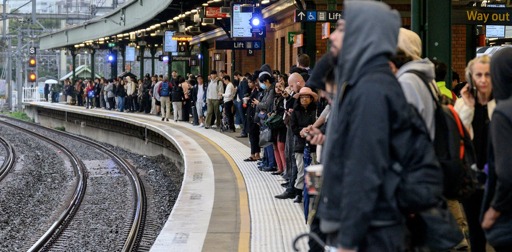
…The relatively small difference between Victoria, where public transport was free, and NSW – where fares remained unchanged – suggests price is not the main constraint on mode shift. Access, travel time, service reliability and the ability to make specific trips appear to matter more.
Yeah cost is only one consideration, for me there are a lot of reasons that I generally choose not to take PT. It works ok for certain scenarios, but is usually the worse option by a significant margin. Even being free isn’t enough to tip the scales the vast majority of the time, particularly when non-cost considerations are included.
My motorcycle gets me to work in less than half the time, leaves on my schedule, I know I’ll get a seat, I can use the one vehicle for the whole trip, it’s far more reliable, I get sick less often (thanks, people who take PT when they are clearly unwell), not to mention that I enjoy riding anyway which is in itself a decent incentive. Taking the car still ticks these boxes - it takes longer than the bike but is still far quicker than PT, plus I can take bulky/heavy things that simply aren’t feasible to take on PT, and it’s a negligible additional cost to take others with me. That said I’m lucky to have parking at work, if that wasn’t the case it would be far less feasible.
And that’s for the city-and-back trips that I assume PT has been optimised for. For any other trips, PT rarely makes sense, though PT being free does address the issue of paying separately for each passenger (eg 4 people going to the city and back costs ~$45 on PT, ~$10 in the car).
If I’m to actively choose PT over bike/car it needs to be the better choice. And it needs to do that by improving, not by simply adding barriers to alternatives.
Car vs PT is pretty regularly going to be decided in favor of the car. The point of PT is to enable people to not need a car in the first place.
I abandoned my car several years ago, at the benefit of around $300-$400/month (once you add up car payment, insurance, gas, maintenance, parking, etc). Nowadays, it would probably be significantly more. I was able to replace that with a $65/month bus pass. My spouse still has their car, so we use that if needed. It’s been a real lifechanger.
I don’t know that PT is ever going to out-convenience a private car trip, barring things like car-free districts. It doesn’t have to - it just has to be useful enough for daily commuting that you can downsize your private vehicles (and save a bunch of money). If you aren’t looking to do that…welp.
What improvements would you recommend? This is important. More ideas need to be discussed.
Not the OP
PT in Australia is an afterthought shoe horned in around car stupidity and it needs citizens to think about it all if they want to make use of it eg living near a train station deliberately etc. been there, done that.
Good PT takes decades of planning and has last mile issues (solved with quality separate infrastructure for hire ebikes and personal escooters).
A good example of this travesty I bring up is near where I used to live on the Gold Coast, Helenesvale Station; has a heavy rail stop, is the terminus for the light rail down to the beach at Broadwater, Southport and soon Burleigh etc and for a bus line. It has a massive shopping centre (supermarket, specialty, medical, fruit and veg, banks etc) and is surrounded by … a huge fucking car park.
What it should have is nearly no car park and 10 x 15 story apartment blocks on site. (that’s 1500 homes right there and zero koala habitat needs clearing, zero roads built etc and workforce right near 1000s of jobs). You wouldn’t even have to think, walk down stairs for shopping, medical etc and a train to Brisbane, or Tram to the beach, or to work for many, many people.
Instead, 100s of workers drive there and park in the car park, as do commuters, a fucking mess.
As an aside, I now live in rural Tassie (climate change saw me move) and there is 1 bus a day where i live. It used to be $6 each way, it’s now free to Launceston. I am sure there are many who don’t dive as much but with the free PT I catch that bus in once a week to the “big smoke” for a day out, rather than drive my ecar every other month for just chores.
A few things come to mind, with the caveat of course this is all from a layman’s perspective and may be misinformed, dumb, or otherwise not feasible.
Basic stuff:
More ambitious:
There are no doubt tons of others but that’s a start.
Wow, pretty impressive! With the petrol situation not going to improve any time soon and climate action desperately needed this is an opportune time for governments to get input from commuters such as yourself throughout Australia and start transforming our PT systems according to the needs of different population centres.
I think your last point about the faulty one CBD model was already recognised long ago. Sydney has 3 major business/admin centres: city centre, North Sydney and Parramatta. I haven’t lived in Sydney for a while so there may be more for all I know. There’s probably similar set ups in other cities but I don’t personally know.