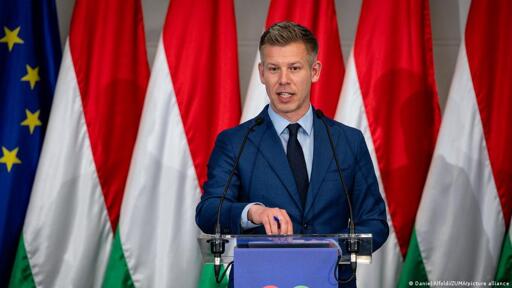
Hungary's new leadership wants the country to adopt the euro by the end of the decade while repairing strained ties with Brussels. But with a weak economy and tight deadlines, experts warn the path will be steep.
I think you are not understanding my point. Currently these banks are offering higher interests on accounts in the national currency than accounts in a foreign currency. Why should that change with the introduction of the Euro?
PS: Banks are also not handing out anything for free, what they hand out, they charge elsewhere and then some.
It really has nothing to do with banks, rather with Central Banks. Granted, lower reference interest rates by the ECB could lower interests you get on your account but it also means that credit rates go down. If you think interest on a regular bank account is a viable long term investment strategy reliably above inflation rate, your mistaken.
The Hungarian central bank has currently very high interest rates. High rates are also fueling inflation, as there is no such thing as a free lunch. While currently Hungary has lower inflation, probably also thanks to the optimism based on the recent regime change, it has a long track record of higher inflation.
You don’t agree? Have a look at the development of the Hungarian interest rates and its inflation in the previous 10 years. It has not always been the case that Hungary had much higher interest rates either.


That’s my point. Now they do and changing to euro would be a loss in this case
I think you are not understanding my point. Currently these banks are offering higher interests on accounts in the national currency than accounts in a foreign currency. Why should that change with the introduction of the Euro?
PS: Banks are also not handing out anything for free, what they hand out, they charge elsewhere and then some.
Why wouldn’t they change?
Now:
Czech bank gives 4% on CZK
Dutch bank gives 1.5% on EUR
After:
Czechia introduces EUR: they will also switch to 1.5%
It really has nothing to do with banks, rather with Central Banks. Granted, lower reference interest rates by the ECB could lower interests you get on your account but it also means that credit rates go down. If you think interest on a regular bank account is a viable long term investment strategy reliably above inflation rate, your mistaken.
The Hungarian central bank has currently very high interest rates. High rates are also fueling inflation, as there is no such thing as a free lunch. While currently Hungary has lower inflation, probably also thanks to the optimism based on the recent regime change, it has a long track record of higher inflation.
You don’t agree? Have a look at the development of the Hungarian interest rates and its inflation in the previous 10 years. It has not always been the case that Hungary had much higher interest rates either.