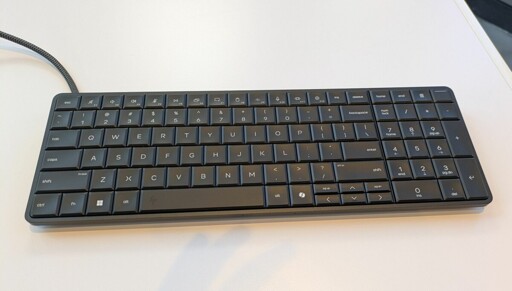
It’s not much cheaper than an equivalent laptop, so who’s this for, exactly?
“Ooh, look who’s fancy now?” – Atari and Commodore.
A laptop is just a PC crammed into a keyboard… with a monitor crammed on top.
Laptop would be cheaper, also the keyboard on this is only 2mm travel…
1500$ lmao
Just get a Raspberry Pi 500 instead :D
I would, but they’re now impossible to find and over $400.
Oof i havent kept up with hardware news so i wasnt aware…
I guess RAM prices just fuck everything huh?
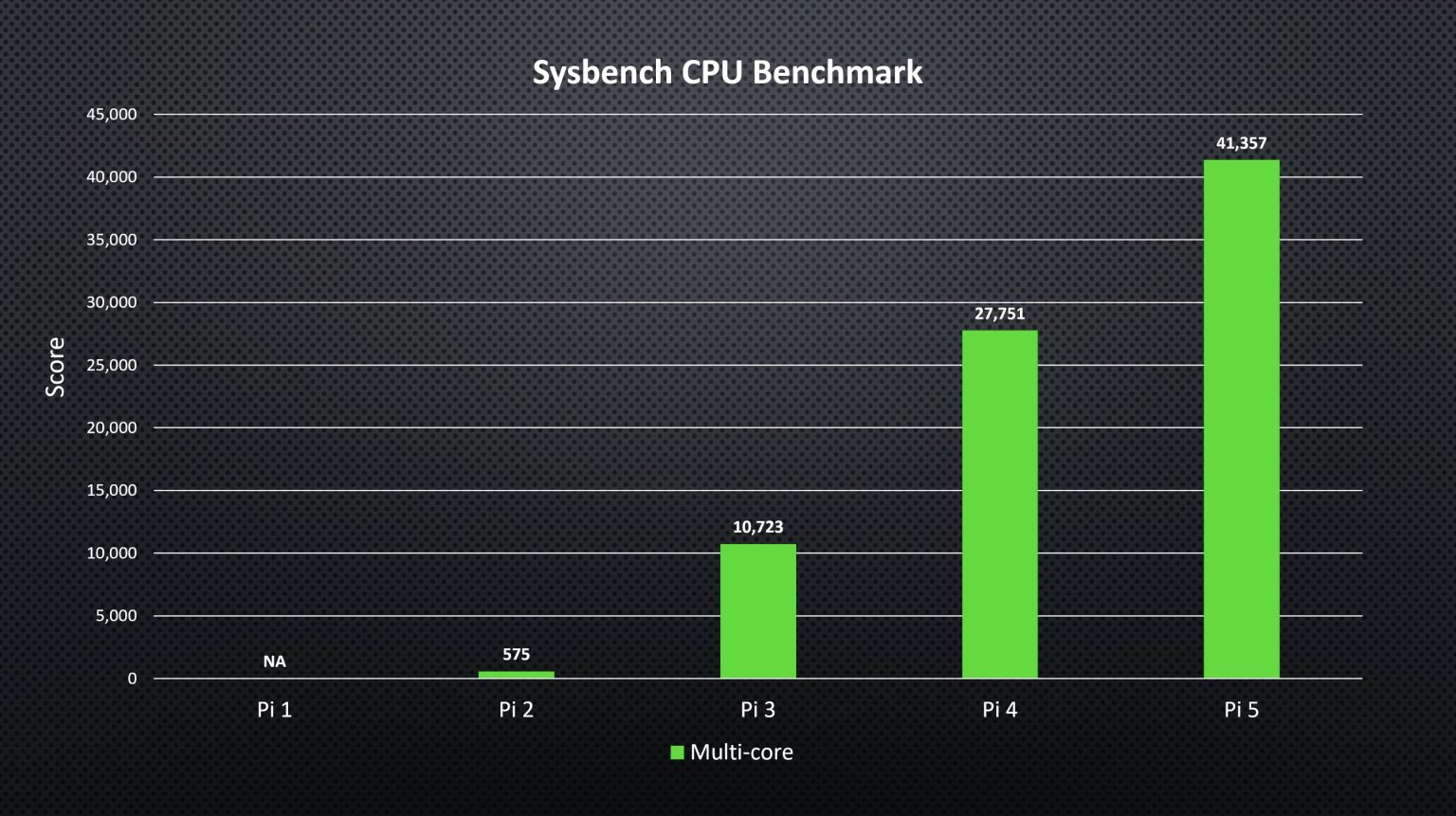
That, and also each Pi keeps getting less and less about being a cheap, low power single-board computer, and more about impressive raw performance numbers: Pi 1 got a sysbech single-thread score of 68. Pi 5 cpu benchmarks 600 times higher.
What is raspberry pi’s raspberry pi?
Arduino
Ok, I had that coming, but that’s the’s the in complexity. What is the scrappy super cheap but capable competitor of the pi, like the pi was to average desktop PCs?
Ok, tldr: what can do the same as a pi for 30 bucks like 10 years ago the pi was?
Raspberry Pi Zero, maybe.
What is the scrappy super cheap but capable competitor of the pi, like the pi was to average desktop PCs?
I’d say Rock Pi or Orange Pi, if you want something close to capable.
what can do the same as a pi for 30 bucks like 10 years ago the pi was?
Probably the Arduino Uno Q. It’s Qualcomm’s new Arduino board that runs Linux. It also seems to start at around $44 for the 2GB model (I’m guessing they’re making a loss since they’re new to the SBC game, and they’re probably trying to gain market share).
Or if you don’t need a whole general purpose operating system, then there’s plenty of microcontrollers that’ll work fine (ESP32, STM32, etc.).
Realistically, the ESP32. Their range has gotten decently powerful enough that many of them replace what once took a Raspberry Pi to accomplish.
Get an orange pi 800?
Doesn’t even seem those are for sale anymore based on both their Amazon and AliExpress stores.
Damn, I still see some available on aliexpress but it looks like they aren’t stocking any more.
Probably taken out by the ram shortage like everything fun.
A raspberry pi is much less powerful.
Before the RAM and storage pricing nightmare, the performance vs price for a Pi 400/500 would be an acceptable trade off for some people. These days, it’s cheaper to buy a laptop with a busted screen on eBay and remove the top half. You get the performance of the HP keyboard at the Raspberry Pi price point.
Thanks, AI overlords, I guess.
A raspberry pi is not a serious replacement for PCs in the enterprise. There’s nothing the pi does that HP and Dell couldn’t do if they wanted. The Pi just seems cheap because it can cut corners that don’t matter to hobbyists but that enterprises would never accept.
Which is why I said “some people”.
The one cool thing about this is that it’s intended to run off a single cable plugged into the monitor for both power and display. That’s where the interesting part ends.
I like the concept because it’s reminiscent of the early computers I grew up with (Tandy CoCo, Commodore 64) and I basically just dock my laptop with its lid closed anyway (screen is too small and resolution too high for my old person eyes).
But considering it’s literally a keyboard PC, you’d think they’d have put more effort into making it a nice keyboard. I hate those “chiclet” low travel keys. Put a PC in a good mechanical keyboard or at least a membrane keyboard where the keys have some travel, then we’ll talk. Until then, it’d be a tad ridiculous to plug a good keyboard into my keyboard PC lol.
It’s not much cheaper than an equivalent laptop, so who’s this for, exactly?
I guess if there were an LCD shortage instead of memory and SSD, it would have a lot more potential.
Didn’t raspberry pi do this years ago?
Yes, but as much as I love the RPi, a PC is still faster.
Who’s this for exactly?
The article answers this question under literally the second header titled “Who’s it for?”
It takes less effort to copy + paste the information from the article then to type out a snarky comment. I got time so I’ll do both.
The first group is so-called “dual deskers” - knowledge workers who have a desk with a monitor at work and another at home. The second group includes deep-pocketed call centers or environments where desk space is at a premium.
Sounds like companies that hate their employees.
I’ve thought about this dual desker problem. It always seemed wasteful lugging around a whole laptop and not really needing the battery and carrying around an extra inferior keyboard and screen.
My thought is to run off a live SSD. My idea was also to introduce a layer of virtualization and a copy-on-write filesystem with FS level syncing for backup. Then you’d have a full disk image backup so you could pick up right where you left off in a VDI if you lost the SSD.
I used to carry around an 11" laptop when I had to give a bunch of presentations in unfamiliar conference rooms. It was the main reason why I switched to Apple around 15 years ago for my travel laptop (couldn’t get Linux-friendly hardware with good battery life and seamless display/audio support over DVI/DP/HDMI and whatever audio setup they’d have for me) while still keeping a “main” Linux laptop for around the house and a headless server sitting next to my router.
I’d love to have that 11" form factor again, with modern thunderbolt/USB4 docking stations at my work desk, home office, and whatever desk I might hotel at or whatever. I rarely used the small screen or keyboard but it was nice to have that option on the move (like in an economy plane seat).
I would have considered this over a mini pc. Most ergonomic setup is keyboard and mouse in a drawer. Fairly small USB monitors that are placed at edge of desk is a field of view similar to 30+" at end of desk, and even closer than a laptop monitor. These are also fairly portable, lighter than a smaller tablet. Mini PCs have much more ports including 4 monitor support, that this may not have.
Here’s a random use case for this: retirement homes. A laptop is too unergonomic for an old person. But they don’t want to take up the space in their little apartments with a big desktop setup. They’re happy to go to a computer lab. But a shared computer introduces complication. But I have to admit it’s a pretty narrow slice of that population that is sufficiently motivated to use a computer. Also they’d be better served with ChromeOS than Windows. You could have a ChromeBox that runs by plugging in a single USB cable and plug it into a monitor with a built in hub and a normal keyboard.