That article is trash. Ministries have only been asked to come up with a plan of what’s possible to do to switch but I highly doubt most will switch. The education ministry recently renewed it’s Microsoft contract and I don’t think there is anything enforcing a switch, it’s only a “please look at what could be possible” thing. The only thing switching for sure is the DINUM, about 250 people, a lot of them already using Linux. But this is the start of an experiment where they are building some NixOS configurations that could be used if a larger switch was to happen. Believe it or not, they NixOS configs are names Sécurix and Bureautix.
The source article from ZDNet they got the information from has been updated to correct the mistake.
Correction on April 16, 2026: An earlier version of this article stated that France was planning to replace 2.5 million Windows desktops with Linux. In fact, the Interministerial Directorate for Digital Affairs is initially migrating only its own internal workstations (about 350) and will coordinate a broader effort. Individual ministries have been instructed to develop their own migration plans by fall 2026. The article has been updated to reflect this clarification.
It’s overselling it, but the move towards digital sovereignty isn’t a passing fad.
The various revelations over the years about the US spying on allies and Microsoft famously telling the EU(?) that they could not guarantee that their data would not be turned over to the US government has all but ensured that this is going to happen as a matter of national security.
They can’t have their government dependent on systems that could be disabled at any time for political reasons, like the sanctions applied to the ICC judge on the genocide case against Israel.
It was one thing when the US was an ally, but now we are not a dependable ally and these countries are reorganizing their security posture in recognition of that fact.
Linux is the only viable operating system that is not vulnerable to US government sponsored supply chain attacks. While it may not be deployed everywhere immediately, the directive to agencies to start planning for the transition is the first step in the process and critical services will transition much sooner.
This will happen regardless of what happens in the election, Trump has exposed the weaknesses in our system of government and the attitude of US elites towards other countries. No sane country would trust US tech given the direction of things.
Linux is the only viable operating system that is not vulnerable to US government sponsored supply chain attacks
Well I certainly don’t agree with that, and in many cases (at least with specific Linux distros) I would even argue it IS vulnerable already. Maybe we have different definitions of “viable” or something. The Linux kernel itself has also been forced to make political decisions at the demand of the United States, such as removing support for Russian CPUs (but somehow Chinese ones are A-OK).
I hope you’re right but I can assure you our government is very good at making grand announces not followed by anything, or even by the opposite. Also our far right, which might very well win the next election, is very much pro-Trump.
Our education ministry keeps signing huge Microsoft contracts, our health data is stored by Microsoft, our intelligence agency use Palantir, our government is mostly on X… I’m forgetting a lot of other things. They are also pushing hard for regulations against privacy, weakening encryption, chat-control…
There are some small nice things here and there like our Gendarmerie using Ubuntu, the DINUM making a lot of open-source tools… But it’s really a drop in the water.
Our elites and politicians share a similar playbook when it comes to doing exactly what they want while pretending to struggle to do anything else.
Technology is important for making the government run more efficiently and the US tech sector has historically provided the tools for making that process more efficient. It was easier to use the tools available from a close ally than it was to devote the resources towards building up a domestic technology sector.
We’re in a different world now, both politically and technologically. The US government has been using this dependency to gain advantage in other areas by spying on our allies. The trend towards right-wing nationalism also creates a real danger that this could escalate into even more coercive tactics.
Now, the cost of cultivating a domestic tech sector is now much lower than the cost of having all of your government functions held ransom by a foreign power. Especially when everyone can see how rapidly the US’s posture towards allies has changed.
That being said, it takes time to build a tech industry and swap to domestic production. The US’s tech sector growth was subsidized by the entire world and built over decades. It will take time to replicate that in the EU (and even longer if there isn’t a unified initiative).
Until then, your governments cannot help but be dependent on Microsoft and other US technology companies who are using emerging technology to enable new capabilities (i.e. Palantir).
As one commoner to another, I hope your country is shocked by the turmoil that we’re going through and can build something better.
You seem to assume our president and its government act with intelligence and in the interest of our country. You could not be any further from the truth.
I expect your elites to operate with the same selfish motivations as ours. That includes wanting to exploit the situation in order to utilize public funds to grow a private tech sector where they stand to profit immensely.
They will also want to protect themselves personally from continuing to be predated on by their elite counterparts in the US who utilize this technological dependency for spying and coercive tactics.
Using NixOS as an imaging tool by distributing a config is pretty neat and I would love to see it happen. I’m surprised they were competent enough to see that route; I wonder who’s behind this initiative?


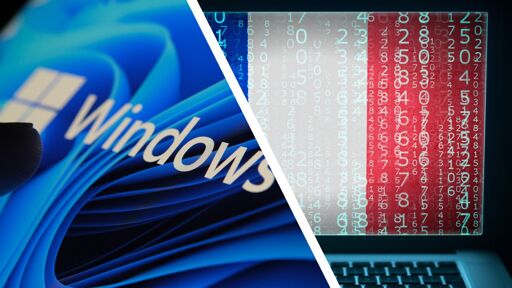
That article is trash. Ministries have only been asked to come up with a plan of what’s possible to do to switch but I highly doubt most will switch. The education ministry recently renewed it’s Microsoft contract and I don’t think there is anything enforcing a switch, it’s only a “please look at what could be possible” thing. The only thing switching for sure is the DINUM, about 250 people, a lot of them already using Linux. But this is the start of an experiment where they are building some NixOS configurations that could be used if a larger switch was to happen. Believe it or not, they NixOS configs are names Sécurix and Bureautix.
The source article from ZDNet they got the information from has been updated to correct the mistake.
It’s overselling it, but the move towards digital sovereignty isn’t a passing fad.
The various revelations over the years about the US spying on allies and Microsoft famously telling the EU(?) that they could not guarantee that their data would not be turned over to the US government has all but ensured that this is going to happen as a matter of national security.
They can’t have their government dependent on systems that could be disabled at any time for political reasons, like the sanctions applied to the ICC judge on the genocide case against Israel.
It was one thing when the US was an ally, but now we are not a dependable ally and these countries are reorganizing their security posture in recognition of that fact.
Linux is the only viable operating system that is not vulnerable to US government sponsored supply chain attacks. While it may not be deployed everywhere immediately, the directive to agencies to start planning for the transition is the first step in the process and critical services will transition much sooner.
This will happen regardless of what happens in the election, Trump has exposed the weaknesses in our system of government and the attitude of US elites towards other countries. No sane country would trust US tech given the direction of things.
Well I certainly don’t agree with that, and in many cases (at least with specific Linux distros) I would even argue it IS vulnerable already. Maybe we have different definitions of “viable” or something. The Linux kernel itself has also been forced to make political decisions at the demand of the United States, such as removing support for Russian CPUs (but somehow Chinese ones are A-OK).
I hope you’re right but I can assure you our government is very good at making grand announces not followed by anything, or even by the opposite. Also our far right, which might very well win the next election, is very much pro-Trump.
Our education ministry keeps signing huge Microsoft contracts, our health data is stored by Microsoft, our intelligence agency use Palantir, our government is mostly on X… I’m forgetting a lot of other things. They are also pushing hard for regulations against privacy, weakening encryption, chat-control…
There are some small nice things here and there like our Gendarmerie using Ubuntu, the DINUM making a lot of open-source tools… But it’s really a drop in the water.
Our elites and politicians share a similar playbook when it comes to doing exactly what they want while pretending to struggle to do anything else.
Technology is important for making the government run more efficiently and the US tech sector has historically provided the tools for making that process more efficient. It was easier to use the tools available from a close ally than it was to devote the resources towards building up a domestic technology sector.
We’re in a different world now, both politically and technologically. The US government has been using this dependency to gain advantage in other areas by spying on our allies. The trend towards right-wing nationalism also creates a real danger that this could escalate into even more coercive tactics.
Now, the cost of cultivating a domestic tech sector is now much lower than the cost of having all of your government functions held ransom by a foreign power. Especially when everyone can see how rapidly the US’s posture towards allies has changed.
That being said, it takes time to build a tech industry and swap to domestic production. The US’s tech sector growth was subsidized by the entire world and built over decades. It will take time to replicate that in the EU (and even longer if there isn’t a unified initiative).
Until then, your governments cannot help but be dependent on Microsoft and other US technology companies who are using emerging technology to enable new capabilities (i.e. Palantir).
As one commoner to another, I hope your country is shocked by the turmoil that we’re going through and can build something better.
You seem to assume our president and its government act with intelligence and in the interest of our country. You could not be any further from the truth.
I certainly don’t assume that.
I expect your elites to operate with the same selfish motivations as ours. That includes wanting to exploit the situation in order to utilize public funds to grow a private tech sector where they stand to profit immensely.
They will also want to protect themselves personally from continuing to be predated on by their elite counterparts in the US who utilize this technological dependency for spying and coercive tactics.
Using NixOS as an imaging tool by distributing a config is pretty neat and I would love to see it happen. I’m surprised they were competent enough to see that route; I wonder who’s behind this initiative?
That’s the Interministerial Digital Directorate, they are very competent.
https://github.com/cloud-gouv