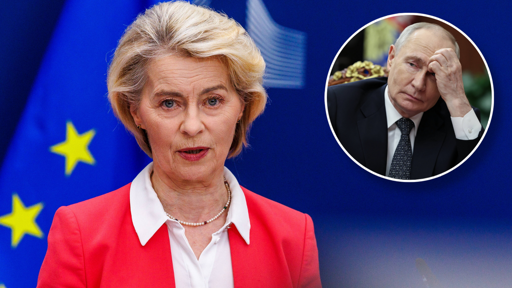
EU countries have reached a political agreement on a new sanctions package targeting Russia over its war in Ukraine, including an oil price cap targeting the Kremlin’s war economy.
Not sure I will ever understand why we didn’t go all in right at the start, or at least at much greater speed. The cost of this slow walking, not just financial, is hard to imagine.
I mean, good we have a new watered down sanctions package I guess.
Because those sanctions also hit EU countries. You want to apply sanctions where it hits Russia more than EU because each export ban is a EU company losing profits. If too many people inside EU suffer because of those sanctions support for them will drop. When people turn against Ukraine populists backed by Russia win elections. You do it gradually so companies can switch to different markets instead of going bankrupt. People keep jobs and keep supporting Ukraine
Because sanctions don’t hit all EU countries equally. With each package they are basically fighting over who will take the hit for them. It takes a lot of counting and haggling. Even without Hungary reaching a consensus is difficult
Obviously Orbán was a disaster but still many sanction packages got past while he was still in office. It’s not enough of an explanation.
As for point 2 and 3 - we could have shared the burden. If in a practical sense country A gets hit the hardest, then country B and C can offer support (more likely through some general mechanism, but still).
It’s just absurd short term thinking, the longer it lasts it only costs us more but also for Ukraine. Death by a thousand cuts just seems a ridiculous strategy in this context.
Obviously Orbán was a disaster but still many sanction packages got past while he was still in office. It’s not enough of an explanation.
They did but it took a lot of effort and time.
As for point 2 and 3 - we could have shared the burden. If in a practical sense country A gets hit the hardest, then country B and C can offer support (more likely through some general mechanism, but still).
They did share the burden but negotiating this took effort and time.
That’s why it was a slow and gradual process. If they would try to completely cut ties with Russia they would spend years negotiating this before anything was actually done. Doing it gradually let them introduce some sanctions while they worked on the next package.
Agreed. I think there were a lot of “let’s just see how it plays out before we upend our energy infrastructure” but of course hindsight shows how wrong that was.
I mean, I can see how some might have been cautious in the first - several months? To re-work how everyone was going to get oil, gas, and electricity - though it was obvious to some of us on day . . . Well, day two, anyway. Some of us are slow.


Not sure I will ever understand why we didn’t go all in right at the start, or at least at much greater speed. The cost of this slow walking, not just financial, is hard to imagine.
I mean, good we have a new watered down sanctions package I guess.
A positive side effect is that it produces news, that it keeps the war and the fact that it’s ongoing in the news.
Another is the damning impression of “it/these will continue to get worse for Russia”. With one clear cut there’s less continuous pressure.
ExLisper gave the political process reasons. The political process is democratic but unfortunately slow.
Because of Hungary
Because those sanctions also hit EU countries. You want to apply sanctions where it hits Russia more than EU because each export ban is a EU company losing profits. If too many people inside EU suffer because of those sanctions support for them will drop. When people turn against Ukraine populists backed by Russia win elections. You do it gradually so companies can switch to different markets instead of going bankrupt. People keep jobs and keep supporting Ukraine
Because sanctions don’t hit all EU countries equally. With each package they are basically fighting over who will take the hit for them. It takes a lot of counting and haggling. Even without Hungary reaching a consensus is difficult
Obviously Orbán was a disaster but still many sanction packages got past while he was still in office. It’s not enough of an explanation.
As for point 2 and 3 - we could have shared the burden. If in a practical sense country A gets hit the hardest, then country B and C can offer support (more likely through some general mechanism, but still).
It’s just absurd short term thinking, the longer it lasts it only costs us more but also for Ukraine. Death by a thousand cuts just seems a ridiculous strategy in this context.
They did but it took a lot of effort and time.
They did share the burden but negotiating this took effort and time.
That’s why it was a slow and gradual process. If they would try to completely cut ties with Russia they would spend years negotiating this before anything was actually done. Doing it gradually let them introduce some sanctions while they worked on the next package.
I’ll concede :D
Those are good points. That said, while I understand the politics behind it all from a moral standpoint I find it indefensible.
Agreed. I think there were a lot of “let’s just see how it plays out before we upend our energy infrastructure” but of course hindsight shows how wrong that was.
I mean, I can see how some might have been cautious in the first - several months? To re-work how everyone was going to get oil, gas, and electricity - though it was obvious to some of us on day . . . Well, day two, anyway. Some of us are slow.
Well, hindsight proves it. I would argue foresight already showed it.
There were other ways to do this, especially coordinated and supportive of the EU countries hit the hardest.