That’s enough to provide the 5,000 residents of Pornainen with nearly one month of heat demand through the summer — and roughly one week of demand in the winter.
It does do something important in the winter: smooth out the irregularities on renewables. It’s not like you charge it up in September and then just expect it to carry you through to March. It means that your renewables just have to cover the demand some time this week, not at the exact moment the town wants the power. If there’s a high-pressure front that means you’ve got minimal wind for Monday through to Thursday, it’s fine, you just extract power from the battery and then re-heat when the wind picks up at the weekend
They’ve got a quote from an Oxford uni professor of energy and climate policy in there who says it can store heat effectively for weeks. The manufacturer claims that it maintains about 80% of its “charge” if left for a month
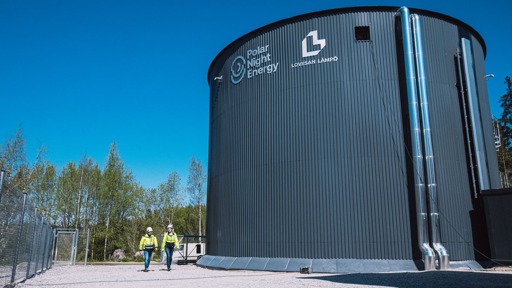
One of the cool things about this design is that the bigger it is, the better it gets at storing heat. The square-cube law is in effect here, since heat can only be lost by leaving the silo at the outside whereas heat can be stored throughout the whole volume
Also, some of us live in, for example, the Netherlands. Pumping two meters of water floods half the country.
And turning a valley into a lake is pretty terrible for the ecology. Adding pumps to existing hydroelectric dams is a great thing, but making new ones is… Hard to sell


Not to take away from the achievement, but how long can heat be stored though? Isn’t pumped hydro a better solution?
from the article
So, basically it eliminates heating needs over summer, which is amazingly useful. But it doesn’t do much for winter.
That sounds crappy, but it’s probably a good 10-20% reduction in heating emissions, which is nothing to sneer at.
It does do something important in the winter: smooth out the irregularities on renewables. It’s not like you charge it up in September and then just expect it to carry you through to March. It means that your renewables just have to cover the demand some time this week, not at the exact moment the town wants the power. If there’s a high-pressure front that means you’ve got minimal wind for Monday through to Thursday, it’s fine, you just extract power from the battery and then re-heat when the wind picks up at the weekend
That does sound interesting. I’m curious though what the heat loss is while stored (I.e how much energy is lost over time with no energy being pulled)
They’ve got a quote from an Oxford uni professor of energy and climate policy in there who says it can store heat effectively for weeks. The manufacturer claims that it maintains about 80% of its “charge” if left for a month
One of the cool things about this design is that the bigger it is, the better it gets at storing heat. The square-cube law is in effect here, since heat can only be lost by leaving the silo at the outside whereas heat can be stored throughout the whole volume
Awesome. Thanks for that.
Apparently long enough for a Finnish town. The technologies aren’t really competitors: They’re complementary technologies for different jobs.
I think pumped hydro is already maxed out in many locations, and a lot more complex/expensive if you only need to store heat (and not electricity).
Also, some of us live in, for example, the Netherlands. Pumping two meters of water floods half the country.
And turning a valley into a lake is pretty terrible for the ecology. Adding pumps to existing hydroelectric dams is a great thing, but making new ones is… Hard to sell