
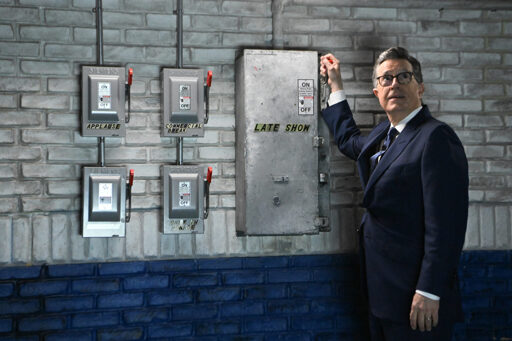
A CBS spokesperson rushed to the defense of the network’s censorship apparatus, giving statements to industry trade publications like Variety and Deadline, claiming that CBS Studios had actually financed and secretly produced the public-access episode in collaboration with Monroe Community Media. “As is our regular practice, we send copyright notices to unauthorized websites that post copyrighted content from CBS and our network/studio talent,” the spokesperson asserted, insisting the copyright enforcement was simply routine intellectual-property protection.
But that explanation raised more questions than it answered. Nothing in the broadcast identified CBS or Paramount as producers. There was no corporate copyright message at the end of the hour; instead, an independent, Chicago-based studio was listed as the production company. Colbert also spent much of the episode openly mocking Paramount and CBS in ways that strongly suggested they were not exactly thrilled with the project. So viewers were understandably skeptical that the corporation had lovingly funded an anti-corporate guerrilla comedy special only to immediately suppress its circulation online.
After a backlash erupted, CBS quickly retreated, announcing it would “waive further enforcement” pending additional review.
That’s not true, corporations have also used it to steal from legitimate rightsholders
Had me in the first half.
How do you shold a right?
Gently then vigorously
Carefully, with a firm and steady grip
No no, it’s “right shoulders.” Corporations support illegitimate shoulders.
Same as a colds houlder
Judges should be required to neuter the prosecution when they are clearly using the expense of the legal system to strongarm someone.
Not…like…literally neuter. I mean if the defense is financially limited and could only afford a single lawyer and a couple paralegals, then the prosecution should be limited to the same resources. Maybe by reviewing billed hours or something. Idk.
Otherwise the prosecution is just a big bully.
I’d be OK with literal neutering in this case.
i vote for literal and metaphorical neutering
In these cases it’d probably have to be the defense that’s neutered. Usually the way it works is a corporation uses something they may or may not have the rights to use in a video they post to youtube or similar, then the original gets copyright striked because the content id recognizes it from the corporate media it’s there to protect. The original rightsholder can try to contact support (if there even is any) but they usually will just say get fucked. At that point you’d have to sue google/the infringing corpo which would probably cost more than they’d make anyways
Oxymoron. There is no such thing.
Agreeing with you would mean not believing that AI is stealing from artists. Just saying.
(I think a lot is wrong with copyrights and especially patents, and am all for breaking them in some circumstances, but not totally abolishing them.)
Right. How could it be when no theft has occurred?
It isn’t stealing anything from anyone and artists have been making art long before the concept of property was even invented.
If you need a reason to justify the trendy “AI bad” narrative, there are plenty of others to choose from that aren’t total bullshit.
I find that to be a consistent and respectable opinion.
Whilst capitalism exists, there is
Key word: legitimate