Strangely enough, this also affects HD remasters of old shows. The Buffy The Vampire Slayer HD remaster has a lot of lighting issues. A lot of scenes which were colored to look like evening or night just look like daytime.
Old stuff made for TV is often in 4:3, the modern stuff is in 16:9 or even wider like for cinema. Sometimes older stuff was filmed in something closer to 16:9 and was cropped to 4:3, you can just crop it differently for a remaster without losing anything. You can see that in the picture, there’s a lot more space to the right of the characters, which unfortunately places them closer to the center instead of the side of the screen.
Exactly. A lot of times there is footage to pull out that got cropped out of the original broadcast, BUT the original shot was made with the crop in mind and there was a decision made about how to crop that particular scene. Just tossing in the full frame without any thought about the result can really change the feel of a scene.
I remember watching an early episode of Angel that clearly had been un-cropped, because you can very clearly see a camera man filming an action scene from a different angle.
I really don’t get the recropping/uncropping to get 4:3 into a 16:9 aspect ratio. There’s a release of Seinfeld where they just chopped the top and bottom off the frame, which very often crops people’s foreheads out of frame and in some instances crops entire jokes out. Like, someone will react to something on a table, but the table is just out of frame for the entire scene.
If the director is very smart, it is possible to film for both, but in most cases it’s just not worth it. Aspect ratio is an artistic choice. You wouldn’t chop the sides off a painting to make it fit your wall.
Good analogy, but it is not nearly as close. Movie aspect ratios are actually variable. Most movies today switch several times over the course of the movies depending on what the director wants to convey. The problem is that they can easily do that on theaters, where the screens seamlessly accommodate the different aspect ratios almost imperceptibly for the audience, but to great emotional impact. However, the same is not true for home TVs, it is a little less flexible and far more noticeable.
The secret is that it was filmed on film and the originals were still around. So they were able to just reprocess the original film with higher resolution and such.
Other shows were either digital, or filmed on film but the only thing saved was the broadcast transfer.

Strangely enough, this also affects HD remasters of old shows. The Buffy The Vampire Slayer HD remaster has a lot of lighting issues. A lot of scenes which were colored to look like evening or night just look like daytime.
Jesus Christ.
They messed with the aspect ratio too didn’t they? Shots are framed wrong now
Old stuff made for TV is often in 4:3, the modern stuff is in 16:9 or even wider like for cinema. Sometimes older stuff was filmed in something closer to 16:9 and was cropped to 4:3, you can just crop it differently for a remaster without losing anything. You can see that in the picture, there’s a lot more space to the right of the characters, which unfortunately places them closer to the center instead of the side of the screen.
Yeah, cropping was a pretty big issue too.
Mel Brookes probably loved seeing this.
Exactly. A lot of times there is footage to pull out that got cropped out of the original broadcast, BUT the original shot was made with the crop in mind and there was a decision made about how to crop that particular scene. Just tossing in the full frame without any thought about the result can really change the feel of a scene.
I remember watching an early episode of Angel that clearly had been un-cropped, because you can very clearly see a camera man filming an action scene from a different angle.
I really don’t get the recropping/uncropping to get 4:3 into a 16:9 aspect ratio. There’s a release of Seinfeld where they just chopped the top and bottom off the frame, which very often crops people’s foreheads out of frame and in some instances crops entire jokes out. Like, someone will react to something on a table, but the table is just out of frame for the entire scene.
If the director is very smart, it is possible to film for both, but in most cases it’s just not worth it. Aspect ratio is an artistic choice. You wouldn’t chop the sides off a painting to make it fit your wall.
Aspect ratio wasn’t an artistic choice back then. 16:9 TVs didn’t exist.
Our 21:9 cinema (or whatever the 1:xyz is) and 16:9 home ratio is the equivalent to the old school 16:9 cinema and 4:3 old ratio.
Good analogy, but it is not nearly as close. Movie aspect ratios are actually variable. Most movies today switch several times over the course of the movies depending on what the director wants to convey. The problem is that they can easily do that on theaters, where the screens seamlessly accommodate the different aspect ratios almost imperceptibly for the audience, but to great emotional impact. However, the same is not true for home TVs, it is a little less flexible and far more noticeable.
Yeah but most formats come very close around 21:9 where the bars are less distracting than on a 16:9 monitor
What the actual fuck am I looking at.
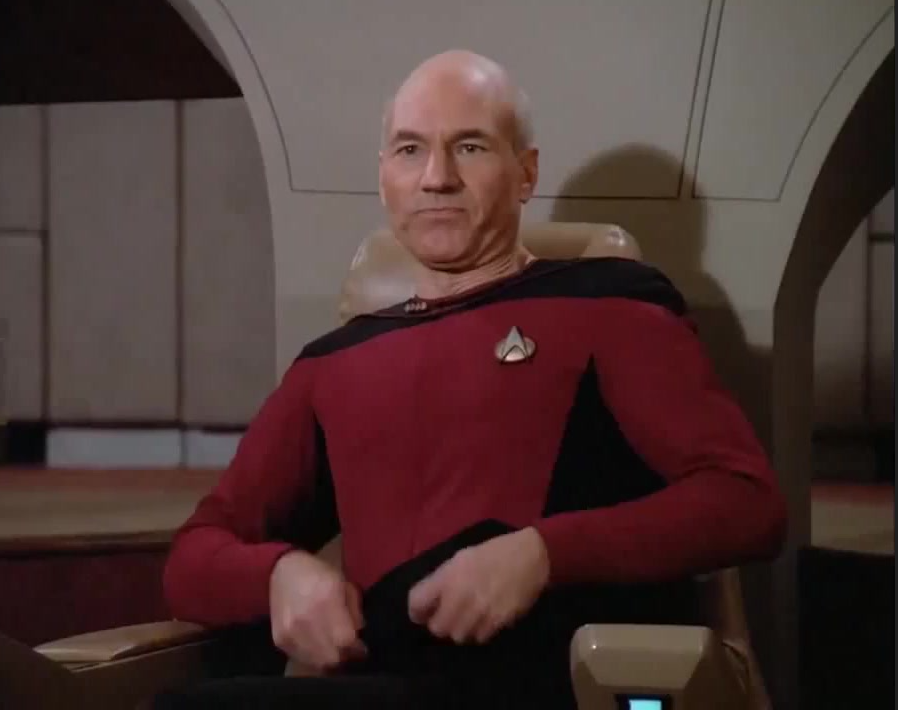
To this day, the TNG remaster is still the best remaster of any TV series.
“To this day,
theTNGremasteris still the bestremaster of anyTV series.”That sentence works like this too!
The secret is that it was filmed on film and the originals were still around. So they were able to just reprocess the original film with higher resolution and such.
Other shows were either digital, or filmed on film but the only thing saved was the broadcast transfer.
Lots of stuff was filmed on tape too.
emotional scene vs tampon commercial
Please refrain from putting the idea of a vampire in a tampon commercial into my head.
Meanwhile, new movie productions are so dark it might as well be designed for the visually impaired.