

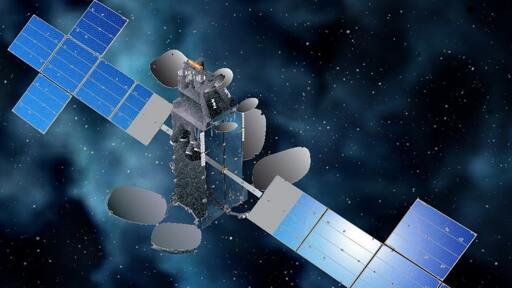
The official expressed concern that sensitive information — notably command data for European satellites — is unencrypted, because many were launched years ago without advanced onboard computers or encryption capabilities.
Maybe those should be replaced?
What the fuck are we in the 1910’s???
Do you have some B€ to spare?
Uuh yeah i do (because taxes), but its being funneled into the pockets of corrupt politicians, the car industry and AI slop.
Hah. I don’t disagree that money is not well used, but trust me, replacing those satellites is no small endeavour on many levels: Industrial capacity, launch capacity, workforce capacity, cost, will…
The official expressed concern that sensitive information — notably command data for European satellites — is unencrypted, because many were launched years ago without advanced onboard computers or encryption capabilities.
According to the article the satellites that were shadowed were:
Satellite Launch date RASCOM-QAF1R August 4, 2010 Eutelsat 3B July 2014 Eutelsat Konnect VHTS September 7, 2022 Astra 4A November 18, 2007 SES-5 July 9, 2012 Eutelsat KA-SAT 9A December 26, 2010 Eutelsat 9B January 30, 2016 Eutelsat 3C February 12, 2009 That wasn’t that long ago relative to encryption being done on computers.
I’m a software engineer in space and the things I’ve heard are astounding. Basically space software as a sector is super backwards and operated under a “We’re too far away to be hacked” mentality for way too long. Thankfully, that is changing, and the EU Space Act mandates cybersec in some cases
What’s it like typing in zero-G? Does the keyboard float away from you?
No, we tape it to the table, duh. But it’s annoying when the tape covers the spacebar!
How quickly could a radio wave get to space? Three minutes? Nah, it’s fine. /s
What I observe is not so much a “we’re too far away to be hacked” mentality, but rather a lackluster approach to software: “Software is just the cream on top that enables the real power of the hardware. So let’s have our hardware engineers do the software as a side exercise. Surely it can’t be that hard.” Then you get hardware engineers, most of whom are fucking stupid in terms of SW development, writing flight software.
Ah yes, assuming experience in your field basically translates to every other field. A tale as old as time.
My understanding is that in space systems, generally robustness trumps everything else, so old stable versions of everything are preferred. So it’s generally a very conservative software stack and process.
generally robustness trumps everything else
Theoretically
So it’s generally a very conservative software stack and process.
Yes, but that sort of process promotes non-adoption of techniques and processes that could increase robustness but are shunned due to pessimistic conservativeness
Oh yes absolutely. I was not trying to justify the design choices, just trying to explain their internal rationale.
Yeah a fair bit of that too!
Yeah, wtf is going on. GPG was released in 1999 and encryption existed before that too. https://www.ssldragon.com/blog/history-of-ssl-tls-versions/
How is this unencrypted
There was something of a to-do a couple years ago when some researchers were trying to see how strong encryption satellites were using and whether they could break it and discovered that a number of of satellite operators weren’t bothering to encrypt things at all.
EDIT:
This might be more recent than that:
https://www.kratosspace.com/constellations/articles/the-state-of-satellite-encryption
A new study from the University of California San Diego (UCSD) and the University of Maryland has performed the most comprehensive public exploration into geostationary (GEO) satellite security yet, logging large amounts of unencrypted data being broadcast across 411 transponders on 39 GEO satellites, which were intercepted with a simple commercial-off-the-shelf satellite dish costing a few hundred dollars.
Wow. Amazing. I basically encrypt everything by default because I’m so paranoid. Sometimes multiple layers of encryption
Relevant 39c3 talk (but dealing with civilian sattelites): Don’t look up
But Luch-1 may no longer be functional. On January 30, Earth telescopes observed what appeared to be a plume of gas coming from the satellite. Shortly after, it appeared to at least partially fragment.
“It looks like it began with something to do with the propulsion,” said Marchand, adding that afterwards there “was certainly a fragmentation” and the satellite was “still tumbling”.
Smells like a shadow space war.
Paywalled. Archive link.
That captcha is not letting me through no matter how many times I try.
Hate those multiple choice images, they’re terrible captcha, or I’m a bot.
Which country is this available in, so I can use the right VPN.
It’s blocked with a Swiss and German IP.
Works in Finland
Moonraker?
They probably saw the illegal tetris shape and had the shut down such transgressions fast. Can’t have those fall down from above.
Looks like it’s time to put some guns on satellites
The problem with kinetic kill anti-satellite weapons is that they create debris clouds. Unless the satellite is at a low altitude and about to de-orbit, that’s generally bad.
https://en.wikipedia.org/wiki/Kessler_syndrome
https://en.wikipedia.org/wiki/List_of_space_debris_producing_events
Top debris creation events, August 2024
#1: Fengyun-1C 2007 3,549 fragments Intentional collision (ASAT)
EDIT: And apparently that debris cloud from that anti-satellite weapon test is believed to have taken out a Russian satellite:
https://en.wikipedia.org/wiki/2007_Chinese_anti-satellite_missile_test
In early 2013, the Russian concept satellite BLITS collided with what is believed to be a piece of debris from Fengyun-1C, was knocked out of its orbit and soon afterwards data retrieval from the satellite ceased.
Kessler is inevitable. Today, no one will cancel satellite launch because others asked them not to. Since humanity is not capable of cooperating we will end up with satellites Cold War. We actually in it already. I’d rather let them learn the hard way and make them all crash, than use it for military advantage. Yeah, some satellites are useful like wildfire monitoring and GNSS, others are either flex or military. Maybe loosing all those useful one will make humanity cooperate and lunch only what really necessary in coordinated and transparent way
Then maybe a rocket that sticks to the target and pushes it out of orbit. Maybe down to the atmosphere if in LEO or away if geosync.
You’re describing drone warfare in space. Neat…
No idea if anyone has done anything to make this more than an idea, but if you want to de-orbit someone else’s satellite safely you could use a laser broom. Whe you vaporise stuff with a laser, the material that ablates off of the object imparts a bit of thrust to that object. This means that zapping a satellite with a laser can potentially slow it down just like pushing it with a rocket. It also has the benefit of being useable on any other troublesome debris, and it can be reused between jobs (assuming you solved the engineering challenges of Big Space Laser)
Need them to fire “parachutes” at satellites. The material will change the center of mass making the satellite difficult to control, obscure antenna and solar panels, and increase the small amounts of drag satellites experience causing them to use more fuel trying to correct orientation and de-orbit far sooner. No extra debris in orbit.