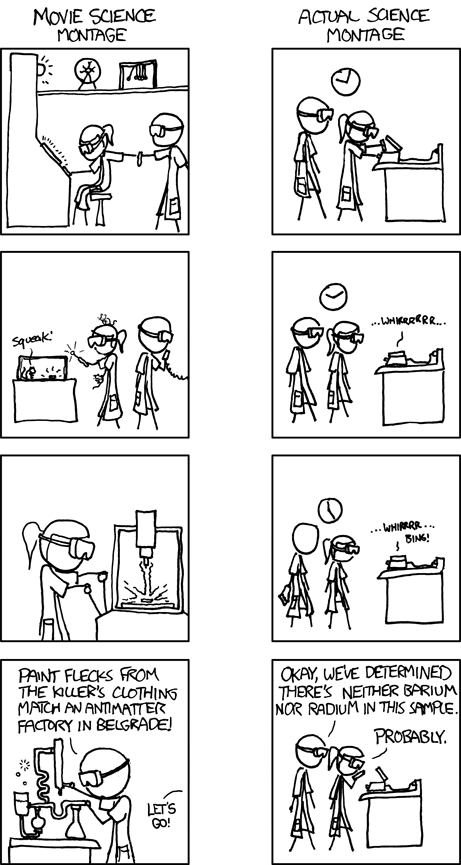
Because adult science is complex and dull to people outside the field.
How do we know the makeup of the atmosphere of a planet in another solar system? That line on a graph is higher then the other one
Idk, that seems like that’d be interesting…
I am Autistic though
So are a lot of scientists.
Ditto
By a show of hands, how many here are autistic? Upvote = Yes, Downvote =No.
Well, statistically the individuals most likely to frequent an alternative social media platform are those with a) the technical proficiency to do so, b) Weak social anchoring to the network effects of mainstream platforms, and/or b) people whose past social interactions have led them to no longer have access to those platforms, ergo by self-selection bias there’s a high probability of finding other high functioning individuals on the spectrum on this platform. Lemmy/Piefed’s primary use case is basically socially-awkward-networking.
Is that why I seem to fit in so well here? I was just beginning to think I finally learned how to be normal…
Well, you ARE normal! With the right people!
– Frost
What if you aren’t convinced one way or the other?
Or diagnosed?
…or mildly so. It’s an imperfect system with no fractional voting. It’s our burden to bare.
They can upvote your comment! It’s branching binaries, all the way down, until we reach enough possibilities!!
Upvote = Yes, Downvote = Yes, but in denial
Better question: how many have declared themselves autistic or even understand the DSM definition?
Is it fashionable? Or just more common than we think?
Pretty much.
There’s nothing dull about seeing a spectrograph working.
Edit: also, how come you can’t find a real hologram displayed in a museum?

Watching a beige box seems kind of dull.
Did scientists figure out how to keep the beige box from turning into a yellow box?
Don’t expose it to UV or excessive heat.
Also, the process is somewhat reversible: Retrobright
However:
The long-term effectiveness of these techniques is unclear. Some have discovered the yellowing reappears, and there are concerns that the process weakens and only bleaches the already damaged plastic.
Yeah retrobright is… Basically only a reasonable option if you want things to look good for gathering footage, it’ll go back to looking like shit within a year or two.

I stood inside the grey box where the magic happens. It was not dull because there was a physicists explaining everything.
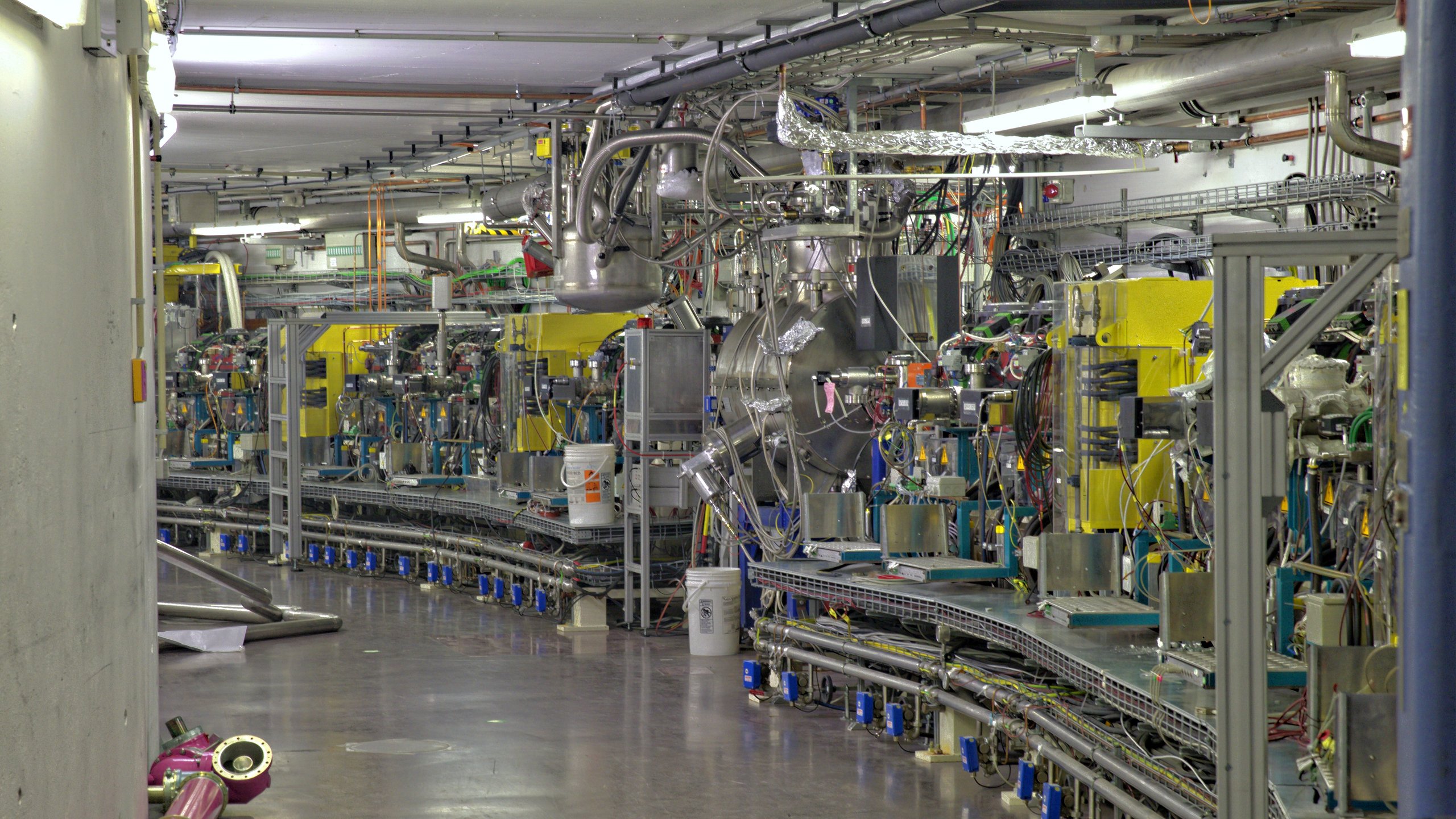
That’s a big box.
EDIT: I like the high tech foil.

Make the box transparent.
But seriously, all of those have older versions that don’t work as well but look absolutely cool.
If you’re gonna make it transparent, make it out of this:


Just like most any difficult work that results mostly in knowledge, it takes self-satisfaction to get the “rewarding” part.
I find that the hierarchy of evidence combined with the ability to critique research is the foundation upon which sits pretty much all of my opinions. It’s a shame kids aren’t taught this from a young age; it would make manipulating them as adults so much harder.
Once you realise the strength of the peer review process, you realise that most peoples opinions dont actually matter: we have strong research on that.
Once you realise the strength of the peer review process, you realise that most peoples opinions dont actually matter: we have strong research on that.
We also have research on people ignoring peer reviewed data in favour of random facts from random sources.
We also have research on people ignoring peer reviewed data in favour of random facts from random sources.
Says who?
Any study with a placebo or nocebo element.
Do we have data on people who understand the significance of peer reviewed research ignoring that research despite the understanding?
kids aren’t taught that at a young age because they can’t grasp it at a young age.
and frankly, most adults can’t either. it’s too abstract for them.
our ability to understand abstract concepts like scientific method begin at age 12. that’s why you start doing science experiments in class in junior high.
But there’s a third option. There’s a difference between complete absence of this topic in the curriculum, and simplified versions of it that increase in difficulty with capability. Mirroring other stages of educational development.
At the moment there’s a complete absence. At least in any country I’m aware of. Until late high school level which is way too late.
Young kds understand hierarchies. Social hierarchies start to form on the first day of kindergarten.
Teaching an 8 year old that science research sits at the top of a pyramid and newspapers and TV sitd at the bottom, would be easy to grasp. There’s nothing stopping us removing the detail and teaching a simplified structure that can then be built upon in subsequent years.
Edit: in regards to your edit, I was taught a simplified scientific method from age 8, not 12.
Teaching an 8 year old that science research sits at the top of a pyramid and newspapers and TV sitd at the bottom, would be easy to grasp.
you have never been around children, have you?
If kid is capable of understanding basic scientific method at 8 years old, they can understand the basic structure of a hierarchy.
“X is more important than Y”
“Why sir”
“Because X uses the scientific method like we discussed in class last week and Y does not”
“What’s the scientific method again sir”
repeats for retention
that’s not how kids work. nor do most people.
Okay. I don’t agree with you, but that’s fine. We can disagree.
I somewhat agree, that looking purely at the data would be boring, especially when it’s on a topic too complex to understand. However, I think science content creators prove it doesn’t have to be boring. However, they’re usually making content on specific topics. A science museum is trying to touch everything.
Nah, astronomical spectroscopy is cool as hell and it’s really easy to have simplified examples you can fiddle with. At its most basic you’re using a prism to divide the sun’s light and measuring the visible bands. (This is pretty much how infrared light was discovered in 1800!)
Most art reflects on cultural and historical contexts that kids might not be aware of yet.
Most science museums are geared toward teaching scientific principles that kids are also less likely to be aware of.So art museums depend on existing knowledge, while science museums supply knowledge to those who don’t yet have it.
Because of our cultural conceptions of the two subjects.
In our culture, it is quite well accepted that for practical reasons, children need to be exposed to and made interested in science and technology from a young age. That way they can become engineers who make good money and help us outcompete our technological/economic rivals. Having a child who becomes a successful engineer (or other stem profession, like a doctor or accountant) is seen as the mark of successful parenting to the middle class, as these roles make a good wage, contribute to society, are reasonably high up the social status heirarchy, and have a clear and achieveable path to success. Therefore parents, who are far more likely to be voters in their cities, will be willing to support spending tax dollars on science museums that are interesting and engaging to children.
And another factor is that science museums designed for children are often just as interesting and engaging for adults. The vast majority of adults have largely forgotten their high school physics or chemistry, and will enjoy remembering those lessons with hands-on demonstrations just as much as children. And while children and their parents are often the biggest target demo of science museums, in larger or more educated cities at least, many museums try to appeal to larger demographics. For example, in my city the Natural History and Science Museum has regular changing exhibits that go in-depth on topics that many find interesting. A while ago, I saw their exhibit on poison, which had a lot of interesting things to learn about the history of poison, evolution, biology, and chemistry. And most people at the exhibit were adults without children.
Anyway - art. Art, on the other hand, is not a viable career path (according to our cultural consensus). Parents want their children educated enough in art to make it a hobby and so they will be well rounded… but they don’t really want their child harboring fantasies of becoming a writer or painter or musician, since these careers tend to have poor wages, have no clear path to middle class success, and will probably end up with their child living in a bohemian commune and getting a neck tattoo. Hence, there is not nearly as much pressure for large investments in the arts that appeal to children.
On the other hand, enjoying art is a sign of high social status. Here, we should differentiate between pop art and high art. Pop art doesn’t need museums, and therefore doesn’t require public funding. The guy who will make you a trippy landscape painting with spraypaint next to the tilt-a-whirl is an artist - but his art will almost certainly never hang in an art museum. It is too lowbrow for that, and the purpose of art museums is to showcase highbrow art - art that the upper classes have deemed “good”. Going to an art museum is a way of signalling social status because what is considered “good” - what is fashionable at the time - is constantly changing, and one can signal their social status by expressing their opinion of what is “good” or “bad”, which signals their closeness to social elites. The closer you are to the elites, the faster you hear about their preferences, and the sooner you can mirror them. Of course, this nuance is lost on almost everyone - they just pick up from the cultural zeitgiest that going to the art museum is a very classy and sophistocated thing to do. And so when funding the city’s art muesum comes up on the ballot, a middle class suburban 43 year old mother of two teenagers isn’t thinking about the museum’s impact on her children’s education, but is rather thinking of her own self-conception as a high-minded individual who supports “the arts”, and who really should get around to badgering her husband into taking her there so she can “keep up with what is going on in the art world” in her fancy dress (that is actually 10 years out of style and hasn’t fit her for the last 7).
Hence why art museums are so often boring and stuffy. Their main purpose is to serve as a social space for elites during exclusive events. Elite tastes must not coincide with common tastes - and since most people like things that are nice and friendly and fun and happy, elite tastes must differentiate themselves by being boring, disconcerting, harsh, and uncomfortable - hence the popularity of modern art and architecture. The interesting and enjoyable thing about art museums is the opportinity to get drunk with elites during their exclusive events. Then the average person, who is not invited to these events, is allowed to feel sophisticated by visiting and staring at the painting that the elites had a conversation next to but never really looked at.
Popular art - art that people actually enjoy for its own sake - doesn’t need museums, since it can be enjoyed in movie theatres, in art studios, on street corners, in crowded bars, at music festivals, at home on a phone or laptop, or next to the tilt-a-whirl.
Because they are….
Suer both may have aspects that appeal to the non primary age demographic but science museums are for kids and art museums aer for adults.
I am being literal about the term Science Museums.
The museum of Natural History is a museum about Science but it is not a science museum.
My local nature and science museum is dumbing everything down by eliminating the need to read and make everything interactive. All the cool walk through exhibits are becoming interactive displays and games. :(
Where’s the problem? It makes learning much more approachable and interesting.
If I want to read, I can just stay at home and read on the Internet.
I can read way faster than I can listen to a narrated video or whatever, and I can easily split my attention without losing my place in the information.
Science museums are FUN because the experience is the purpose: teach people scientific principles or exhibit the (progressive) history of science.
Art museums have different purposes: historical theses, expression, cultural development, discussion, drinking, or money laundering.
It makes some sense: science museums are educational focused, art museums are about very boring things that adults enjoy but kids might not.
My fave science museum is the DaVinci Museum in Milano. It not as kiddie as the others, and my teenage kids actually enjoyed it as much as I did.
Maybe it’s halfway between an art museum and a science museum because DaVinci was kinda split that way too.
I loved the DaVinci Museum! Second to the ADI design museum, but I’m a bit of a design nerd.
I hadn’t realized the extent of his hand in essentially the existence of Milan. It’s definitely one of the best non kiddie science museums I’ve been to. The Fernbank in Atlanta is increasingly kiddie inside but out back they have an extensive forest of native plants which is super cool. They do adult nights sometimes but I think thats just adults getting drunk and doing kid stuff.
Because you didn’t get enough art education when you yourself were a child.
Based on how a lot of adults act, I’d say we don’t get enough science education either.
Capitalism wants workers and scientists, so it gets kids interested in science and doing things with their hands.
Art is only useful to capitalism for money laundering, and we don’t want kids getting interested in culture and history or the idea they can influence culture, do we?
Because science is fun and art is boring lol, like asking why the bouncy castle is for kids and why the conversation about traffic is for adults
I’m sad you think art is boring, art history is some of the most hilarious shit out there
Idk you gotta let that go, different people find different things boring. I studied some art history doesn’t tickle my funny bone in the slightest and that’s perfectly OK.
I mean, yeah, but you stated it at the start like art was boring universally. Now you’re saying different people find different things boring.
I mean yeah that’s the popular opinion based on OP premise. No opinion is ever going to be universal but you can take a poll and see which ones are more popular than others.
Honestly cos adults are scared to show wnimsy and a thirst for kmowledge, or have to pretend they knew about every cool thkng that is demonstrated in a science musem. And in arr museums, adukts will pretend to “get it” to impress their date whereas kids will usually not pretend to like a picture just to impress their parents.
Meanwhile in history museums everyone regardless of age can join together in agreement that ancient Egypt was cool as fuck
Many art museums have recorded guides for kids. The one I went to the other day also gave kids the opportunity to paint their own paintings based on subjects (skulls, vases, fruit etc) the painter of the main exhibition (Césanne) used.
Most art needs context or understanding of a subject before it can be fully experienced. Something children generally don’t have the base of knowledge to understand or appreciate. Though there is certainly art that is meant singularily with just the work itself sans anything else.
Needing that art history to appreciate it doesn’t work for kids most of the time.
Science helps children understand the world they are a part of. They need it in a way that art generally doesn’t.
This also changes depending on what science is on display but kids as already exposed to art in the form of media and the decor of the places they live.
Higher science or perhaps a better term might be more complicated science needs advanced education to be digested, and also much of science that is new to people would need to be read and understood in publication or it is behind restricted areas for safety and also IP reasons so not really something you can bring kids to to show them.
So it makes sense, it’s not too difficult to understand. But there also is room for taking the time and effort to create museums that DO allow those things that usually arent allowed.
Art in action IS a museum/gallery
Science in action will often get you killed without proper safety and that would add significant cost to projects that already have funding issues.
And then there’s things like CERN… You can get a tour!
We’re all kids at heart. Go and press the button, it’s fine!
I wanna go to an art museum that lets me touch and play with the art the way a science museum lets me touch and play with the science.