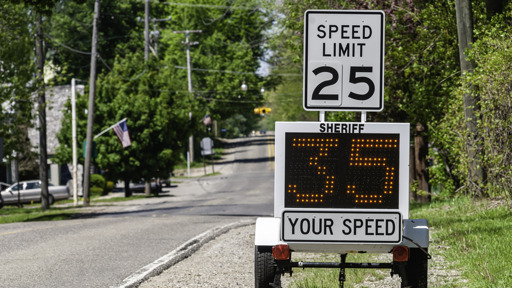
What’s a little extra 5 or 10 mph on the clock?
deleted by creator
i have gotten tailgated by a semi truck in a highway construction zone, one of the scariest things i have experienced while driving. i couldnt even see his lights in my back window he was so close
I got tailgated on a rural highway by a semitruck once. I was going 70 mph. When I slowed down to stop at a red light, they changed lanes and blew through it.
You should have brake check him /joking
My entire commute
German standard.
And don’t dare to drive lower, although of course you’d be legally allowed to.
There are roads…
Lmao. These roads are everywhere then. I have in my life not seen a single place where driving speed limit doesn’t earn you someone glued to your back, even though a minute ago there was no one behind you.
This is experience from driving all over Europe and the US.
Removed by mod
When you do this, they become a reasonable person and stop doing what they’re doing
deleted by creator
The best method is to spray your windshield.
Some of it gets swept with the wind into their windshield, and they have to wipe/clean theirs.I don’t think that’s ever failed to get someone to back off.
Why would someone care about this? I’ve had this happen to me a handful of times, almost always a jeep because they have crazy over spray, I was never tail gating but I was totally unphased by it, its wiper fluid not acid
That’s why I fill my windshield wiper fluid reservoir with hexafluorosilicic acid.
I don’t think people care about it, but it seems to trigger some subconscious “I’m too close” and they drop back a bit.
I guess if someone is actually being an asshole aggressive tailgater then they won’t care
In my experience, American roads are built to support much higher speeds than the speed limit is set. Going 10-20mph over the limit doesn’t feel particularly unsafe on the wide, straight roads.
On the other side, it felt crazy to drive the speed limit on (for example) the narrow, windy roads in Ireland. The limit there felt like a literal maximum, whereas in the US it feels like the minimum.
As noted car enthusiast NotJustBikes has said, driving is not a conscious activity. We drive to what feels right, to a degree. A road built to support 100kph will always have speeder problems until layers of traffic calming are put in place.
UK B road limits are in fact limits (as opposed to North American suggested minimums), often being little more than millennia old cart paths with asphalt applied
I think we just need to pull people over for speeding until they get it that speeding is not OK. Like the signs are right there, and driving SHOULD be a conscious activity. If people are not driving consciously they should lose their car and license.
Driving consciously is bound to be less safe. Any activity you’ve done a thousand times, if you start overthinking what you’re doing, you make more mistakes.
Just design the roads for the speed you want people to go and 99.9% of drivers will slow down without giving it a second thought. You design a road for 130 km/h, people will go around 130 km/h not the 90 km/h limit you’ve posted. Etc.
deleted by creator
Driving consciously is bound to be less safe. Any activity you’ve done a thousand times, if you start overthinking what you’re doing, you make more mistakes.
That’s complete nonsense, i didn’t say overthinking but absolutely you should be paying attention. You’re actually arguing that not consciously doing things is safer? Pay attention, when you a speed limit sign, follow it. That’s all I’m asking for, that’s not overthinking. In fact speeding is overthinking, “sign says 40 but im good to go 45 or even 47”. THAT is overthinking.
Just pulling more people over for speeding is how you turn it into a revenue generating exercise. Law enforcement’s goal should be improving safety, not maximizing revenue.
Designing roads to encourage people to drive an appropriate speed is more effective, even when the road blocks aren’t staffed.
Note: but I’ll fight against destructive speed bumps, maybe all speed bumps. They’re usually just annoying and damaging without really helping. It should also not be a goal to damage my car if I drive at the speed the rest of the road is designed for. Heck, a speed bump warning may be more effective. Either way: fix the road the right way
and you’re here in the US? I ask because yeah i constantly see people taking turns way too fast and drifting into the next lane or even the shoulder, people disregarding cones, people going 20mph over land bridges for no reason than other than in the US we just assume you go 10mph faster over a land bridge just because. People speeding up in front of yellow lights and then just getting there late and running the red anyway. Like daily, like at each intersection this happens.
yes, i’m all in favor of best practices when it comes to designing roads, but people here drive like crazy assholes and they rather risk the occasional crash than drive sensibly for the road conditions like you say. Tons of people on their phones swerving in and out of traffic. Yes, let’s improve the infrastructure 100%, but there really is a problem here of people disregarding basic driving safety on top of that.
you’re here in the US?
I’ve seen people here describe it as the most European part of the US, but yeah.
I do see it - straight and wide roads have more distracted drivers, more speeders, more dangers, especially for pedestrians and cyclists. But we also have a lot of narrow, winding roads with utility poles right on the edges, deer warnings, etc. you have to pay attention
deleted by creator
If you look at the design documents for the roads in your area, usually available in plain old PDF files at your State DOT website… it usually states both the designed speed, and what the posted speed will be.
If it’s a modern road, it is almost certainly designed for 5-10mph over what the posted limit will be. Because they know most traffic will speed, and that is accounted for in the road design, regardless of the posted limit sign.
It’s wild to me that someone heard this logic and said “makes sense”.
Like, I get it from an engineering perspective. You find out the maximum capacity of a bridge, account for extremes like multiple heavy loads, find the point of failure, and then engineer in a safety factor. Making sure your bridge can handle your theoretical maximum several times over.
But, we aren’t dealing with people seeing a strong bridge and thinking “nice, I can carry more stuff in my car” and encourage a larger capacity. The capacity they carry is already limited by their vehicle. They aren’t even thinking about the bridges capacity.
With road design. The road controls the capacity (speed) directly to the user of the road. There is a physical speed that if their car reaches they will crash. They interact with it directly.
Designing a road that increases that speed at which a guaranteed crash will happen is primarily just increasing the lethality of said crash. That’s the primary part of “safety” that the design guideline is controlling.
It’s saying. “Hey, if you go too fast for the road conditions, don’t worry. We made sure that the road was designed so that when you reach that speed you’ll have less time to react and more chance of dying”.
Also, “everyone speeds” is bull shit. Every speeds down a zero intersection straight road with a posted speed limit 15 MPH under what the road was designed for. It’s a fucking self fulfilling prophecy.
It’s saying. “Hey, if you go too fast for the road conditions, don’t worry. We made sure that the road was designed so that when you reach that speed you’ll have less time to react and more chance of dying”.
That’s not at all what’s being said. Knowing the speed people will want to drive with a specific design, doesn’t make it inherently “too fast”, its the exact opposite. The road designers are literally designing what the road condition will feel like to drivers, then taking the human factor into account to set a sensible limit instead of an arbitrary one.
If they know the road design will make people drive 50mph, and that most people drive 5mph over the posted limit, they post a 45mph limit. Driving at 50mph down that road is not “too fast”, that’s literally what was designed to feel correct.
There have been several studies over the years about posted versus real world speeds. Including studies of the same road with the posted speed being changed and monitoring driver behavior. They found that regardless of what the posted sign says, people usually drove about the same speed on that road. The minimum and maximum speeds varied with different signs as some people used that number directly, but the average of all traffic stayed the same regardless of the signage because that’s the speed that felt correct for that roadway. In some cases that was under the posted limit, in others that average was up to 10 over the posted limit.
Every speeds down a zero intersection straight road with a posted speed limit 15 MPH under what the road was designed for. It’s a fucking self fulfilling prophecy.
Most roads do not have posted speed limits that vary dramatically from the speed that feels right on that road, because they’re designed for a specific speed and posted with that consideration. Artificially low speed limits are not common. They’re usually from a speed being changed years after the road was designed and built, so it wasn’t intended to have drivers at that speed and also wasn’t physically changed to help reinforce that speed subconsciously, or from a town trying to boost ticket revenue.
That’s not at all what’s being said. Knowing the speed people will want to drive with a specific design, doesn’t make it inherently “too fast”, its the exact opposite.
You quoted and replied to my hyperbolic conclusion instead of the substance of what I was saying. Which is why I don’t really disagree, on the face of it, with anything you said.
The problem is not in individual roads or individual road designs. Though we often have to use the thought of an individual road to describe the problem. Which is what I was doing through analogy. The problem is that there is nothing put into the design to account for the impact on the way people drive based on the design parameters themselves.
It is a feedback loop that is not being taken into consideration by the design guidelines of American road infrastructure. The very basic “post the height of the bridge as 1 ft lower than it actually is” is being applied to speed limits and road design. When this type of thinking is far too simplistic for a much more complex system of human interaction with the road and other humans themselves.
The truck driver that drives a 10ft tall truck that fits under a bridge with a posted 9 ft 11in tall sign doesn’t think “hmmm I bet I could fit my 10ft 1in truck under here as well”.
But drivers do have these more complex thoughts and interactions with the road that they drive down every day.
My post was more a criticism of the use of speed limits in general. Which is why I was being hyperbolic. But I should have been more clear.
I am in favor of the design choice that "the driver should not even need to know the limit. They should be incentivized by the design to drive at a speed that is both safe for themselves, other drivers, and above all, pedestrians.
When I was in Appalachia, on the mountain roads, many are very narrow, and winding. Speed limits often like 40, and you can’t go more than that without crashing unless you have a motorcycle or something. It’s not a suggestion, it’s the maximum you can do on the curves.
Furthermore, even though that’s the maximum, the safest speed on mountain roads is the one you feel comfortable with. Even though I’m experienced driving in the mountains and can comfortably go that limit I’m not gonna be too annoyed at the car from Florida in front of me going 15mph under. I will get extremely annoyed when they don’t use the pull out spots or if they accelerate up to the speed limit in the passing zones though.
You are right about American freeways. City roads tend to have a lower speed limit that is probably appropriate and it would be unsafe to go faster.
Rural America will have little roads with deer and intersections at blind curves and say 55 mph seems about right.
I have noticed the opposite, having driven in multiple countries. American urban speeds are dangerously higher while the highway speeds are set lower.
Rural America will have little roads with deer and intersections at blind curves and say 55 mph seems about right.
And the residents will do 65 on them and complain about the tourists who do 45. I know, I’ve been both.
@Semi_Hemi_Demigod @jj4211 And US insurance companies will consider it not your fault if you wreck your car by hitting one of the deer, as if it’s not possible to slow down and take precautions when and where deer are likely to be present.
People will always drive at the speed that feels safe, it’s not just Americans. Gradually here this is being recognized, and roads narrowed, speed bumps added, etc. in places where we need to go slowly. At my work complex the stated limit is 10 mph and even on my bike I am speeding, and cars are passing me, but it doesn’t feel unsafe at all.
This. My city keeps putting in more and more traffic cameras, but it doesn’t slow cars down; it just generates revenue. If they actually wanted people to slow down, they’d reconsider having the main road look like a pin-straight four-lane highway.
Behavioral engineering is way more effective than posted speed limits that often didn’t seem to correlate with reality.
If you give me a five lane stroad with wide lanes and lights only every 1/4-1/2 mile, I don’t care what the speed limit is, I’m doing 60+ because it feels right, and if someone does the speed limit in front of me I’ll probably be annoyed.
But if I was going down the same street, doing the same thing, with the same amount of time available, but the lanes were narrowed to add protected bike lanes, the center lane was replaced with a median with trees and occasional left turn/u-turn spots, and crosswalks were added between the lights, I’m going to do around 35 because that feels right, and I won’t even be mad about it. I’ll just cruise down the street chilling.
Give people a street where it seems like you should be going fast and people will go fast, and get aggressive/angry when they can’t. Give people a nice street to roll down and chill and that’s what they’ll do. It looks nicer and is more walkable/rideable too.
Right, this is one of those things where I seemed to have a very different experience than many Americans …. But we have older roads that are narrow and winding. The towns were all built out before cars and never really got to the “stroad” stage of dystopia. All those “design elements” come for free
I mean, if you’re on a bike or power walking or something I’m certain nobody’s going to get too disagreeable about your speed.
Lol how wrong can you be, if you are fraction slower than the person behind you (type of vehicle doesn’t matter) you get cussed out in America. I literally was going 20 mph up a hill with an ebike and some gobsmacked asshole has the nerve to tell me to yield to cars behind me because according to him I don’t have a “real” ebike 😤🥱. This happens everywhere in my city, jokes on them I don’t need to go 60 mph to get to my job in less than 10 min, sounds like poor planning on drivers end to live so far away and have the audacity to tell locals not to use our roads.
Oof that’s rough. I do pull over to the side & let cars pass when I ride in the 35mph road on the way to work (there is a sidewalk I can use, it’s allowed but sometimes there are pedestrians using it or work trucks parked over the entire sidewalk -fuck those guys in particular, then I use the road) but once on a different 35 with no good sidewalk I had a Prius follow slowly and at a safe distance for so so far even though there was plenty of room to pass. Honestly I can get to 35 on the electric bike but don’t want the cops to know, and it wouldn’t help because as the whole point of this thread is - on the road to work it’s smooth and easy so people do 45.
Yeah, technically I have the same right to be in the car road, there is no bike lane or path, but it’s not something I’m willing to die for, I am slower traffic and keep right. There are lights so if I walk it across an intersection and wait I can get a very light traffic situation for a couple of blocks.
Wrote the city to complain about the road though, to ask them to convert it like they did some of the other similar sized ones, bike lanes, middle turn lane.
If someone’s willing to stay behind you that long, they’re not the car to worry about. They have patience and caution.
This might be me. We have a lot of narrow and winding roads where it’s really not safe for me to give the clearance you deserve. But waiting another 30 seconds really doesn’t impact me. Most drivers are more aggressive about passing cyclists
Just to troll …… when I used to cycle regularly, they did care. All the cars were too damn slow and wouldn’t get out of the way. I hated some sections of towns where I had to slow down
My closest call was an elderly woman who misjudged my speed. She passed me but then immediately slowed for a turn without realizing I was there and couldn’t brake as sharply. Worked out though: I was able to brake enough to turn inside her and avoid the accident, and my brakes shrieked like a banshee so she knew what she did
the real answer to question “why people speed” is someplace closer to “why was this neighbourhood road designed like a freeway”. Another is “why is it safe to have virtually no speed limits on Autobahns?”. I mean people act on environmental queues - from the size of lanes to what speed fellow motorists are observing. Just pinning it on individuals is incorrect. HOWEVER there are entitled arseholes out there who will totally ride jour read bumper at high speed because they need to pass you only to turn off at nearest exit.
“why was this neighbourhood road designed like a freeway”
The stroad by my house is five lanes wide with a 45mph speed limit but still has crosswalks that nobody can use because it’s a five lane road with people doing 45mph and many people have already been killed crossing. So many that children are bussed from the school across the road because it’s too dangerous to even have a crossing guard.
You read that right: Kids who live less than 200 feet from the school can’t walk there because the road is too dangerous.
And we can’t get the speed limit lowered because it’s a state highway and the state says it has to be 45 and the local community has no say in it.
And people wonder why I hate authority.
from the size of lanes
I mean, going the speed of traffic is safer than not. So yeah, it’s okay when everyone else is doing it.
Also if the law enforcement in the area lets it happen, what message is that supposed to send to your average single-loop thinker?
Let’s it happen? I regularly see the police where I live do the kinds of things they pull people over for; speeding, rolling stops, distracted driving, failure to signal etc.
Tough to maintain credibility when those charged with enforcement don’t follow the rules either.
That’s true where I live too, but the asshole drivers not in cop cars far outnumber the entire police force of my town. Every day I see someone run a red light, change lanes in front of someone without signaling, or do 35 in a 25 school zone. And they think that’s okay not because they saw a cop do it too, but because they see all the people around them getting away with it. The cops either don’t care or are too busy blowing their budget on nice gear to hire enough people to do the job.
You might even get an impeeding traffic ticket if you drive the speed limit
deleted by creator
Laws that aren’t enforced are Laws that can be enforced selectively.
Right you are. It’s part of the perennial conservative system of control: There’s an in-group the law protects but doesn’t bind, and an out-group the law binds but doesn’t protect.
Right. Traffic enforcement that’s “random” is fundamentally unjust. But conservatives like it because they can bully the out-groups, and some assholes like it because it brings money in via fines.
going the speed of traffic is safer than not
Maybe if you only consider the safety of yourself and others in cars, which isn’t exactly what I would expect someone in c/fuckcars to do but then here we are…
deleted by creator
Bullshit. It’s the same mentality as people had during COVID. “The others aren’t wearing a mask, so neither should I”
If wearing a mask while others did not caused you to be a danger to yourself and others, this analogy would make sense.
Bullshit. With covid if I wear a mask and you don’t there’s still been a significant decrease in risk of transference and both of us are safer. With not going the speed of traffic, if I strictly follow the speed limit and you don’t there exists a differential that increases our risk equally.
Speed limits are one of very few, if not the only, legal limits that is set by observation of actual human behavior. Look into how the 85th percentile rule is used (in the US). If a speed limit is set too high or too low compared to nominal human behavior the state creates a difference in perceived safe speed and strict adherents. It is that difference that causes problems.
There are parts of Atlanta where the speed limit is dynamically set (sometimes down to 40mph) and the flow of traffic is maintained at 20-30 miles faster; there are also parts of Florida where the speed limit is 70mph and the flow of traffic is 80-85mph. In each case, a strict adherence to the posted limit is dangerous as you now become an obstacle everyone else needs to evade.
The inverse is also true. If there are adverse conditions on the road that warrant the flow of traffic to 30mph under then going the posted limit you also put yourself and those around you in significantly higher risk.
If you’re traveling at the posted speed limit and there’s a broken down car stopped in front of you, do you strictly adhere to the posted limits straight into an accident or do you adjust your speed to that of the flow of traffic in accordance with the conditions of the road?
Traveling with the flow of traffic makes you more predictable and puts you inline with the actual realized conditions of the road, and being predictable on the road is the safest thing you can do while driving.
Wearing a mask makes everyone safer. Speeding along side a multitude of other speeders makes all of you safer.
Your example of the broken vehicle is not very good but everything else is very good. Are you saying that having to speed up with traffic to go around an accident is what should be done rather than get stuck in your lane behind an accident? You should move over and also slow down.
You should do what the cars around you are doing to pass that block. You shouldn’t blindly follow the speed limit as a strict unnuanced law regardless of what is happening around or in front of you.
No person shall drive a vehicle upon a highway at a speed greater than is reasonable or prudent having due regard for weather, visibility, the traffic on, and the surface and width of, the highway, and in no event at a speed which endangers the safety of persons or property
What you are talking about, I think is called the general speed law. Basically as fast as road conditions allow. Above is from California https://california.public.law/codes/vehicle_code_section_22350
It quite literally is.
If you don’t keep up with traffic, people pass you, and that is much more dangerous than an extra 10mph
I’ve had people blow past me at like 20-30 over. Swerving all over through traffic. Only for me to pull up beside them at the stop light at the top of the exit ramp. Worth it. Not saying it’s always the case. But it’s funny af when it does.
That’s not relevant to this article.
Then people should stop passing, and realise an ekstra 5 mph isn’t going to get you to your destination any faster?
Good luck telling that to your average moron on the road
We don’t live in fantasy land where common sense exists and we have to work around that
Sure, but just because they are morons, doesn’t mean I have to drive faster than what I deem is safe.
The safest speed is nearly always the average speed of traffic, this is well studied…
Can’t argue with facts with someone that goes off feelings
That is true, but that doesn’t mean I feel safe driving as fast as other drivers. It doesn’t mean I feel confident in my ability to react in time, if something was to happen a few cars ahead. Is it statistically safest? Absolutely, but that doesn’t mean everyone is equally safe going that speed.
If you don’t feel confident driving the usual flow of traffic you shouldn’t be driving
So many times I’ve had to slam on brakes to let an idiot get back in their side after a pass because some slowpoke idiot is doing 60kmph on a 100kmph road and a whole column is passing them
If you don’t speed tf up you will get yourself or someone else killed
When you’re alone on the road drive whatever speed you like
We’re generally talking about people driving over the speedlimit on this post. Someone doing 60km/h in a 100 km/h zone isn’t the point of discussion. Someone driving 120 km/h in a 100 km/h zone is the problem. You can’t blame the people simply following the laws for the actions of people breaking the laws.
Yeah but if you’re the odd one out, you’re the problem.
If everyone is going too fast for you, you should use a slower road and not be a danger/impediment.
I think that’s a very backwards way of thinking about it. If you’re being safe, but a bunch of people are being unsafe, and bring your life in danger, that’s not you being a problem, that’s you being a victim.
If people start waving knives around at random, and telling you they’ll get closer to you, if you don’t also wave a knife around, then that’s a hostage situation, not people wanting you to be safe.
You’re not being safer by driving slower, your base premise is wrong
My base premise is faster drivers being the source of slower drivers being unsafe, not the other way around. Thus the slower drivers are the victims of this, and shouldn’t be blamed for driving slower, and definately shouldn’t be encouraged to driver faster, just because a bunch of assholes think they’re more important than everyone else.
They should be encouraged and enabled to not drive at all.
Slow drivers are a big reason why I want free and abundant public transportation.
“if you’re being safe”
Being the one person interrupting the flow is safe how?
Are those chunks of semi tires on the road safe because they’re not moving? (Also… they weigh more and move less than the look)
“You made me do it!”
I would agree with the several comments on the engineering and design of the higher speed roads being able to handle increased limits, but I don’t think the road or even most of the cars’ ability to go that fast are the problem. It’s the drivers. Raising the limits means people will go that much faster (the ones who are even bothering to stay close to it), and the risks will be higher and more deadly.
There is also the issue of fuel efficiency vs. speed and how little time is gained for a lot more gas used. Even with modern cars there’s a limit of aerodynamics and how much more it takes to push air out of the way faster as you get higher in speed. Of course this pales compared to how many people I see idling in parking lots on their phone, and then complain about gas prices. There’s a disconnect somewhere.
During the Arab Oil Embargo they lowered speed limits on highways to 50 mph, which is the most economical speed to drive.
Windows up is more efficient also, as is fully inflated tires.
I tested my car as a hypermiler over thousands of miles on dead flat roads empty of other vehicles, my daily commute was 78miles. The most economical speed was 30mph in 5th gear with cruise control on. For most people that’s not a practical speed for any kind of long journey,but I was getting over 100miles per uk gallon in the summer (hot weather helps with fuel economy, as does not having headlights or ac on). I got through so many audiobooks driving so slowly!
If you don’t mind sharing, what car is that, and what year of manufacture?
A Skoda Fabia Estate Greenline Diesel 1.2 litre engine, made in 2011. I took it past 180,000 miles until a deer jumped out and put and end to things.
ooooh … you know what, maybe i’ll avoid highways and stick to roads with 30 mph speed limits, too, actually. i drive a hybrid so it might be pretty chill and cost next to nothing.
Hot weather does not help with fuel economy precisely because you have to turn on AC (or arrive at your destination a sweaty mess, everyone will LOVE that smell).
Mild weather helps a lot with fuel economy though, engine still warms up faster compared to the winter and you don’t need AC.
The most economical speed was 30mph in 5th gear with cruise control on
That can’t be too good for your engine’s health unless you have a fairly short 5th gear (e.g if you have 6 or more gears anyway or just a short final drive). Most of my manuals have been 5 speed manuals and they aren’t too happy in 5th at 50 km/h.
Since you mentioned below that it’s a diesel, that will cause real issues over a few hundred thousand. I had to clean turbo vanes on a 415k km 1.9 tdi, all gunked up from eco-driving. Vanes don’t get exercised and they don’t get any proper heat either. You’d ideally want to be cruising around 2000 rpm and you should be using most of your rev range, not just the bottom end.
Seriously, that’s why I always just accepted the approximation of 45mph …. The lowest speed you can smoothly drive in the top gear.
But you can hear when the engine is going too slow, when you’re potentially causing more harm than good. Anyone using a standard transmission knows where their shift points are and intentionally going significantly below that is counterproductive
Economy isn’t just about fuel economy. Less unsprung weight and highly inflated tyres reduce fuel consumption, but low profile tyres result in damaged wheel rims and lack of adhesion results in lack of control.
Alloy wheels with low profile tyres are lighter, but are also more prone to irreparable damage.
If you have the smallest steel rims that fit over your brakes (and the highest profile tyres to match manufacturer recommendations), you are less likely to have a puncture or damaged wheel, especially in potholed regions. (I live in Victoria, Australia).
If you have the correct tyres inflated to the correct pressures, they will last longer and provide the most optimal grip.
which is the most economical speed to drive.
That is not universally accurate. Even at the time, there were vehicles that were more efficient at higher speeds than 55mph. But those weren’t American designs, of course so they were of course ignored in favor of the general majority. And those vehicles that were more efficient at higher speeds, got screwed for simplicity.
I did wonder about that actually, questioned it.
It seems odd wind resistance would be higher at higher speeds and not linear to me as well. Idk why but it’s counterintuitive to me.
Drag is not linear, it is proportional to the velocity squared.
However that is only one of the big factors. Vehicle shape and aerodynamics have a large effect on drag. This is one of the reasons for the flush door handles on some vehicles, lowered drag means increased efficiency. Then you also have the efficiency of the engine and power train at various speeds and power output.
No… It was the most economical speed to drive for the average car at that time. Now it’s 65 because that’s what the federal test uses.
How does that play with older cars, like 00’s cars?
Same difference. Good fuel efficiency came at around the same time as vaguely safe cars.
I don’t think I’m autistic. But it tickles my brain that the speed limit is one USian law that is designed to NOT be followed literally.
If it were, it would be trivial to use automatic toll reader cameras to give everyone who speeds a ticket. They have a time stamp when you enter the toll road. They have a time stamp when you exit. They can calculate mathematically that if your average speed is higher than the limit, you broke the speed limit.
But they don’t do this, because society does NOT believe in following this specific law (speed limits)… because why exactly?
There is an unwritten rule in society that the speed limit law is not meant to be followed literally?
I hate it.
The other aspect is that we typically are against automated enforcement regardless of the law.
We typically want people to be in the loop. If there were more visible traffic cops, people tend to slow down to the limit.
Automated enforcement just invites cities to do extremely vile things like kill people by lowering yellow light durations.
Well if the limit was actually meant as a limit, they could at least send an automatic warning.
This seems to send the message that the speed limit isn’t a limit at all, it is just informational, and also an excuse for police to pull anyone over for any subjective reason.
Autonomous weapons go brrr
Another factor that hasn’t been mentioned yet is it gives cops pretty unilateral right to pull you over if they feel like it. IANAL, but in many places it’s illegal for a cop to pull you over just for “being suspicious”, but because of speeding and various other traffic laws on the books that are almost universally ignored, they can pull you over for speeding, then decide you seem suspicious and search your car, breathalyze you, etc.
Keep in mind police in the United States don’t have to prove someone was speeding. There is no photographic evidence or logged speed reading. If a cop says you were speeding, according to their “justice” system, you were speeding. End of story.
"You were going fifty-five in a fifty-fo’ "
Prima fascie.
No body is driving perfect, speedometers aren’t perfect, and such automatic devices aren’t perfect nor can they identify the driver yet. I believe they use these elsewhere like UK… But most likely have a bit of wiggle room
It may be necessary to speed up to avoid or pass something reasonably and ultimately the speed limit is so for most conditions. In a 70 it may be reasonable to do 80 on a clear, sunny day with minimal traffic. After all it’s still 70 at dark when your visibility is cut way back. Plus it can’t be a hard rule given weather conditions, traffic speed differentials, etc… 70 may be too fast or otherwise.
It’s not that big of a deal unless you’re the one driving too fast or slow relative the everyone else.
If that happened people would avoid toll roads which means there won’t be enough toll income.
Or they could make the speed limit law an appropriate limit, rather than something everyone exceeds
There are plenty of stories in our folklore of times people sped 100+ just to get to the emergency room on time.
Should be a valid excuse for breaking the law!
There’s lots and lots of laws like that
Like perjury. It’s almost never pursued, the judge will just order your testimony ignored
Or paying your taxes. You’re basically expected to do your best to cheat, especially if you’re a corporation
Yeah I’m trying to accept that there are laws like this :/
When I was 4, I asked to see the book of laws. You know, the thing that determines whether you live free or in prison, the things that lays out all the things you actually have to do. The absolute list of things that must be followed to exist within our society
I’m still more baffled than my parents were then that there is no such book, and that it is not a book all adults must obviously have simple and continued access to
A federal effort to just fucking count the number of federal laws in effect stopped well in the six digits before the effort was essentially declared impossible
You’re not coming to terms with anything yet. Your eyes have cracked open ever so slightly and you’re desperately trying to close them again
I speak this all without judgement in the nature of compassion and desire for understanding. I can put it more plainly but you’re approaching the truth on your own, and you will gain deeper understanding arriving to the obvious conclusions yourself
I had a political science professor who used to say that while all societies had a system of justice, that was the topic of the 200 level class, it was so difficult, and so we wouldn’t be talking about it in his 100 level international politics class.
I never took his 200 level class, and to this day I wonder…
Especially since it’s not even criminal.
They don’t do it because the U.S. has good standards for what is a crime.
For example cops can’t tailgate you then give you a ticket for speeding.
Additionally, doing this only on freeways would probably make the roads less safe as drivers would go faster on surface streets. Thr 65mph speed limit was set in the 1950s by 1950s white men for 1950s cars. Freeways are safer than surface streets by multiple factors of 10.
In my US state of Texas, speed studies set the speed limit based on a 85th percentile rule. They assume that people will basically ignore the speed limit and drive the speed they feel is safe. That’s why we have highways with 85 mph speed limits.
https://www.txdot.gov/safety/driving-laws/speed-limits/speed-zone-studies.html
That’s not a bad strategy. Driving slowly on slow roads or in adverse conditions and fast on highways seems rational to me. What is the point of making a road that is specifically designed for high speed and then putting a limit on it? The speed limit is an incredibly blunt instrument for deterring bad driving, as if driving below the limit is always going to be the safest option. It also motivates law enforcement abuse. The vehicle-environment-driver complex is much more nuanced than a single variable threshold.
That’s always been my thoughts on the matter. Don’t enforce speed. Enforce proper lane usage and following distance.
That and modify the road, don’t expect all the drivers to change their subconscious behaviors
It can be as simple as paint - people will go the speed they feel is appropriate, threat of punishment won’t effectively change their behavior. If the road looks smaller than it is or seems to narrow around intersections, people just drive slower
Cheap, easy, science based.
What is the point of making a road that is specifically designed for high speed and then putting a limit on it?
Because once you get within an hour and a half of a major city, you’ve got hundreds of suburbs feeding into it with everyday commuters trying to drive along side people out there driving like it’s GTA.
The only places where it’s actually 85 are places where the air lift won’t make it to the hospital in time.
I’ve got my problems with Texas’ infrastructure but removing speed limits wouldn’t help.
This isn’t specific to America…
Here in Europe we occasionally get road construction sites on motorways where the speed limit is temporarily reduced to 80, 60 or even 40 because the lanes are narrower than usual and drivers need to navigate around the construction site. I’m never quite sure how fast to drive there: if I actually drive the posted limit, I’ll have 0 cars in front of me, but it looks (from my perspective) that I’m holding up 67 cars behind me who would want to drive faster. If I keep up with what the driver in front of me is doing, I’m technically violating the law…
Just go the speed limit and keep in the travel lane, people can pass if they want to go faster than the speed limit.
In situations like that it is common that the road has been reduced to one lane.
Then yeah people gotta be patient, i dont run through the supermarket either even if im in a big hurry.
Not run, but I can walk pretty fast and hate to waste time at the grocery. Even the smallest full grocery has aisles 3 carts wide so there is no excuse for obstructing traffic and I hate everyone who does.
I mean yeah then maybe living in a society isn’t for you lmao
Are there workers? If there are workers, slow the heck down, keep them safe. If there are workers, it shouldn’t even be a question
Of course the assumption was that it was clearly completely safe to drive significantly faster than the posted limit.
I live in Pennsylvania where the roads are always under construction because there’s never anyone actually working on them.
Removed by mod
In America, unfortunately, and depending on where you are, this could very well get you killed or pushed off the road.
People are rage crazy these days, everyone. Do not do this.
Hint: I too want to get to my destination relatively quickly. So this is just asshole behavior for the sake of it…
Always disheartening to see this rule of thumb downvoted. In here, of all places. People really telling on themselves. If someone is tailgating you they have less stopping distance if you have to brake suddenly. Slowing down increases time to react. It’s not bad behavior or road raging, it’s prudent sense. It can save your neck. I learned this in driver’s ed. I’d rather have a cager sniffing my asshole at 30 than at 45, and if they don’t have a lane to just go around, the speed limit is probably lower anyway.
I don’t recommend driving at 10 under though. As in like all the time. If you’re in a safe situation you should just drive near the limit, it’s usually what the road is designed for.
Depends on where. I’m going the speed limit through town or less where there are people. It saves lives.
But highways are built for fast driving and cars continue to get safer and more performant. Fuck the speed limit set for 1970’s death traps and hasn’t changed.
The real problem as always is local roads designed like highways. Stroads seem to be one of the underrated evils of modern society
The speed limit has raised since those death machines… Specifically because it was lowered due to that oil crisis.
Cars might have gotten better, but a lot of highways haven’t been improved enough for those higher speeds. For example, there’s a lot of on ramps in older cities with very short merge zones, and you need to hammer the throttle and pray that there’s a spot for you by the time you hit the end.
This is especially true if the person in front of you refuses to accelerate to highway speeds to merge safely, simply hoping that people will be nice enough to let them in.
There’s one near me where I’ve almost been in accidents just about every time I use it.
Yep, lots of these where I live. My civic was a problem, but my Subaru had enough acceleration to make it easer. Now I have an EV and a habit of hanging back on the ramp since my EV will make the guy in front of me appear to be standing still
It’s because it is never enforced anymore.
It’s worse than that. If everyone speeds all the time, cops have a valid reason to pull over and harass anyone they choose, on the pretext of speeding. You’ll never guess what demographic gets a disproportionate amount of police attention despite not speeding (or committing other traffic violations) significantly more than average.
And of you’re not speeding, it appears in the US they stop you for endangering others on the road
So they set up speed camera(that is not Flock or mass surveillance) and people yell about constitutional right.
Rightly so. A machine should not be able to enforce the laws. You have the right to face your accuser in the US - can’t often do so if humans are taken out of the enforcement loop.
It’s pretty much codified. 9 mph over means pretty much nothing. If you are a little over that? Everyone knows the courts will probably knock it down to 9 over just by asking.
As another comment points out, it’s works for being selectively enforced. Almost every car on the road can be pulled over. Even if you are going the speed limit, you might get pulled over for impeding traffic.
deleted by creator
Because roads are engineered to accommodate a certain speed limit then politicians artificially lower it so they can show how safety conscious they are. Then instead of admitting it was a stupid rule they blame everyone for breaking it just like they do with abstinence only education.
Lol wtf is all these car lovers doing in /c/FUCKCARS
First of all, you’d be surprised how many car enthusiasts support good urbanism. They aren’t mutually exclusive.
Second, the people in this thread aren’t demonstrating love for cars anyway; they’re largely merely acknowledging the factual reality that it really is dangerous to provoke a lot of extra lane changes and passing maneuvers by driving at a significantly different speed than the flow of traffic. Speaking of which, I’ve removed some of your other comments (specifically, the ones suggesting to do that and to pseudo-brake-check people who tailgate in response) in accordance with section 8.1 of the Lemmy.world TOS. Please don’t make similar dangerous suggestions here again.
Hey power tripping mod, don’t be an asshole.
It’s not a brake check to lightly tap the pedal to flash the light. That’s how you communicate to person behind you.
Why would you delete my comments in the name of danger but let everyone else who says you should drive above the speed limit stay?
Because one is done in an attempt to invite a collision and the one is done in an attempt to avoid a collision
In that case you’d be communicating that you’re brakechecking them lmao. Once in a while i do a “reverse pass”, i just go in the left lane take my foot off the gas and let them pass me on the right, then i get back over.
That also sounds dangerous to me, imo, if there are other cars around. I would just continue to drive a safe speed and let them pass on the left. Or, if appropriate, put my right blinker on and hug the right shoulder to make it easier for them to pass (e.g. on a two lane road with the passing middle lane marker.)
That also sounds dangerous to me, imo, if there are other cars around.
well yeah, i only do it if the left lane is completely empty to spitefully show them they could have easily passed the whole time lmao
Oh, nice lol.
Unsure if this type of person knows how to use a rear view mirror tho :p
Welcome to /c/all!
For real. As if my 30 year old car loves doing 80+ mph. I hate people justifying speeding. Instead of flashing my brakes lights if they’re too close I just l clean my windshield and splash their car. Instead of brake checking I just barely slow down and force them to go around.
I’ve modified the rear sprayer on my car to squirt directly at the car behind me. It’s a lot of fun.
I haven’t commented yet, but consider my situation as an example.
Middle aged, lifelong resident of midwest suburbia, USA. Car-centric infrastructure created long before I was born. Mass transit is a novelty that’s only available when visiting the city. All of this to say: Owning a car and driving to every destination is a basic necessity.
I enjoy the sensory experience of driving and I have a small fun car.
But I also try to pay attention to the world around me and care about other people and other life on this planet. So even though I’m a bit of a “car guy” I can definitely say yeah, fuck cars.
And I use the term “cars” lightly. Where I live, if you drive a “car” like a 4-door sedan that seats 5 and weighs under 3,500lbs (1588 kg), you are already in the smallest 10% of vehicles on the road.
I thought fuckcars meant that you wanted to fuck cars…
They literally want to fuck cars.
It bothers me when people don’t go the speed limit. Faster or slower, the speed limit is to set a consistent speed. Consistent means predictable which results in safer conditions. This would result in less traffic and less fuel consumption.
However, following the flow of traffic is safer than trying to go the speed limit. If you’re the one person going 20 units per hour slower than everyone, you are the hazard.
However, following the flow of traffic is safer than trying to go the speed limit. If you’re the one person going 20 units per hour slower than everyone, you are the hazard.
If people are intent on breaking the law, I will accommodate them passing me safely.
I will not be breaking the law to accommodate someone else’s desire to do so, to consider that to be an expectation is downright delusional
In my high school marching band, us in the drum line had this really hard to reach mark for one show. We had something crazy like 30 yards on a 16 count. Just absolutely hoofing it.
None of us could do it consistently, except for the 2nd bass drummer who was really tall and had a really wide gate. Anyway, he’d hit is mark every time. And every time he did, the band director would yell at him because even though he was in the right spot, everyone else was wrong together, so we all looked correct and he looked wrong because while we were in a perfectly straight line, he was another 5 yards or more to the right of us. He looked ridiculous.
And what made it worse was that our line was supposed to connect with a curved line in the low brass section. Their curve was supposed to reach out and run right down to the point of our #1 snare drummer. And that 2nd bass drummer would be in their way every time. And in an attempt to avoid a collision, they would change from a smooth arc into a weird curvy wobble just to avoid him.
The band director was sick of it ruining the spectacle. The band was sick of getting points off in competitions. So, when the band director said “make the form work, and if someone is in your way, run them over,” no one in the formation spoke out against it.
The next run through the song, that 2nd bass drummer got walloped by a two tubas, and then got his bell rung by a trombone player. He was right. He was always right. And in being right, he looked wrong, he made life harder for everyone around him, and ultimately was hurt because of his stubborness.
The lesson was finally clear to him: when you are in Rome, you do as the Romans do. It doesn’t matter how confident someone is that they are supposed to be driving on the right side of the road, if everyone else agrees to drive on the left, then that person will get in a head on collision. And then we the attendees of their funeral can write “They were right” on their gravestone. For some things in this world are worth dying for, and some things are not, and there is a certain wisdom in distinguishing the two.
Is there a reason that the band director couldn’t modify the drill to make something actually achievable, or simply reflect the reality of how it was being performed?
My marching band days were in high school and i don’t really remember if our drill ever got changed midway through, or how.
I know the original thread was about speed limits, but i don’t usually think about marching band so this is fun.
Lol, no problemo! I’m happy to talk marching band.
Basically, he was a perfectionist with high expectations. He wrote his own arrangements and wrote his in drill sheets. He didn’t want to change it because he wanted us to be able to do it. To his credit, we punched way above our weight class. We competed as a AAA band despite being a single-A size and we regularly ranked in the top 3.
He only taught at our highschool for a few years. Then he taught at a university across the country, was there a few years, and is now the band director of a very well known university band. Not interested in doxing him or me, so pardon the vagueness.
I think he is much better suited for his current role rather than the highschool he was at while I was there. Thankful for the opportunity and stewardship, but with the hindsight of adulthood, he pushed us kids more than was appropriate. Not dangerous, just disproportionate to our age.
That’s a great story. Glad he went on to bigger and better things!
Our band director would tell us that we were “outstanding in our field” quite often during practice. Our band was all volunteer / extra curricular, and we would compete in band festivals in which we were often the only band in our (small) size category, and win by default, but we’d try to be louder than the bands where participation in band was mandatory for music students.
So your point is, I’m in my lane, driving the speed limit, and some asshat with shit for brains drives like a fucking lunatic comes up behind me, now I have to drive like a fucking lunatic too?
No.
However i have been on roads where the posted speed limit was something like 45, but the average speed limit of the 10+ cars around me at any time was 65 / 70, due to the road’s design encouraging that speed. (This was when i was traveling in Long Island, NY).
I could go against the grain and drive 45, and that would be perfectly legal, but likely more dangerous than trying to match the slowest speed of other cars around me.
In my world, driving 45-55% faster than the speed limit is driving like a fucking lunatic, so yes, that is what you’re getting at.
It is so weird then that in the USA, there are places that driving “sane” singles you out, and is more dangerous.
Yeah but am I going to put myself at risk of a ticket, points on the license and higher insurance rates, and attention from the police, (the less interaction the better,) because others speeding is making it dangerous?
Sometimes. Most of the time, I follow the law. Almost all of it. Only in passing really do I speed on purpose even a bit. I would for safety if it was needed, but I am not going to put myself in danger of being pulled over because people that are less likely to get hassled by the cops are mildly inconvenienced by someone going the speed their lawmakers all agree on.
In an ideal world, I agree 100%. Most of the time I can set my cruise to the speed limit and let the reckless people pass.
That’s my preference. Just set CC to speed limit, and let the regenerative braking handle any downhill sections.
But, in traffic that can be unsafe. Still I try to keep myself to the speed limit and check my speedometer frequently so I don’t speed even if it “feels safe”.
I do find that I’m one of the faster drivers in the rain tho. Maybe I’m trusting my car too much, but it seems like the rain affects other drivers’ feelings of safety / speed more than mine.
You’re supposed to go below the speed limit. It’s a limit.
That’s not what the speed limit is for though. It’s the maximum safe speed not the speed you should always move at